










































Malaria in Pregnancy (MiP) Advocacy Guide for National Stakeholders
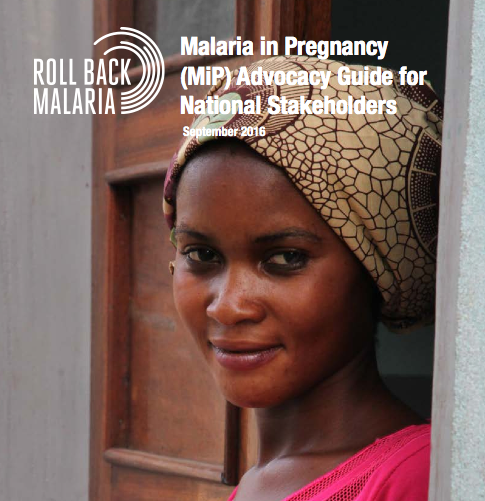
Developed by the Roll Back Malaria Partnership (RBM) Malaria in Pregnancy Technical Working Group (MiPWG), the aim of this malaria in pregnancy (MiP) advocacy guide is to provide malaria and reproductive, maternal, child, and adolescent health (RMNCAH) stakeholders in malaria-endemic countries with the tools to advocate for scaling up MiP interventions.
As explained in the guide, MiP is a “major public health concern that significantly impacts maternal and child health in countries with both moderate and high malaria transmission rates. A critical step in addressing this health issue is to call on national decision-makers to invest in the scale-up of MiP interventions. Equally critical is for national malaria control programs (NMCPs) and RMNCAH programs to jointly harmonize policies, guidelines, and implementation strategies related to MiP and develop stronger ANC [ante natal care] platforms, all of which will reduce mortality of and morbidity in pregnant women and children…One persistent challenge in malaria advocacy efforts is a lack of national-level advocates consistently working on the ground.” For this reason this advocacy guide was developed to provide guidance and tools for malaria and RMNCH stakeholders at the country level - particularly technical implementers — to advocate for the scale up of MiP interventions.
The guide consists of two parts:
Part I: MiP Advocacy Guidance - provides guidance on achieving each phase of the advocacy cycle. The phases that are discussed in more detail in the guide are the following:
- Assess: It is critical to gain a full understanding the national MiP context in order to define the most pertinent issues and inform the direction of advocacy efforts.
- Make the Case: Once the issues have been identified, one can frame advocacy messages to key audiences — particularly key decision makers and influencers — and set an agenda of issues that are important among targeted groups and the greater public.
- Ignite: By building partnerships and networks of stakeholders and getting the media and public opinion makers to help make the issues salient, advocates will help catalyse change and move the agenda along.
- Monitor and Evaluate: In order to know whether advocacy is successful, one needs to develop advocacy objectives and indicators and then monitor and evaluate whether advocacyefforts are essential and increase accountability.
Part II: MiP Advocacy Tools - includes a set of tools and templates stakeholders can use to build an advocacy framework, as described in Part I. The tools are as follows:
- TOOL A: Policy, Guidance and Pre-Service Training Assessment - this tool has three parts that are designed to help identify the status of national policies and guidelines in terms of updates and harmonisation, and whether those policies and guidelines are clearly and effectively being communicated and implemented at the service and community level.
- TOOL B: Assessing the Malaria in Pregnancy Landscape Worksheet - will help highlight the important findings that can inform the malaria in pregnancy (MiP) advocacy response by providing a template to summarise data obtained and reviewed.
- TOOL C: Problem and Solution Tables - will help to provide a clearer picture of the effects of the core problem that needs to be solved, the root causes of the problem, and the potential solutions and benefits of solving the problem.
- TOOL D: Malaria in Pregnancy Stakeholders - will assist in identifying which key decision makers are the most appropriate for advocacy messages.
- TOOL E: Stakeholder Influence - will assist in prioritising one's advocacy efforts based on the level of influence of stakeholders.
- TOOL F: Stakeholder Linkages Maps - will help one gain a better understanding of the nuances within the structures and systems in a given country that need to be considered when planning malaria in pregnancy (MiP) advocacy. This information will help guide decision making about primary and secondary audiences and influencers as well as other aspects of the advocacy strategy.
- TOOL G: Malaria in Pregnancy Advocacy Messages for Key Audiences - to ensure that MiP advocacy messages are appropriately tailored to one's audience, it is important that the ‘asks’ are clear and that the messages support the ‘asks’. This tool has two parts: 1) a sample messaging table that can be adapted for each country context and 2) a message checklist to help ensure that messages will have impact.
- TOOL H: Private Sector Partnerships Assessment Worksheet - will help highlight opportunities for mobilising resources from the private sector for scaling up MiP and strengthening ANC platforms. Some questions will need to be answered through interviews with national malaria control programme (NMCP) and reproductive health (RH) programme managers and/or staff and other key stakeholders in the country.
- TOOL I: Advocacy and Media Opportunities Worksheet - will help highlight opportunities for raising awareness of MiP issues in the public sphere through events, activities, and media.
- TOOL J: Defining SMART Malaria in Pregnancy Advocacy - this worksheet will help identify appropriate objectives for one's MiP advocacy.
- TOOL K: Advocacy Output Indicators - this will help link the communication objectives, reference points, and targets for one's advocacy goal.
Publishers
English
69
VectorWorks website on October 26 2016.
- Log in to post comments