










































Lobi Mokolo Ya Sika "Tomorrow Is A New Day" Project Evaluation
Search for Common Ground
This 34-page evaluation report shares findings of an assessment of the "Tomorrow is a New Day" project in the Democratic Republic of Congo by Search for Common Ground (SFCG). The project is designed to reach soldiers of the Armed Forces of the Democratic Republic of the Congo (FARDC) and civilians to improve civilian protection, fight impunity, and restore military-civilian relations. It included the creation of Civilian Protection committees, as well as increasing awareness of human rights principles and conflict transformation strategies through radio, comic books, theatre, and mobile cinema. According to the report, the project has led to a change in military-civilian relations and in the perception of the FARDC by the population. Both civilians and soldiers called for further sensitisation activities, and displayed a strong desire to work together to create peace in their communities.
During the reporting period, 533 sensitisation activities with 122,572 participants were organised. These activities raised awareness and provided a forum for discussing important topics. The recurrent themes covered were sexual violence, the rule of law, the role of the military, forced labour, illegal recruitment of child soldiers, and conflict management. Opinions gathered in the course of the evaluation process revealed that civilians and soldiers did not have only negative things to say about one another, and were enthusiastic about the potential of the "Tomorrow is a New Day" project. In particular, project beneficiaries lauded initiatives such as joint military-civilian community fields, the "Tomorrow is a New Day" radio programme and comic book, and the performance of the military (8thIntegrated Brigade), which SFCG had been working with for the previous two years.
The following are some of the key findings of the evaluation conducted by SFCG in 2010: Security
According to the evaluation, in both Ituri and North Katanga, the number of persons surveyed who claimed that they or their family had suffered a human right violation in the past six months decreased over the course of the project. As well, particularly in Ituri, the improvement in military-civilian relations regarding whether or not the FARDC helps civilians, or causes insecurity, was clear between the baseline evaluation and the follow-up evaluation. At baseline 32% of civilians expressed that the FARDC helps civilians, while at evaluation that percentage rose to 56%. SFCG observed that the radio plays a critical role in terms of providing information for soldiers and civilians, due to its low cost, portability, and the wide availability of batteries to power them. In Ituri and in North Kivu, more than 80% of civilians said that they obtained security information from the radio. In North Katanga, 70% of civilians said that they received security information from the radio.
Military-Civilian Relations
The evaluation showed that relations between civilians and the military improved. In Ituri, a major change was observed in the attitudes of civilians during focus group discussions. They no longer had the same bitterness for the soldiers, and had shifted their anger towards the government, who they felt were not supporting the soldiers. This suggested a newfound sense of solidarity with the soldiers, who they could relate to, feeling that they too were neglected by the government. In addition, survey results reinforced the more positive atmosphere observed. There was a 26% increase - from 22% to 48% - in respondents rating the situation as regards living alongside soldiers, as 'excellent'. Furthermore, 64% of respondents claimed that the situation had improved in the past six months.
In North Kivu, 66% of civilians said that they had witnessed a change in military behaviour in the past six months, referring to the new units that had been deployed in their area. The type of change reported was that there had been a reduction in theft, murder, and sexual violence. Also, 67% of civilians stated that if they were to have a conflict with a soldier, they would go to the military authorities. This demonstrates a relatively high level of trust in the ability of military commanders to resolve military-civilian conflicts.
Military Justice
The evaluation showed a significant improvement of knowledge of both civilians and the military in terms of military justice. Mobile cinema screenings were a particularly efficient tool to increase knowledge of the legal punishment within the FARDC. On the question of impunity, civilians were far more skeptical of the military justice system than their military counterparts. Almost all soldiers, as opposed to just under a third of civilians, felt that soldiers were always punished if they committed a serious crime. The same results were observed during focus group discussions. Thus, there is still far more room for sensitisation activities, particularly with civilians on military justice-related issues.
Knowledge of SFCG activities
A total of 22% of civilians and 44% of FARDC soldiers surveyed had listened to the “Lobi mokolo ya sika” radio programme. Furthermore, a high proportion of both groups had heard of the "Tomorrow is a New Day" project. In Ituri, where the "Tomorrow is a New Day" project is particularly popular, survey results showed that there had been a 16% rise, from 67% to 83%, in listenership of SFCG radio programmes, and 72% of civilians and 92% of soldiers stated that they knew of the "Tomorrow is a New Day" project. In North Katanga, 61% of civilians and over half of the civilian focus group participants had listened to SFCG radio programmes. In South Kivu, only 10% of civilians knew of the "Tomorrow is a New Day" project. This shows that while the work SFCG conducted with the 8th Brigade in the region has been extremely beneficial, there is still far more room for sensitisation activities with civilians, and the current goodwill provides an excellent opportunity to improve relations further.
The report notes that FARDC troops demonstrated a stronger knowledge of the activities and objectives of the "Tomorrow is a New Day" project than civilians, which they said was primarily to improve military behaviour and military-civilian relations. This can be explained by the fact that a higher proportion of soldiers than civilians had taken part in SFCG activities. SFCG focused a great deal of its work on changing the behaviour of soldiers, which is also why a higher proportion of soldiers than civilians had taken part in SFCG sensitisation activities.
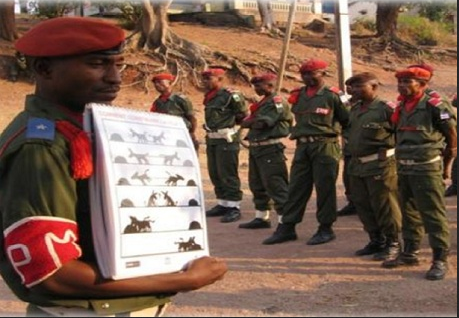
The soldiers explained that their favourite sensitisation tools were the radio programmes. Soldiers also mentioned that the SFCG comic book is extremely popular. Soldiers repeatedly stated that they used the name of the antagonist of the comic book as an insult. They said that they would warn their colleagues that they were acting like "Commandant Janvier" if they were abusing civilians. In addition, the soldiers explained that they appreciated SFCG sensitisation techniques due to the various tools used, such as the image box. They said that these tools gave SFCG techniques a "human touch", stating that FARDC techniques which focused on military regulations were drier. Furthermore, they explained that whereas FARDC techniques involved describing appropriate military behaviour, SFCG sensitisations provided soldiers with strategies and methods for dealing with military-civilian conflicts before and when they occur. The evaluation offers a number of conclusions based on the results.
- Military officers and ordinary soldiers exposed to this project demonstrate a greater awareness of human rights and the importance of protecting civilians.
- Military officers who are members of committees display a ‘zero tolerance’ for abuses committed by members of their units, and thus these cases are denounced before the military justice.
- There was a decrease in the abuses committed against civilians by officers and soldiers who are in units that are part of this project, including rape and sexual violence.
- Relationships between civilian groups and military are improved as a result of this project.
- Military and civilians are more aware of how to combat impunity, how to access military and civilian justice and the consequences of justice in action.
Click here to download the key findings in PDF format.
Search for Common Ground website on January 17 2013.