










































The Learning Route in Rwanda - Leveraging the Scaling up Nutrition Civil Society Network: Building Regional Platforms to Promote Learning on How to Address Malnutrition
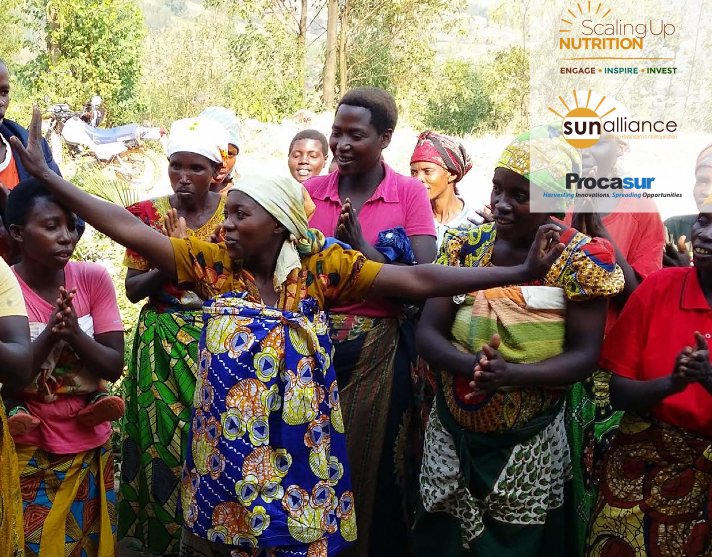
"Progress continues to be made in the fight against hunger; yet, a large number of people still lack of food and are not adequately nourished. It is estimated that 795 million people in the world were undernourished (2014-2016 estimates), meaning they had insufficient calories in their diet to meet their needs."
In 2016, the Scaling Up Nutrition Civil Society Network (SUN CSN) launched a two-year learning exchange programme to strengthen SUN Civil Society Alliances (CSAs) and regional platforms, and to promote learning across countries on how to address malnutrition. At the centre of this programme are two peer-to-peer learning exchanges, called ‘Learning Routes’, that aim to develop the ability of the Learning Route participants to identify potentially useful innovations that can be adapted and then applied in their own community, institution, and country. The Learning Route programme’s main objective is to build stronger, aligned civil society alliances that work for improved nutrition at all levels of society. This background report was produced in preparation for the 2016 Learning Route in Rwanda. It is primarily intended as a briefing for those participating in the learning exchange, though it will also be of value to those interested in civil society efforts to end malnutrition in Rwanda. The report was developed following a participatory mapping process involving civil society organisations in Rwanda and a survey of 11 Anglophone African SUN Civil Society Alliances. This process identified the priority thematic areas to be covered during the exchanges - which include advocacy, communication for behavioural change, and social mobilisation - and the best practice examples that are most likely to stimulate country to country learning.
The report starts by providing basic information on poverty and malnutrition in Rwanda and the process of scaling-up nutrition efforts. It looks at the SUN movement in Rwanda and the establishment, structure, objectives, and achievements of the SUN Alliance in Rwanda. The main part of the report is dedicated to the five successful initiatives which were selected by the SUN Alliance in Rwanda. These case studies fall under one, or more, of the thematic areas identified in the survey of African CSAs, and exemplify the work done by civil society in those areas. The themes are:
- advocacy, social campaigning and mobilisation
- multi-stakeholder coordination
- communication for behavioural change
- integrated approaches to fight malnutrition
The case studies outlined in the report describe the experience, main outcomes, and lessons learned by the civil society organisation leading the initiative. They were developed with the participation of the organisations involved and reflect their experience. They are intended to provide ‘food for thought’ for the field visits which will take place during the Learning Route.
The five case studies (and their associated learning areas) are:
Case study 1: Rwanda Stakeholder and Action Mapping for nutrition (learning area: coordination strengthening to improve nutrition) - This case study describes the Stakeholder and Action Mapping project which sought to improve coordination among stakeholders by providing a clear understanding of “who is doing what and where” in nutrition, identifying potential gaps in the actions taken and estimating progress toward achieving defined Core Nutrition Actions (CNAs), with the final objective of improving planning and scaling-up interventions in nutrition in the country. The case study offers insight into how to plan and implement mapping activities efficiently and effectively. It also demonstrates how mapping can be a powerful tool to prioritise actions and strengthen coordination towards common goals.
Case study 2: Strengthening Pro- poor Public Private Partnerships to fight malnutrition, the experience of DUHAMIC-ADRI (Duharanira Amajyambere y’Icyaro or ‘Action for Integrated Rural Development’) and SOSOMA (learning areas: social mobilisation towards nutrition, pro-poor PPP, social marketing, integrated approaches to fight malnutrition) - This case study looks at how DUHAMIC-ADRI started a food processing company called SOSOMA which sells 50% of its products at subsidised prices to the government and humanitarian organisations, while the other 50% is sold directly to supermarket at prices the local population can afford. The case study provides insights into successful strategies used by civil society to promote appropriate pro-poor partnerships between the public and the private sectors to reduce malnutrition, while ensuring visibility and benefits to smallholders in the value chain.
Case study 3: Communication strategies for behavioural change towards improved nutrition: the Land O’Lakes and Urunana experience (learning areas: communication for behavioural change, multi-stakeholder coordination) - This case study describes the Land O’Lakes initiative which used different communication channels to spread nutrition-sensitive messages: in training modules for farmers, depicted in storyboard illustrations, via health centres, schools and households, and through radio programming. Land O’Lakes partnered with Urunana to channel nutrition messages through their most popular radio soap opera, which used a wide range of life stories, reflecting the lives and common problems experienced by the soap opera audience, who are mostly rural people. At the same time, content was developed to contain social messages about sensitive issues, such as reproductive and sexual health, gender, family conflict and reconciliation, family planning, and HIV/AIDS. Ururana DC and Land O’Lakes began a collaboration to promote positive nutrition messages, specifically related to milk consumption. The case study highlights the importance of developing effective communication strategies to raise awareness on nutrition-sensitive issues; and how the strengthening of collaboration between CSOs led to successful implementation of communication strategies and positive nutrition messages reaching targeted groups.
Case Study 4: “Milk Way” to enhance nutrition, from the producer to the consumer: the experience of Nyanza district (learning area: integrated approaches to fight malnutrition, advocacy, multi-stakeholder coordination) - This case study looks at the effort of the Rwandan government to increase milk consumption through an integrated approach that involved multiple stakeholders. This involved several programmes and campaigns such as Girinka Munyarwanda (‘One Cow per Poor Family’) and the ‘One Cup of Milk per Child’ programme, as well as advocacy and communication efforts directed at policy makers, producers, and consumers around the importance of ensuring the quality of milk. Training was also necessary and included the ‘model village’ approach where farmers are trained to act as ‘model farmers’ to their neighbours, accelerating the spreading of good practice in livestock management techniques and high quality milk production. This case study provides a practical example on how an integrated approach to nutrition, when managed effectively and with the active participation of multiple stakeholders, can make substantial changes in improving poor rural livelihoods, as well as enhancing nutrition.
Case study 5: Decentralisation and operationalisation of nutrition interventions: the case of Gisagara district (learning areas social mobilisation, advocacy, communication for
behavioral change, multi-stakeholders coordination) - Gisagara district had one of the highest chronic malnutrition (stunting) rates among under-5 years aged children. This led public authorities to coordinate with a wide range of stakeholders to address child malnutrition. They conducted research which showed that lack of family planning, low income, poor hygiene and sanitation, illiteracy, the high price of nutritious food, gender-based violence, and family conflicts were among the main factors affecting child malnutrition in the district. Based on recommendations emerging out of the research, SUN Alliance members worked with Gisagara district officials on a communication campaign for behavioural change targeted at the local population; communities were mobilised to promote correct approaches towards nutrition, including change in habits or behaviours that can negatively affect child nutrition. Cooking competitions were conducted; communities also competed in composing poems, songs, and dramas with nutrition messages. Awareness raising among the rural population was done through Community Health Workers (CHW), in partnership with local CSOs. This case study helps to identify modalities through which civil society can enhance national and local policies and strategies to effectively address nutrition problems, with a special focus on vulnerable and disadvantaged communities. At the same time, it offers an example of effective strategies for mobilising rural communities and promoting correct approaches towards nutrition, through better coordination between government and civil society around nutrition interventions.
Click here to find out more about the Rwanda Learning Route and to access English, French, and Spanish versions of the report.
SUN Civil Society Network website on February 28 2017.
- Log in to post comments