










































Keep Your Chats Exactly That!
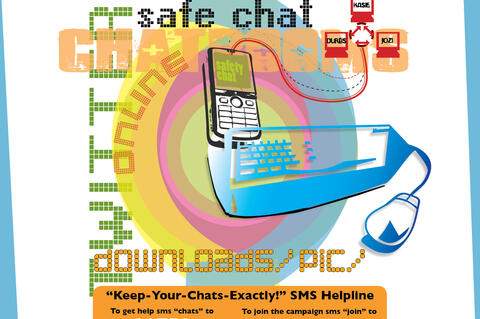
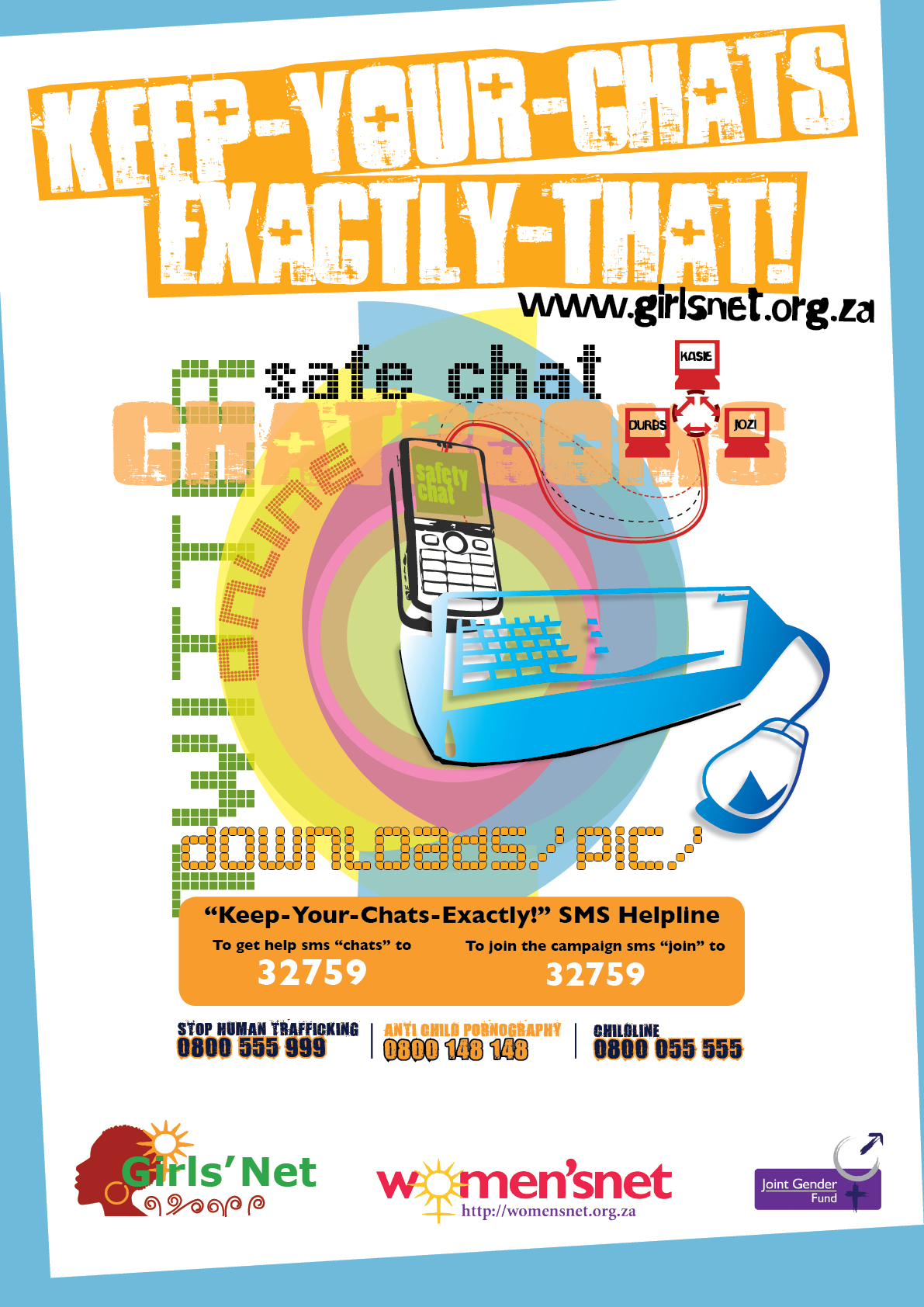
Focusing on girls and boys between the ages of 10 and 19, the campaign is designed to serve as a form of intervention to create awareness that perpetrators of sexual violence are using ICTs and that sexting (sexual harassment through text messaging, or SMS) and cyberbullying are considered crimes.
Information kits and a curriculum for lessons on digital safety have been developed and are distributed to schools throughout South Africa. The materials also provide assistance to teachers in the form of facts sheets, ideas for lessons, and handouts. They also available on the Girls'Net website.
The Girls'Net website is mobile-enabled so that young people can: have easy access to the site, including information on online safety; participate in the different forums; and comment and blog. The website also serves as a platform where children can share their experiences of harassments; they can also "name and shame" perpetrators.
There is an SMS helpline that young girls and boys, teachers, and parents can contact if they need an advice on online safety. In addition, anyone can join the helpline to receive information on a weekly basis. Within South Africa, the following information can be used to access the helpline through SMS:
- To get help, text (SMS): “chats” to 32759
- To join the campaign, text (SMS): “join” to 32759
Gender, Information and Communication Technologies (ICTs)
Women’s Net is a South African based non-governmental organisation that works to advance gender equality. Its work focuses on the intersection between gender and ICTs. It recognises that ICTs are a gendered tool and aims to address imbalances in women's and men’s access to and meaningful use of ICTs. Girls'Net, a project by Women’sNet, is a South African social and multi-media programme that gets girls involved in the use of ICTs for their own development. The aim of the project is to use ICTs to help girls realise their full potential.
According to Girls'Net: "Cell phone technologies and the internet offer huge potential for addressing development challenges. However, the prevailing gender disparities and power imbalances between males and females play out in these virtual environments, as well as in reality. Cell phones have been implicated in transactional sex, in the production, sharing and distribution of pornography, and in human trafficking. Creating safe spaces for the youth to communicate and express their needs has become vital in the fight against such rising social problems. This campaign, therefore, serves to address violence experienced through the internet and cellular phones by raising awareness and disseminating information, and... promoting the use of the same technologies for positive special participation on the same issue."
Women'sNet, Take Back the Tech, United Nations Development Fund for Women (UNIFEM). Funder: Joint Gender Fund.
Women's Net website on June 24 2009; and email from Eva Ramokobala to The Communication Initiative on May 27 2010.
- Log in to post comments