










































The Kasiisi Project Girls Support Program
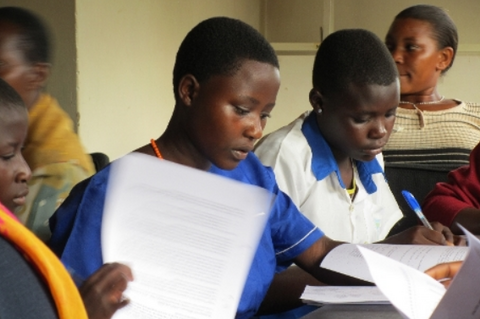
Launched in 2006, the Kasiisi Project Girls Support Program works to keep girls in school, inform them about their sexual health, and assist them to be economically independent. Strategies to assist girls to successfully complete their primary education include: supplying sanitary pads to girls who are menstruating; constructing private 'girls only' latrines at schools; and providing accurate health information and mentorship through a female health worker. The support programme is led by the Kasiisi Project, in collaboration with the Jane Goodall Institute.
According to the Kasiisi Project, academic performance correlates closely with school attendance, and absenteeism, and dropout rates are high for rural Ugandan girls for reasons often linked to their reproductive biology. Many obstacles stand in the way of successful education for rural African girls, but chief among them are issues relate to puberty, menstruation, early pregnancy, early marriage, and HIV. Previously, many girls would not attend school when they menstruated or would drop out of school completely. The support programme uses the following strategies, to encourage girls to stay in school and finish their education.
Community Health Worker/Peer Education
The Kasiisi Project Girls Support Program hired a female Community Health Worker who circulates between the primary schools giving lessons on menstrual hygiene, sexually transmitted diseases, and strategies to avoid early pregnancy. The health worker, with the help of the Jane Goodall Institute, also runs peer education workshops. These workshops train girls and female teachers to be mentors to other girls in their schools. They provide peer educators with the proper tools and knowledge to be effective role models. There are currently 14 trained women teachers supporting 42 trained student-educators in 14 schools serving 5000 girls.
'Girls only' latrines
The Program has built girl friendly latrines with washing facilities at 5 project primary schools. These latrines allow the girls the space and privacy to take care of feminine issues which used to keep them from attending school altogether.
Supplying Sanitary Pads
Girls receive sanitary pads through the support programme. The vision is to expand this programme to more schools and eventually, through the use of a local, affordable, eco-friendly alternatives, phase out expensive, imported pads.
Education, HIV, Reproductive Health
Drop-out rates are high for rural girls where up to 80% of girls entering primary school will never complete their primary education. Uganda has the highest teen pregnancy rate in Sub-Saharan Africa with over 30% of girls having their first baby by the time they are 18. HIV infection rates are 9 times higher in girls than boys the same age and Uganda has one of the highest maternal death rates in the world, 25% of which are from unsafe abortions. However, studies have shown that each additional year of education for girls reduces the risk of HIV infection by 7% and delays the first pregnancy by a year.
Early data from the support programme show that the initiative has had impact.Through the project girls' attendance has increased since 2006 when the distribution of sanitary pads began. Girls in schools with peer-educators are better informed about reproductive health and more comfortable with discussing issues around menstruation, puberty, and relationships with boys.
Kasiisi Project, Jane Goodall Institute
Global Giving website, The Kasiisi Project website and Global Giving document [PDF] on October 11 2013.
- Log in to post comments