










































1 minute
Investigating Corruption in Malawi - Training Resources for Journalists
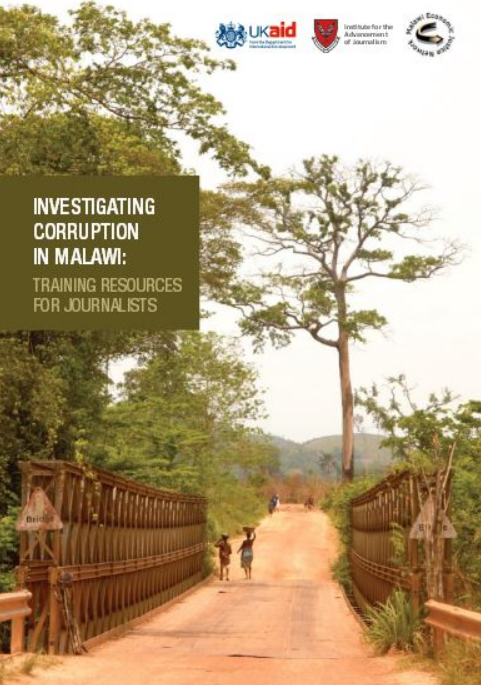
In March 2012, Transparency International (TI) together with the Institute for the Advancement of Journalism in South Africa, and the Malawi Economic Justice Network held a five-day training on investigating corruption for journalists in Malawi. The Training Resources are based on this training and include further contributions like excerpts from TI's Global Corruption Barometer findings in Southern Africa, an article on journalism and corruption in Malawi, an article on whistleblowing in Malawi, a step-by-step manual to story-based enquiries, a guide to reading budgets, and a case study on anti-corruption efforts in a public office in Blantyre, Malawi. The training resources are meant to inform and guide journalists and civil society in Malawi on how to investigate corruption following a story-based approach.
The step-by-step manual to story-based enquiries aims to provide a guide to a technique and methodology of investigative journalism that will help reporters to go about their investigations in a systematic, highly organised manner. It is a methodology that is used by many social scientists, police investigators and business consultants. It was adapted for journalistic purposes by a group of international investigative journalists under the leadership of the founder of the Global Investigative Journalism Network, Mark Hunter, an internationally acclaimed investigative reporter, trainer and academic. When used effectively, it will not only result in a story that will hold up in court, but also one that scrutinises matters of importance to readers, viewers or listeners in a way that will be remembered, that stirs, and might well lead to change.
English
49
Institute for the Advancement of Journalism website on August 5 2013.
- Log in to post comments