










































Increasing Women’s Political Participation in Liberia: Challenges and Potential Lessons from India, Rwanda, and South Africa
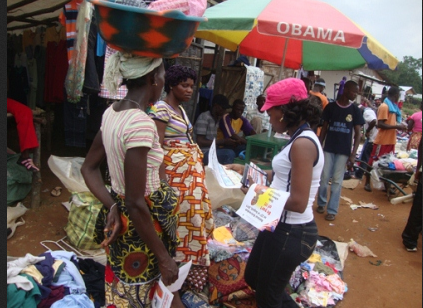
National Elections Commission of Liberia.
This 23-page paper explores international experiences to draw on best practices that could inform strategies to help improve women’s political participation in Liberia. Published by the International Foundation for Electoral Systems (IFES), the report states that entrenched traditional norms, cultural practices, limited education of women, and institutional frameworks have hindered gender equality in Liberian politics. Attempts by the global community to mitigate these inequities have been widely ineffective and local efforts in Liberia, including civic education, have not led to gender equality in national governance. In this paper, IFES Hubert Humphrey Fellow Samuel Cole draws on the experiences of Rwanda, India, and South Africa to suggest legal reforms and civic advocacy efforts to encourage greater women's political participation in Liberia.
In terms of international practices, the paper outlines some key elements of electoral processes affecting women’s participation in elections:
- Legal frameworks are one key element that could facilitate or deny gender equity in political governance. The legal framework for elections, in addition to the national constitution, includes the electoral system, which is the means by which votes are calculated into seats. Research has shown that the proportional representation (list PR) is most appropriate in terms of gender equity and governance. Quotas, or a reserved seat system, have been effective in Rwanda, South Africa, and several Arab countries in enhancing women’s participation.
- The second element is general political participation. Advocacy, activism, training, and the internal democracy of political parties have been identified as items central to increasing women’s political participation. Parties can encourage democracy within themselves, promote political quotas and opt for a list PR system that makes it easier for women to be elected.
- Voter registration plays a role in gender equality, be it state-initiated or self-initiated. The key is access to the process for women. Playing the role of household manager in many societies, women are frequently disadvantaged when voter registration centers are located too far apart or when information about the registration process is not adequately disseminated.
- Voter education, which includes information on voting rights, the political system, candidates and issues in the election, as well as where and how to vote, has been identified as a big factor in gender equity in governance. Voter education programmes should highlight the rights of women to be elected and to vote without interference from husbands or anybody else.
- Election observation is also listed as an area that should always involve an equal number of women and men. The Office of Democratic Institutions and Human Rights of the Organization for Security and Cooperation in Europe believes that for an election observation report to be deemed credible, the observation team should ascertain whether or not women have an equal opportunity to take part in the process.
According to the paper, the specific cases of the three countries point to a few important items. On the one hand, the case of India is no different from Liberia. Ranked 94 in the world in women’s political participation, the world’s largest democracy remains far behind many nations in taking steps for gender equity in politics. On the other hand, the situations in Rwanda and South Africa are worth modelling. Rwanda has taken concrete steps towards gender equality, adopting an effective gender quota system and a legal framework suitable for enhancing gender equity. The result is more than 50% representation in parliament. In South Africa, apartheid only made South African women stronger in terms of advocacy, activism, and political negotiations. Consequently, the South African Constitution emphatically addresses the issue of women’s political equity, equality, and non-sexism. In sum, the success of Rwanda and South Africa can be attributed to a good legal framework and strong political will that have been driven by strong advocacy, activism, and civic education.
The paper identifies a number of possible lessons drawn from the analysis of the different countries that could be used to increase women’s political participation in Liberia. For short-run impact the following lessons have been identified:
- Political parties need to take more pragmatic actions in practicing internal party democracy by putting forward more women candidates (50%) and helping such candidates in training, raising funds, and campaigning.
- Women advocacy groups need to join together by forming strong coalitions that will give them tenable positions and strong negotiating leverage.
- Pro-democracy and human rights organisations, as well as the news media, need to highlight the issue of gender mainstreaming in politics as a rights issue.
- As part of the internal process of ethical fairness and transparency, employment at the national Electoral Commission needs to be based on gender equity, and all election-related programmes should employ a gender perspective and take issues of women as a central part of the process.
- The country's executive leadership needs to be committed to gender equity and reflect that at the level of cabinet appointments.
In the long term, the paper suggests that there is a need for constitutional amendment to change the electoral system to list PR and to create room for binding laws for parliamentary quotas for women. The paper also suggests re-incorporation of civic education as a core subject in the Liberian primary and secondary school system, and for the civic education commission in Liberia to help propagate issues of democracy, rule of law, and women emancipation from household duties.
International Foundation for Electoral Systems website on January 17 2013.