










































Improving Provision of Family Planning among Pastoralists in Kenya: Perspectives from Health Care Providers, Community and Religious Leaders
London School of Hygiene and Tropical Medicine, or LSHTM (Kenny, Bhatia, Lokot, Bacchus, Cislaghi, Hossain); University of Nairobi (Hassan); Save the Children, Nairobi (Aden, Muriuki, Osman, Kanyuuru); Save the Children International (Pryor); London School of Economics and Political Science (Kenny, Hossain)
"Restrictive gender norms limit women's access to family planning, and these influence local leaders and HCPs [healthcare providers]."
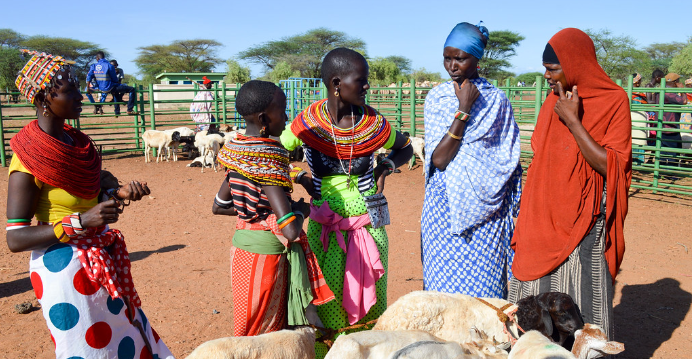
Existing research on access to sexual and reproductive health services in Sub-Saharan Africa suggests there exist key obstacles to accessing family planning (FP) services, particularly for nomadic and semi-nomadic pastoralists in Kenya. In such contexts, healthcare providers (HCPs) working in local health centres are often the most reliable source of information on FP and sexual and reproductive health issues. However, HCPs can both enable or hinder the uptake of FP services in several ways. Community and religious leaders also affect the social acceptability of FP, especially in nomadic settings, where they are often considered the custodians of culture and tradition. This study examines the perspectives of HCPs and community and religious leaders in Mandera and Wajir, Kenya, on the individual, interpersonal, and structural barriers and facilitators to accessing FP.
Data for this paper come from a larger qualitative study with 203 individuals who participated in either an interview or focus group, which explored social norms, fertility preferences, and modern FP amongst nomadic and semi-nomadic pastoralist girls, boys, women, and men. This paper focuses on interviews conducted in November 2018 with HCPs working in health centres located in Wajir and Mandera (n=4), community leaders (n=4), and religious leaders (n=4) from the pastoralist communities the health centres serve. Three participants were Christian, and nine were Muslim.
Three overarching themes emerged:
- Perception of FP as a health priority: Most HCPs and local leaders described access to food and clean water and other health concerns to be health priorities for nomadic communities - not FP.
- Explanations for low FP use:
- Desire for large families - Having ten or so children was described as "good" and an "advantage" because it meant responsibilities could be shared.
- Tensions and secrecy in FP decision-making - Men (in particular, husbands) were described as key FP decision makers who played a role in shaping access to FP for women. Both HCPs and local leaders were aware of existing gender norms that men often made FP decisions, and while HCPs found ways to circumvent these norms, local leaders often reinforced them (e.g., by advising women to obtain consent to use FP from their husbands despite beliefs that men would not consent to its use). For these reasons, some women kept their FP use hidden from their husbands.
- Religion and culture: Both religious and community leaders said that FP was associated with anti-Islamic beliefs, and they mentioned negative consequences or punishments for going "contrary to God". In contrast, HCPs highlighted the tensions between delivering FP messaging and religious beliefs and/or culture.
- Fears about FP: HCPs described "myths and misconceptions" held by both women and men, such as about side effects of FP. They also described community perceptions of FP as "defective" or "bad" and associated with infertility.
- Recommendations to improve access: Two additional sub-themes emerged as barriers, but also as entry points for improving access to FP. These included: (i) structural barriers specific to nomadic pastoralist populations - e.g., providers were from different socio-demographic backgrounds to the communities they served, who faced structural marginalisation from health and other services (thus, there is a need for more facilities and outreach); and (ii) limited community awareness and knowledge of FP methods - e.g., HCPs and community leaders described a need for multi-stakeholder awareness-raising, noting that the only way to bring about a change in attitudes towards FP was through engaging community members around FP, with a focus on men and religious leaders as the main barriers to its use. It was suggested that such engagement take place through education.
Reflecting on the findings, the researchers note, for example, that "HCPs had internalised community gender norms around decision-making, which they said was a barrier to delivering FP to women who did not have their husband's consent.... Nevertheless, HCPs in this study held beliefs about what was expected of them as providers and played an important role in women's access to FP, which was often done cooperatively with the woman seeking FP in secret. Training HCPs from pastoralist communities could be helpful in addressing some of the tensions between HCPs and the local beliefs outlined, as well as efforts to ensure non-local providers receive training to provide culturally sensitive services and build trust and relationships with the nomadic communities they serve..."
Concrete programmatic and research ideas for the way forward include:
- "Programmes to improve FP access should be delivered alongside interventions targeting the immediate health concerns of pastoralist communities, incorporating structural changes."
- "Further research should explore the complicated nature of FP decision-making, to understand opportunities for women's greater role, both through gender transformative approaches as well as in the absence of men's interest in FP, and the role HCPs play in supporting and enabling women's preferences. [The] findings highlight the importance of including men, to increase their awareness and acceptability, of FP for those women who wish to access services."
In conclusion: "HCPs that are aware of, and sensitive to, the religious, cultural and normative reasons for non-use of modern family planning, could play a key role in improving access."
Global Public Health, DOI: 10.1080/17441692.2021.1944263. Image credit: Donna Bowater/Marchmont Communications via Flickr (CC BY-NC 2.0)
- Log in to post comments