










































Improving Productivity and Market Success (IPMS)
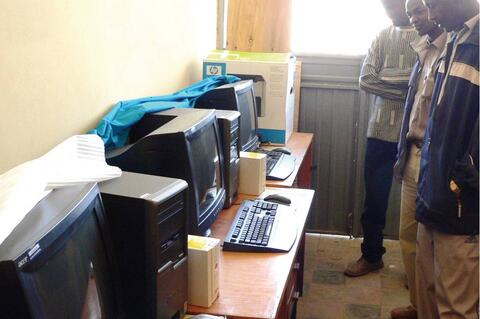
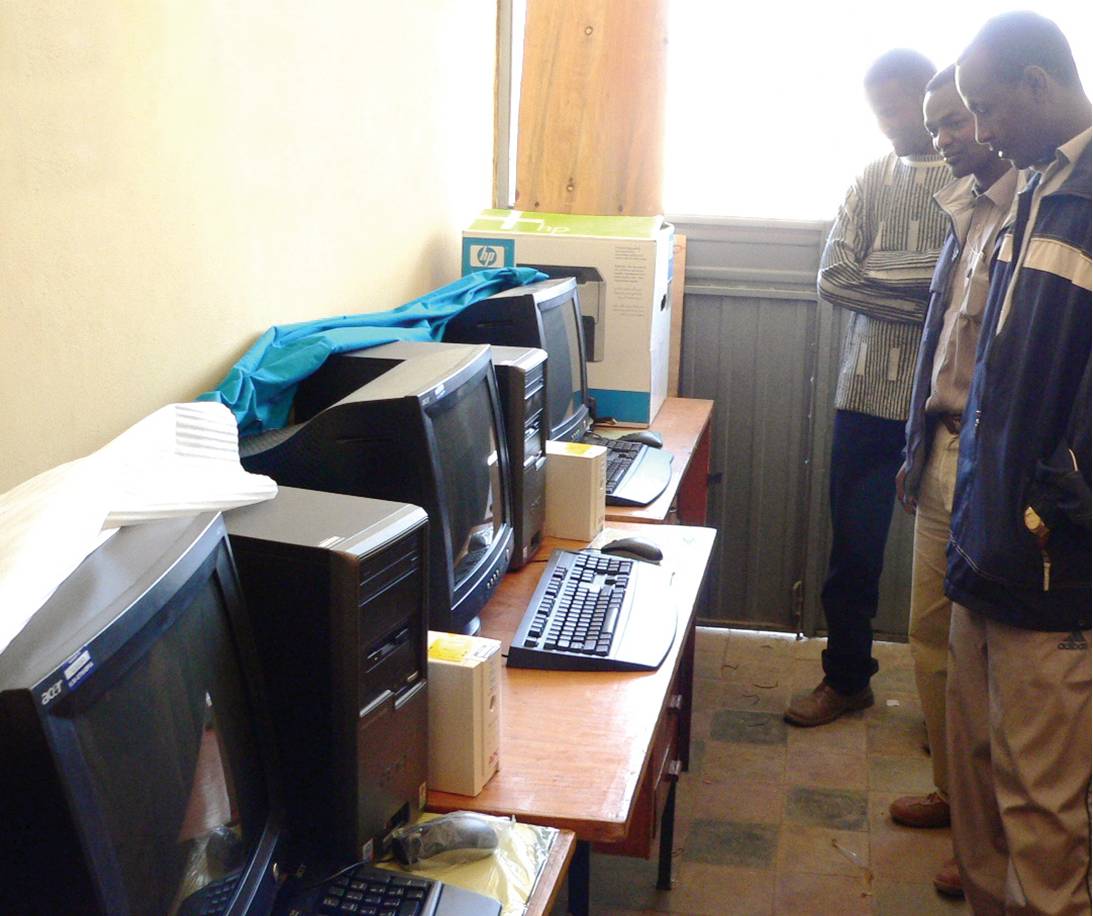
The IPMS project works in 10 districts, called woredas, which were selected by the respective regional governments after discussions with local farmers, non-governmental organisations (NGOs), government departments, and other interested groups. While the project focuses on 4 main areas - knowledge management, capacity building, commodity development (both crops and livestock), and research - this summary focuses on knowledge management activities undertaken by the project. In each district the project set up a woreda knowledge centre (WKC), where the farmers can access information on how to grow a new crop or simply the contact details of other farmers or traders. Each centre is equipped with 5 computers, a television, DVD players, and a library containing books, manuals, and training guides in printed form and on CD or DVD. (The project distributes material, in printed and digital form, obtained from organisations such as the Food and Agriculture Organization (FAO) and the International Fund for Agricultural Development, or IFAD). There are also 10 other centres scattered across the districts, plus 8 more based in the regional government bureaus of agriculture and agricultural research institutes.
Although each of the 28 knowledge centres has a dial-up internet connection, routine internet access is limited due to high user fees. For centres located in areas where there is no electricity, the project provides a generator and a digital camera so that local staff will be able to photograph and document environmental changes, and to record videos of successful practices that offer good learning or teaching points. The project is also upgrading some of the 15,000 farmer training centres (FTCs) set up by the government across the country, equipping 40 of them with computers, printers, TV sets, and DVD players.
The use of video and DVDs is proving to be especially popular and effective. The team in Ada'a Liben district, for example, has produced a number of videos on innovations introduced by local farmers in areas such as beekeeping and fruit nursery management, as well as on the progress and successes of Ada'a farmers. Other WKCs have started producing their own videos on selected local technologies for use in farmer training courses, including demonstrations of onion production and marketing techniques, conservation agriculture, and rice cultivation. The recordings are transferred to CDs or DVDs, and are distributed to other centres, where they are used as training and motivational materials.
In addition to providing regularly updated market information, the centres are seen as hubs to promote a culture of sharing knowledge and encouraging collaboration among farmers and extension workers. The project is also attempting to improve the links between farmers and traders, creating opportunities for small-scale producers to sell to new markets - thereby increasing their incomes and helping to reduce poverty in the area. To that end, the IPMS project supports individual and organised groups of farmers to improve their negotiating power and food processing skills. Specifically, the TVs and DVD players are used to show training videos and recordings of farmers demonstrating crop management techniques. (Sometimes, the centres show entertaining films to draw in audiences of farmers, their families, and others involved in agriculture.)
Based on an interest in documenting local knowledge of agricultural techniques and making it available to professionals working in the sector, IPMS has developed the Ethiopian Agriculture Portal (EAP), a website that provides information for experts, extension officers, researchers, policymakers, NGOs, and community-based organisations. A team of content managers selects, reviews, and uploads content from a variety of sources, including the latest publications from the Ministry of Agriculture. For the regional agricultural offices that have limited internet access, the project team has developed an offline version of the website, which is loaded onto the computers in each of the 28 WKCs.
The IPMS website shares information about the project itself, and the research and resources that have emerged, in focus areas that include: Knowledge Management, Capacity Development, Commodity Development, Policy Recommendations, Gender, HIV/AIDS, and the Environment.
Agriculture, Technology.
IPMS Knowledge Management Advisor claims that "The team now expects to extend their efforts to other parts of the country, and hopes that their approach can be replicated in other countries. Using ICTs has certainly contributed to the success of the project. And while the farmers benefit, the fact that their sons and daughters, living in very remote parts of Ethiopia, will grow up knowing how to use a computer, makes the project all the more worthwhile."
CIDA, ILRI, MoARD.
"The Centre of Information: Regional Information Centres Promote Crop Production in Ethiopia", by Ermias Sehai, ICT Update, no. 49, June 2009; and IPMS website, January 10 2010.
Comments

Good article
Good article
- Log in to post comments