










































Impact Data: Horizon Jeunes
Image
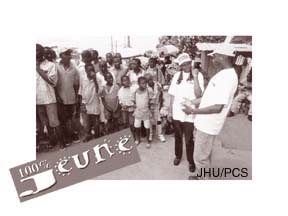
Horizon Jeunes was an adolescent reproductive health programme that aimed to increase adolescents' awareness and use of preventive behaviours and sexual health products and services in Cameroon. The programme aimed to encourage adolescents to delay the initiation of sex and to use condoms to prevent HIV and sexually transmitted infections (STIs) when they do choose to initiate sex. The project was designed to reach in- and out-of-school urban youth aged 12 to 22.
Methodologies
A quasi-experimental evaluation design used baseline and post-intervention surveys at least 14 months apart in two small cities in Cameroon: Edéa, the intervention site, and Bafia, the comparison site. The baseline survey was carried out among randomly selected youth ages 12 to 22 in each city (Edéa: n=1,606; n=805 / Bafia: n=801); participants in the follow-up survey included randomly selected youth ages 12 to 22 in each city (Edéa:n=1,633; n=811 / Bafia: n=822). In addition, sales data and data on health centre visits for family planning were collected.
Knowledge Shifts
The intervention had a significant effect on knowledge of condoms for birth control among both male and female youth. The proportion of male youth in the intervention community who knew of the benefits of condoms for birth control increased from 65% to 71% between baseline and follow-up, while the proportion declined from 55% to 42% among males in the comparison town. Among intervention site females, the proportion knowing about condoms for birth control rose from 39% to 74%, versus a slight increase from 36% to 44% among females in the comparison town.
The intervention also significantly increased male and female youths' knowledge of oral contraceptives - from 13% to 39% of intervention city males, versus a change from 9% to 11% of comparison city males, and from 23% to 60% of intervention city females, versus a change from 14% to 25% of comparison city females.
The intervention significantly increased male youths' knowledge of the intrauterine device (IUD) and injectable contraception (rising from 45% to 27%) versus little change among males in the comparison community (from 3% to 8%).
The intervention also significantly increased male and female youths' knowledge of oral contraceptives - from 13% to 39% of intervention city males, versus a change from 9% to 11% of comparison city males, and from 23% to 60% of intervention city females, versus a change from 14% to 25% of comparison city females.
The intervention significantly increased male youths' knowledge of the intrauterine device (IUD) and injectable contraception (rising from 45% to 27%) versus little change among males in the comparison community (from 3% to 8%).
Attitudes
The proportion of male respondents who considered themselves at risk for STIs or HIV/AIDS increased significantly in both intervention and comparison sites between 1996 and 1997, and increased significantly more among males in the intervention site (from 13% to 50% versus 18% to 26% among comparison site males).
The intervention significantly increased females' awareness of their own responsibility to use protection during sex. The proportion of intervention city females who saw themselves as responsible for protection rose from 74% at baseline to 84% follow-up, versus a slight decline from 76% to 74% among comparison site females.
Delayed initiation of sexual intercourse among male youth in the intervention site (that is, the proportion of respondents who initiated sexual intercourse prior to age 15) decreased significantly (down from 29% in 1996 to 19% in 1997); little change occurred among males in the comparison site (25% to 22%). There was also a significant decline (from 10% to 4%) in the proportion of intervention site females who initiated sex prior to age 15, whereas proportions rose from 8% to 13% among comparison site females.
The intervention significantly increased females' awareness of their own responsibility to use protection during sex. The proportion of intervention city females who saw themselves as responsible for protection rose from 74% at baseline to 84% follow-up, versus a slight decline from 76% to 74% among comparison site females.
Delayed initiation of sexual intercourse among male youth in the intervention site (that is, the proportion of respondents who initiated sexual intercourse prior to age 15) decreased significantly (down from 29% in 1996 to 19% in 1997); little change occurred among males in the comparison site (25% to 22%). There was also a significant decline (from 10% to 4%) in the proportion of intervention site females who initiated sex prior to age 15, whereas proportions rose from 8% to 13% among comparison site females.
Source
Science & Success in Developing Countries: Holistic Programs that Work to Prevent Teen Pregnancy, HIV & Sexually Transmitted Infections [PDF], by Sue Alford, Nicole Cheetham and Debra Hauser, accessed from the Advocates for Youth website on June 23 2005.