










































Impact Data - Gobe da Haske (Tomorrow Will Be a Brighter Day)
Image
Date
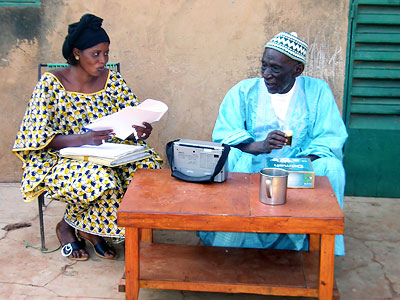
In February 2006, Population Media Center (PMC) launched a radio serial drama entitled Gobe da Haske, which in Hausa means "Tomorrow Will Be a Brighter Day". The drama was designed to raise awareness and discussion around child trafficking, exploitation of children, and related issues. According to PMC, because of a dramatic growth in population in Niger, development of necessary infrastructure is impeded, social services are unavailable, and parents find themselves struggling to provide for their large families. As a result, many children are forced to leave their communities at a very young age in hopes of a better life or they are sold into slavery by their parents.
Methodologies
The programme, consisting of 144 episodes, finished its initial broadcast on January 14 2007. A final evaluation survey was completed in March 2007.
Knowledge Shifts
According to the evaluation, the final survey provided evidence of significant changes in the level of knowledge of listeners, as demonstrated by the following indicators:
- 39% of listeners could identify at least three methods of family planning, compared to 10% of non-listeners.
- 23% of listeners knew the link between use of family planning and reducing exploitative child labour, compared to 6% of non-listeners.
- 67% of listeners had heard about exploitative child labour, compared to 28% of non-listeners.
- 55% of listeners had heard of child trafficking, compared to 28% of non-listeners.
- 34% of listeners could cite at least three practices that lead to exploitative child labour, compared to 15% of non-listeners.
- 29% of listeners could cite at least three practices that lead to child trafficking, compared to 14% of non-listeners.
Increased Discussion of Development Issues
40% of listeners had discussed exploitative child labour during the past 12 months, compared to 19% of non-listeners.
Access
According to the evaluation, listenership throughout the programme was very high, with 86.6% of men and 94.3% of women respondents reporting that they "always" or "frequently" tune in. Overall, 92.1% of male and 93.7% of female listeners reported that the drama's issues concerned them.
Source
PMC website on May 5 2008 and June 25 2009.

- Log in to post comments