










































Impact Assessment of East African Community Media Project 2000 - 2006: Report from Orkonerei Radio Service (ORS) in Tanzania and Selected Communities

This 52-page report is the result of an impact study commissioned by the Division for Culture and Media with the Swedish International Development Agency (Sida). It is one of three separate impact studies of three community radio stations supported by Sida via the East African Community Media Project (EACMP). The objective of the study was to identify the "most significant change" in the community served by the Orkonerei Radio Service (ORS) in Tanzania.
The EACMP is a sub-regional initiative involving 4 partners in Kenya, Tanzania, and Uganda, which has developed 3 community-owned and -managed radio stations. The project is designed to strengthen the capacity of the involved communities to formulate, articulate, and implement their development agendas; to provide a means of accessing information in a timely and strategic manner; and to develop the radio stations to maintain high-quality broadcasting standards, be of high integrity, and engage the listening public in professional programming.
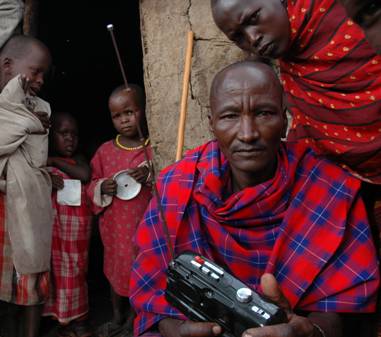
According to the authors, this impact study documents with some depth how the Maasai people living within the area covered by ORS FM have experienced major, positive development changes and empowerment since the start of the radio. These changes include: a strengthened sense of identity and culture; improvement in women's lives through insights and attainment of their human rights; empowerment of the Maasai community through information and communication; and improved livelihood in general. The report documents how poverty is seen to be diminishing with respect to the community's power, choice, and material well-being.
Eight specific areas of change considered "most significant" are listed in the report: the ability to speak together, understand, and develop identity through the use of Maasai language broadcasts; preservation and promotion of the Maasai culture and traditions; education of Maasai children, especially girls; increased awareness of (women's) human rights; improved efficiency in managing livestock; improved governance at all levels; increased action around the environment and conservation; and improved health status, especially among women.
The report also looked at three aspects of sustainability - social, institutional, and financial - and questioned how it is that the radio station, its producers, and the organisation around them caused these changes. According to the report, programme production is highly participatory and involves community members at many levels. Producers see themselves as representatives of the community and facilitators for change within the community. According to the report, although the station is making a positive impact in terms of social and community development, it has a number of organisational sustainability challenges to overcome.
The report also includes a number of recommendations focusing on changes in the community caused by the radio, and the sustainability aspects of the station. These fall under several categories: ensuring continuation of the overall development framework of the EACMP; further promoting the social sustainability aspects of the radio; strengthening institutional sustainability; enhancing financial sustainability; and replicating the initiative.
Communication for Social Change website on April 17 2009 and May 12 2010.
- Log in to post comments