










































ICT for Health: Five Years of Learning
Image
SummaryText
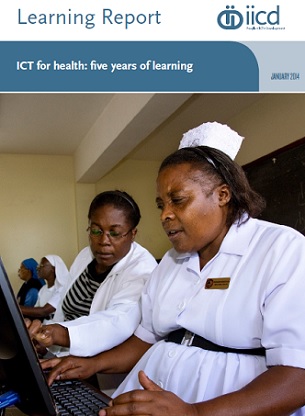
This 16-page report shares lessons learned by the International Institute for Communication and Development (IICD) from working with the healthcare sector to use information and communication technology (ICT) to improve the effectiveness, efficiency and equity of healthcare systems. The report highlights a selection of results and key lessons learned on the four intervention areas covered by the IICD ICT4Health programmes over the past five years: improving healthcare delivery, enhancing health professionals’ capacities, strengthening health systems, and improving community health awareness. For each intervention area, the report presents a list of applied solutions, followed by results and lessons learned. The lessons learned are grouped around three themes that play a major role in IICD’s work:
solution design, capacity development, and sustainability of the solution.
IICD describe their approach as participatory and multi-stakeholder, focusing on people, rather than technology. The report outlines IICD’s 'ICT-led social innovation approach' which consists of six phases: needs assessment, project formulation, implementation and pilots, embedding, scaling up and systemic change. In all these phases, IICD facilitates capacity building processes, advises on strategic, technical, and financial aspects of projects, and facilitates knowledge sharing and lobbying on ICT in health.
The report shares the following experiences and lessons learned from supporting partners across the four key intervention areas:Improving Healthcare Delivery
IICD works to support health workers and improve service delivery. For example, in Mali, Tanzania and Uganda, IICD has implemented low-tech solutions that allow voluntary health workers in remote places to use mobile and land-line phones to consult certified mid-wives in hospitals. Satellite-enabled telemedicine platforms and teleconferencing equipment are also used to enable health professionals to conduct (real-time) consultation between health workers and medical specialists operating in different regions or countries. The results have included improved quality of diagnosis and treatment, prevention of unnecessary referrals, reduced waiting time and costs, and more effective use of human resources.
From this experience, lessons learned have included the need to develop platforms that are highly responsive (response time delays discourage use) and can be used for both consultations and teaching. When implementing an ICT programme, younger health care workers, remote sites, and foreign missions tend to pick up on ICT responses quicker, and there is a need to make extra efforts to involve management, administration, and medical staff in order to ensure ownership at all levels. "Making the benefits of the ICT intervention explicit to all stakeholders is also crucial to get everyone on board." While technology is the tool, focusing on people allows the initiative to address cultural attitudes towards knowledge sharing.
Enhancing Health Professionals’ Capacities
IICD uses ICT to assist with continuous professional development. "ICT enables health workers to access the latest medical information and knowledge without the need to travel. Thus they keep themselves informed, learn collectively with peers and continue their professional medical education online." This includes the use of ICT enabled learning centres which have video, digital cameras, and presentation software, and distance education through teleconferencing tools and digitisation and (online) repositories of study materials. As a result, health care workers have improved their capacities in both ICTs and in health care and medical knowledge.
Strengthening of Health Systems
ICTS can be used to improve Health Information Systems, by helping to improve tracking of health trends, assist with planning health policies, and improve coordination and transparency in the sector. "IICD has also been supporting partners to use a variety of mobile data collection tools. Such tools allow community health workers and home-based caregivers in the field to send data, allowing programme coordinators at central locations to analyse large amounts of data from their programmes in a timely and efficient manner." As a result of integrating ICTs, partners are able to more effectively manage their data. Patient care is improved, and clinics show increases in revenues, due to less wastage and improved patient times.
Improving Community Health Awareness
According to the report, IICD’s awareness interventions focus on "connecting remote communities to urban parts of the country through shortwave radio systems, the Internet and telephony. Once these communication channels have been established, dissemination of relevant health information will be possible to community health workers in the field." This may include the use of multimedia health education sessions using a laptop and projector, tailor-made materials such as posters, brochures or videos, mobile phone messages and quizzes, and working with community health workers to develop their own health education materials using digital cameras and video cameras. The results have included improved communication between urban and rural offices, as well as saving on travel time and costs. Multi-media tools are able to reach more people, as well as improve the quality of participation and interaction.
The report notes that lessons learned related to awareness have centred on what particular strategies work in different settings. In some cases training is required on the basic use and operation of the technology, such as how to open and send a text messages. Voice messages can be used to target illiterate people, but they have some limitations in that messages are not stored, and this should not replace personal networks. As well, peer learning networks can offer opportunities to review project implementation, what is working and what isn’t. It is also important to keep in mind the needs of different groups, and apply a gender lens to increase female participation.
IICD describe their approach as participatory and multi-stakeholder, focusing on people, rather than technology. The report outlines IICD’s 'ICT-led social innovation approach' which consists of six phases: needs assessment, project formulation, implementation and pilots, embedding, scaling up and systemic change. In all these phases, IICD facilitates capacity building processes, advises on strategic, technical, and financial aspects of projects, and facilitates knowledge sharing and lobbying on ICT in health.
The report shares the following experiences and lessons learned from supporting partners across the four key intervention areas:Improving Healthcare Delivery
IICD works to support health workers and improve service delivery. For example, in Mali, Tanzania and Uganda, IICD has implemented low-tech solutions that allow voluntary health workers in remote places to use mobile and land-line phones to consult certified mid-wives in hospitals. Satellite-enabled telemedicine platforms and teleconferencing equipment are also used to enable health professionals to conduct (real-time) consultation between health workers and medical specialists operating in different regions or countries. The results have included improved quality of diagnosis and treatment, prevention of unnecessary referrals, reduced waiting time and costs, and more effective use of human resources.
From this experience, lessons learned have included the need to develop platforms that are highly responsive (response time delays discourage use) and can be used for both consultations and teaching. When implementing an ICT programme, younger health care workers, remote sites, and foreign missions tend to pick up on ICT responses quicker, and there is a need to make extra efforts to involve management, administration, and medical staff in order to ensure ownership at all levels. "Making the benefits of the ICT intervention explicit to all stakeholders is also crucial to get everyone on board." While technology is the tool, focusing on people allows the initiative to address cultural attitudes towards knowledge sharing.
Enhancing Health Professionals’ Capacities
IICD uses ICT to assist with continuous professional development. "ICT enables health workers to access the latest medical information and knowledge without the need to travel. Thus they keep themselves informed, learn collectively with peers and continue their professional medical education online." This includes the use of ICT enabled learning centres which have video, digital cameras, and presentation software, and distance education through teleconferencing tools and digitisation and (online) repositories of study materials. As a result, health care workers have improved their capacities in both ICTs and in health care and medical knowledge.
Strengthening of Health Systems
ICTS can be used to improve Health Information Systems, by helping to improve tracking of health trends, assist with planning health policies, and improve coordination and transparency in the sector. "IICD has also been supporting partners to use a variety of mobile data collection tools. Such tools allow community health workers and home-based caregivers in the field to send data, allowing programme coordinators at central locations to analyse large amounts of data from their programmes in a timely and efficient manner." As a result of integrating ICTs, partners are able to more effectively manage their data. Patient care is improved, and clinics show increases in revenues, due to less wastage and improved patient times.
Improving Community Health Awareness
According to the report, IICD’s awareness interventions focus on "connecting remote communities to urban parts of the country through shortwave radio systems, the Internet and telephony. Once these communication channels have been established, dissemination of relevant health information will be possible to community health workers in the field." This may include the use of multimedia health education sessions using a laptop and projector, tailor-made materials such as posters, brochures or videos, mobile phone messages and quizzes, and working with community health workers to develop their own health education materials using digital cameras and video cameras. The results have included improved communication between urban and rural offices, as well as saving on travel time and costs. Multi-media tools are able to reach more people, as well as improve the quality of participation and interaction.
The report notes that lessons learned related to awareness have centred on what particular strategies work in different settings. In some cases training is required on the basic use and operation of the technology, such as how to open and send a text messages. Voice messages can be used to target illiterate people, but they have some limitations in that messages are not stored, and this should not replace personal networks. As well, peer learning networks can offer opportunities to review project implementation, what is working and what isn’t. It is also important to keep in mind the needs of different groups, and apply a gender lens to increase female participation.
Source
- Log in to post comments