










































How to Use Social Media to Better Engage People Affected by Crises
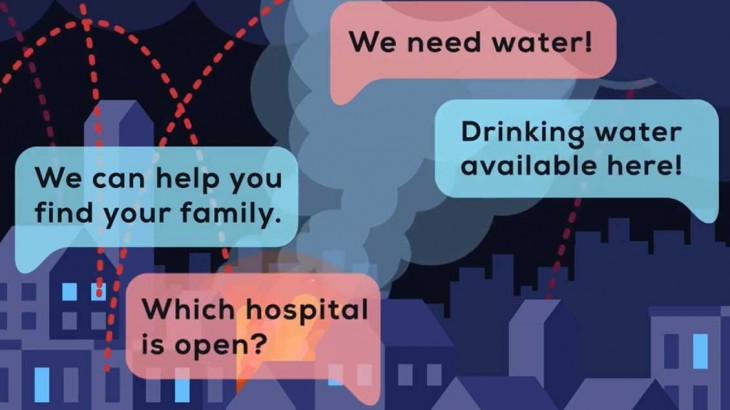
"Existing studies show that digital communications channels can be critical before, during and after natural disasters, crises and armed conflicts, to save lives and reduce suffering (e.g. by disseminating of early warning messages and safety tips, helping people to reconnect with their loved ones, directing affected people to humanitarian services...). However, the use of social media by humanitarian organizations to engage and communicate with (not about) affected people is, to date, still vastly untapped..."
This guide provides practical tips and advice on how to use social media effectively to engage with, and be accountable to, affected people during humanitarian crises. For the guide's publishers - the International Committee of the Red Cross (ICRC), the International Federation of Red Cross and Red Crescent Societies (IFRC), and the United Nations Office for the Coordination of Humanitarian Affairs (OCHA) - community engagement means "enabling affected people to participate in determining their own needs and finding their own solutions. By engaging and sharing responsibility with affected people, humanitarian organisations secure better relations and acquire invaluable insights, improving the overall effectiveness of their programs."
ICRC, IFRC, and OCHA observe that, during disasters like hurricanes or the ongoing migration crisis worldwide, Facebook and Twitter are crucial components of the humanitarian response. These and other social media platforms allow local and international actors to better coordinate relief efforts and disseminate lifesaving messages in real time. Importantly, affected communities use the channels to reconnect with relatives, seek help, and provide feedback and complaints on the assistance received (or not). Dr. Jemilah Mahmood, Undersecretary General for Partnerships at the IFRC, explains: "In the chaos that normally follows a disaster or crisis, rumours and fake news can spread quickly. If left unaddressed, these can undermine the trust people have in humanitarian organizations, and can even make it less safe for our volunteers and staff. By engaging with social media as standard practice in the aftermath of an emergency, we can understand what people are worried about, we can see the news they are sharing, and we can respond decisively, accurately and collaboratively."
Primarily designed for staff who are responsible for the official social media channels in their organisation, the guide provides practical tips, advice, and 10 short case studies, like the United Nations High Commissioner for Refugees (UNHCR)'s use of social media listening to document and counter smuggler narratives in Europe, or the ICRC's creation of a mobile-friendly map to help Aleppo residents locate their nearest water point. In addition to the case studies, the guide includes:
- What's in this guide?
- Which social media platforms are important?
- How to build proximity and trust online
- Social media listening: How do I get started?
- How do I deal with criticism, negative and abusive comments?
- Preparedness: How can I be social media ready?
- What resources and processes do I need to have in place?
- How do I work with colleagues from programmes?
- How can I identify and connect with influencers?
- Emergency response: What now?
- How can I produce useful and effective content?
- What content formats should I choose?
- Should I pay for advertising?
- Other networks
- How can I produce useful and effective content?
- How do I measure success (or failure)?
- How can I learn more?
- Annex 1: Creating message libraries & FAQs
As much as this guide aims to help humanitarian organisations better serve people online, the ICRC, IFRC, and OCHA stress the importance of keeping locally relevant, trusted two-way communication channels open. This is of critical importance, as many of the most vulnerable may remain offline, or lose online access.
30
C4D Network Twitter Trawl: 9 – 15 October 2017; and IFRC News Release, October 11 2017 and "How organizations can use social media to better serve crisis affected people", by Tina Bouffet, October 11 2017 - all accessed on October 16 2017.
- Log in to post comments