











































How to Integrate Children's Participation in Health and Nutrition Programming
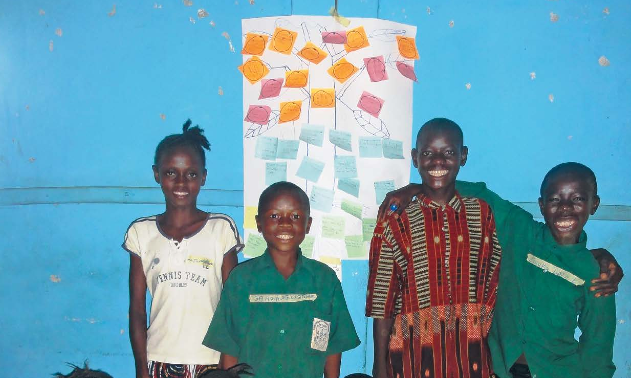
This guide has been developed for Save the Children’s health and nutrition staff and partners so they can better support the meaningful participation of children and young people in health and nutrition programmes. As defined by Save the Children, “[P]articipation is about having the opportunity to express a view, influence decision making and achieve change. Children’s participation is an informal and willing involvement of all children, including the most marginalised and those of different ages and abilities, in any matter concerning them directly or indirectly. Children’s participation is a way of working and an essential principle that cuts across all programmes and takes place in all arenas, from homes to government and from local to international levels.”
Besides the fact that Save the Children views children’s participation as a core principle of their rights-based programming approach, children play an important role in the nutrition of the family. In many parts of Asia, Africa, and Latin America, parents from the economically poorest families often have to leave home to find work. This regularly leaves children, especially girls aged from around six to 18, to act as the primary caregivers for their younger siblings. For that reason, it is important to equip children with the knowledge and skills they need to take care of their own health and that of other children in their care.
The guide focuses on opportunities for children’s involvement in maternal, newborn, and child health and nutrition, especially at the community and primary healthcare levels. It looks at the involvement of children at all levels of the programme cycle from design, implementation, and monitoring and evaluation, as well as their role as advocates to influence policy and practice on the health and nutrition issues.
The guide contains five sections:
Section 1: What is children’s participation? - provides a definition and brief descriptions of different types of children’s participation, with examples from health and nutrition sectors.
Section 2: Why is children’s participation important? - outlines the rationale for and benefits of children’s participation, with a focus on health and nutrition programming.
Section 3: Making children’s participation meaningful - provides a checklist using indicators for the internationally agreed basic requirements in children’s participation.
Section 4: How to involve children in health and nutrition programming - gives practical guidance to involve girls and boys of different ages in health and nutrition programmes, including practical activities and tools to involve children and young people in each stage of the programme cycle. The manual gives special consideration to children’s evolving capacities and how to reach and engage children under the age of five years in health and nutrition work. In particular, it includes information on:
- raising awareness among staff of human rights principles and involving children in understanding childhoods;
- involving children in analysing rights;
- involving children in the design of health and nutrition programmes;
- involving children in implementing health and nutrition programmes;
- involving children in monitoring and evaluation; and
- involving children in external influencing, advocacy and accountability
Section 5: Further reading - sets out resources that organisations might find useful on children’s participation in health and nutrition programmes.
Throughout, the manual provides hyperlinks to relevant tools/resources/videos that provide practical guidance on how to incorporate children’s participation.
English
92
Save the Children UK website on July 26 2017.
- Log in to post comments