










































HNI Madagascar: Information Via Mobile to Tackle Gender-based Violence
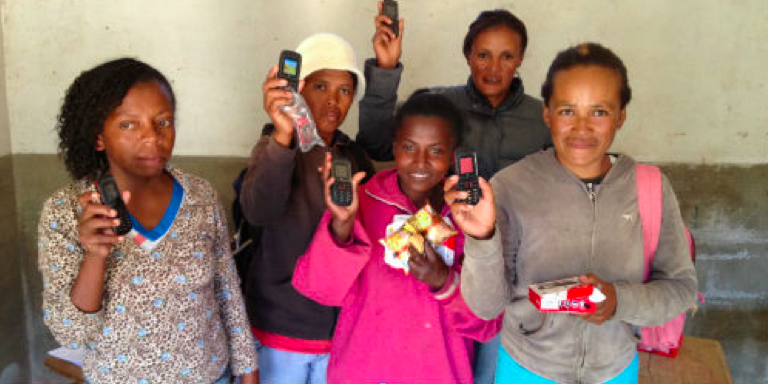
“The addition of gender content to the 3-2-1 Service is beginning to show evidence of positive social impacts for both male and female users and commercial benefits for Airtel.”
This case study describes the 3-2-1 mobile-phone-based information service in Madagascar and the impact of the introduction of gender content to the service. It outlines the journey to the development of the gender content, the positive social impacts for both male and female users of the service, the commercial benefits for the service provider, Airtel, and the lessons learned in the process.
As explained in the case study, 3-2-1 is a free, on-demand voice and text-based information service that has attracted over 3 million Airtel Madagascar subscribers since it launched in March 2010. The 3-2-1 Service is provided by HNI, an international non governmental organisation (NGO), and is branded and marketed by Airtel Madagascar. Before the addition of gender content, the 3-2-1 service provided information on water and sanitation, agriculture, land tenure, microfinance, family planning, health, and disaster response. After being awarded a GSMA Connected Women Innovation Fund grant in 2014, HNI conducted extensive consumer insights research, which informed the development of new gender content added to the 3-2-1 service. The consumer insights research confirmed significant gender inequality in Madagascar - many women are not aware of their rights, and gender-based violence is a major problem. In an effort to bridge this information gap, HNI created the first ever on-demand gender mobile information service for women in Madagascar.
To assess the commercial and social impact of the service, the project conducted continued monitoring and evaluation and data analysis based on service use and consumer surveys. The following key findings outlined in the case study are based on the results of this research:
Overall, the report states that the addition of gender content to the 3-2-1 Service is beginning to show evidence of positive social impacts for both male and female users and commercial benefits for Airtel. For example, introducing the gender content has allowed Airtel and HNI to:·
- Deliver content that was popular with customers - Six months after launch, 232,158 unique users had accessed the gender content, 50% of whom were women. Heavy marketing at launch helped to draw subscribers, and over half a million queries were received, making it the most popular content area on the 3-2-1 Service.
- See lower churn rates (the annual percentage rate at which customers stop subscribing to a service) - Users of the 3-2-1 gender content tended to have lower churn rates than the average Airtel subscriber, although it is not clear whether the service itself reduced churn. They also reported using their SIM more for voice and SMS since beginning to access the gender content.
- Generate positive brand perception - The vast majority of 3-2-1 users reported having a positive impression of the mobile operator after using the gender content and said they would recommend it to friends.
- Improve knowledge that ultimately led to behaviour change - The 3-2-1 gender content allowed users to improve their knowledge of human rights, education, and gender equality. Users, especially women, were not only able to recall the information communicated through the information service, but some also reported no longer being victims of physical and mental abuse by their husbands (also users) as a result of the 3-2-1 gender content. The 3-2-1 gender content includes information about the importance of equal decision-making in the household, and 91.3% of the female users surveyed reported participating more in decision-making. Some women also reported being inspired to open their own bank account and manage their finances as a result of listening to the gender content.
- Facilitate first-time SIM ownership for women - 7.1% of female users surveyed reported that the 3-2-1 gender content was one of the reasons they bought an Airtel SIM card, and 5% are estimated to be first-time SIM owners as a direct result of the gender content.
The research also showed that popularity of the gender content was uneven. Violence, Advice, and Education were the most popular topics, while Economic and Political Development were the least accessed ones. In addition, not all messages were played through to the end. The proportion of messages that were listened to more than 75% of the way through varied from 85% for Violence, Education, Economic and Political Development, and 39% for Advice and News. This shows the importance of understanding customers’ needs and usage before investing in content creation, as well as carefully monitoring usage.
Users were asked to select their gender when accessing the content so HNI could collect data on the gender of subscribers. Although there were challenges collecting this data - some users would select one gender, then the other, or exit the service at the gender question - the case study cites this as an effective way to gather gender data. “Collecting and analysing gender disaggregated data provided valuable insights when designing and adapting the services. In fact, users who identified themselves as female showed a much higher rate of SMS usage, which is perhaps an indication of their price sensitivity and level of mobile money usage (although usage remains minimal), compared to users who identified as male. These gender differences in usage offer useful insights into designing appropriate services for this segment.”
GSMA website on July 20 2016.
- Log in to post comments