










































Health Workers' Perceptions and Challenges in Implementing Meningococcal Serogroup A Conjugate Vaccine in the Routine Childhood Immunization Schedule in Burkina Faso
United Nations Children's Fund (UNICEF) Ouagadougou (Nkwenkeu, Fall, Hien); U.S. Centers for Disease Control and Prevention, or CDC (Jalloh, Walldorf, Oumar Diallo, Krishnaswamy, Hatcher, Patel, Novak, Hyde, Soeters); Institut National de Statistique et Démographie (Zoma); Davycas International (Tarbangdo, Aké); Ministère de la Santé, Ouagadougou, Burkina Faso (Combassere, Ky, Kambou, Medah); UNICEF New York (Mirza)
"To identify opportunities to equitably increase coverage of MACV and MCV2 in Burkina Faso, perceptions of emerging community demand barriers reported by health workers in this assessment must be further examined."
Multiple supply- and demand-side factors impact access to and acceptance of vaccines. Obstacles to achieving optimal childhood vaccination coverage include, for example, socio-cultural influences, parental knowledge, and normative attitudes. One year following the introduction of meningococcal serogroup A conjugate vaccine (MACV) into the routine childhood immunisation schedule (15-18 months) in Burkina Faso, an assessment was conducted to qualitatively examine health workers' perceptions of MACV introduction, identify barriers to uptake, and explore opportunities to improve coverage. The paper offers recommendations to improve effective administration of vaccines in the second year of life (12-23 months of age).
The researchers note that the second dose of measles-containing vaccine (MCV2) is given at the same time as MACV (15-18 months of age), yet national MCV2 coverage in Burkina Faso was estimated to be only 50% in 2017 - despite having been introduced into the routine childhood immunisation schedule years earlier (in 2013), and in contrast to the nearly 100% coverage of MACV reported during mass vaccination campaigns that began in 2010. The high community demand observed for MACV was seen as a way to improve MCV2 uptake (to reduce high dropout rates), because both vaccines are co-administered at the same visit.
Data collection took place during February and March 2018 and was conducted by teams comprised of an interviewer and a note-taker, all of whom were from Burkina Faso and had prior experience in qualitative methodologies. They conducted 12 in-depth interviews (IDIs) with regional health managers (n=4), district health managers (n=4), and frontline healthcare providers (n=4) in 4 purposively selected districts in Burkina Faso. Districts were selected to include urban and rural areas as well as high MCV2 (Mangodara and Ouahigouya) and low MCV2 (Koupela and Baskuy) coverage areas.
Four crosscutting themes emerged; no meaningful differences were observed between high and low MCV2 coverage areas or between rural and urban areas. Some of the central communication-related elements are highlighted below:
- Supply and health systems barriers - For example, in some cases, respondents have used their personal finances to conduct community awareness and outreach. One respondent reported that the introduction of MCV2 at the 15- to 18-month visit was not preceded by proper training and supportive supervision.
- Demand-related barriers - Respondents suggested their environment is influenced by an array of socio-cultural factors that might drive or impede vaccination uptake. For instance, they referenced high illiteracy among caregivers, which they believed can lead to poor management of the child's vaccination card. Relatedly, misperceptions about meningitis prevention and the MACV have been gaining traction in some rural communities, where vaccination outreach is often difficult because of long travel distances. The influence of traditional healers, who are not always supportive of modern medicine, was raised as a source of vaccine hesitancy in some communities. Some managers said that pockets of people in communities resist vaccination based on their religious beliefs, especially in isolated areas. In some cases, respondents believed that caregivers with children close in age would become discouraged to attend vaccination sessions because of the social stigma associated with having closely-spaced children. Also, activities related to the livelihood of community members (e.g., subsistence farming) prevent some caregivers from returning with their children for scheduled vaccinations, according to the interviewees.
- Specific challenges related to MACV and MCV2 co-administration - For example, several respondents noted that some caregivers are concerned about their children receiving multiple injectable vaccines in a single visit. To address such concerns, health workers pointed to the need to raise caregiver awareness and knowledge regarding the timeliness and importance of the 15- to 18-month visit for MACV and MCV2. They suggested that improving demand for MACV and MCV2 vaccination will require strengthening caregiver engagement, especially in rural communities where the level of caregiver education remains low.
- Motivations and efforts to improve vaccination coverage - According to respondents, caregivers' motivations for vaccination revolved around the desire to keep their child healthy. Overall, health workers perceived that MACV was a source of motivation for caregivers to bring their children for the 15- to 18-month visit when MCV2 is also administered. Caregivers were said to appreciate the implementation of community outreach activities and to respond favourably to non-cash incentives to mothers of fully immunised children (such as long-lasting insecticide-treated bed nets).
Among the reflections the researchers share in the discussion section of the paper: "According to respondents in this study, only few and isolated cases of active vaccination refusal, which were largely attributed to religious beliefs, have occurred. These results also indicate that passive refusal may stem from other underlying mistrust of authorities, coupled with personal beliefs and the influence of local traditional healers. Taken together, these factors may lead to vaccine hesitancy in some communities, which has also been observed in previous studies..."
In addition, the researchers note that health workers in the assessment considered interactions between caregivers and health workers to be important factors for complete vaccination. Respondents emphasised their inability to engage in health education with caregivers during immunisation sessions because they are overloaded with many competing responsibilities. This finding is consistent with prior studies.
Taken together, these results point to the need for adequate operational and programmatic planning, health worker training, and clear policy communication to help ensure that health workers do not refrain from opening multi-dose vials for small numbers of children; this could help improve missed opportunities for vaccination for both MCV2 and MACV. Finally, health workers should appreciate that "vaccination in second year of life is an integral part of health services and build interpersonal communication skills to address socio-cultural beliefs and improve caregiver awareness of the need for timely and up-to-date vaccination."
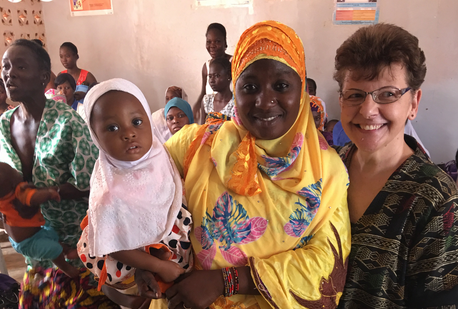
BMC Public Health (2020) 20:254. https://doi.org/10.1186/s12889-020-8347-z. Image caption/credit: "UNICEF Rep DR Anne Vincent at Dassasgo health center for the introduction of MenAfricVac Vaccine to combat meningitis" - UNICEF Burkina Faso via Twitter
- Log in to post comments