










































Guideline for Gender Sensitive Conflict Reporting for Media in Ethiopia
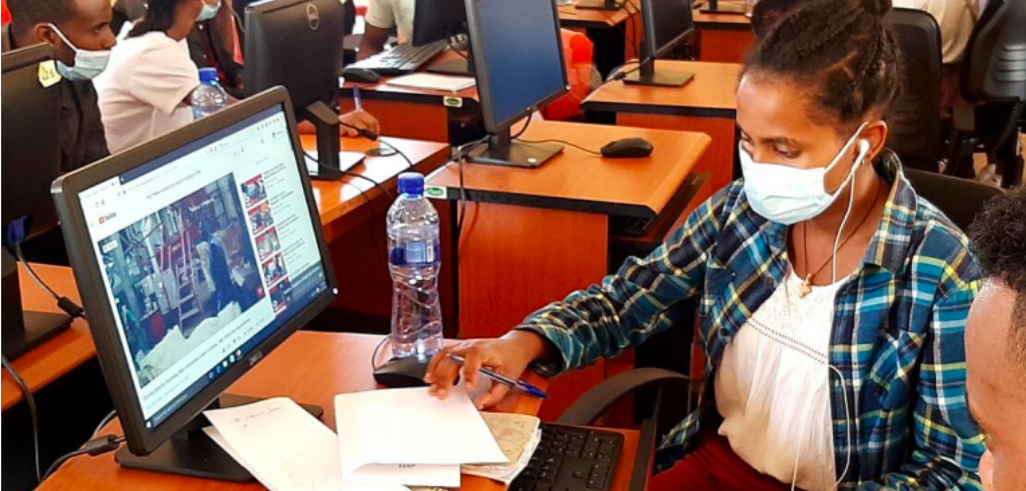
"Media has a critical role to play in changing the narrative on women, especially in conflict situations."
This guidance document is designed to support journalists and media practitioners in Ethiopia to become more gender sensitive in their conflict reporting. It provides guidance on ways to avoid gender stereotypes and gender biases when reporting on conflicts, as well as explanations on the essence and significance of gender-sensitive conflict reporting and ways of minimising harmful approaches to conflict reporting. The guideline emerged as part of a broader skills-building effort by the United Nations (UN) Women Ethiopia Country Office in collaboration with the Ethiopian Media Authority to build the capacity of journalists on gender-sensitive conflict reporting and peace journalism.
As explained in the introduction, Ethiopia is a country that is prone to conflict with frequent tensions between political parties, groups, and regional states. It is, therefore, important that reporting is conflict-sensitive and does not aggravate tensions or cause conflict to escalate. At the same time, there is also a need for gender-sensitive conflict reporting that tells balanced stories that include the voice of women and that critically analyse the different impacts of conflict on women and men. As stated in the guideline, this is "not only a matter of changing narratives and challenging stereotypes, but also a matter of basic journalism ethics to tell balanced stories of all stakeholders".
The guideline is intended for journalists, editors, media practitioners, experts, and other stakeholders who are interested in improving their understanding of gender-sensitive conflict reporting. It is particularly intended for journalists who report on cases of conflict and violence for newspapers, radio, television, or online media outlets.
The resource is structured along eight principles for gender-sensitive conflict reporting:
- Be aware of the complexity of conflicts (conflict analysis).
- Diversify news sources and the content.
- Employ gender-sensitive interview techniques in conflict news.
- Ensure balanced representation of women in conflict news.
- Avoid stereotypes in visuals.
- Use both gender- and conflict-sensitive language.
- Report gender-based violence in conflict.
- Respect the privacy of conflict and gender-based violence survivors.
Under each principle, the guideline includes the following sections:
- An explanation of the principle;
- Know: key points that media professionals are expected to know about each principle;
- Do: key actions that media professionals should take based on an understanding of the "Know" section;
- Expected challenges: potential challenges journalists might face while trying to implement the principle;
- Possible solutions: recommended solutions for the potential challenges listed. These recommendations are not set in stone but are, rather, pointers and methods journalists and other users can refer to and implement according to their context and the availability of resources;
- Examples: when applicable, examples of actions on the ground that are related to a principle; and
- Blue Pages: included in some of the principles to offer deeper insight into the concepts associated with the particular principle.
UN Women Africa website on November 22 2023. Image credit: Fojo Media