










































Geração Biz
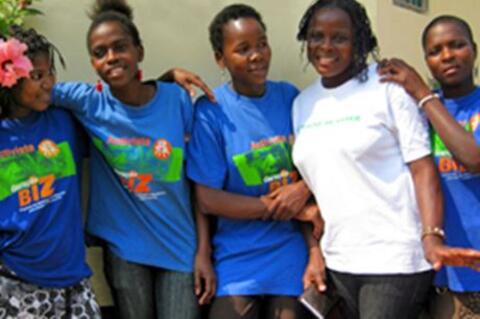
This initiative is centred around the active participation of young people and the active involvement of the government at different levels. Young people not only participate in the programme design, implementation, and evaluation but also identify new areas that are of importance and advocate for the programme to respond to these needs. The central components of Geração Biz are:
- Youth-Friendly Health Clinics: Geração Biz increases access to gender-sensitive, youth-friendly clinical and counselling services by establishing adolescent-only clinics as well as integrating youth-friendly health services (YFHS) into existing public sector facilities.
- School-Based Interventions: The programme trains students in more than 300 schools to advise and empower their in- and- out of school peers on topics such as sexuality, teen pregnancy, abortion, and STI/HIV/AIDS. Students use counselling, drama, films, group debates, and youth discussion centres.
- Community-Based Interventions: The programme works to establish centres where young people can go to receive counselling and condoms. It also sponsors events such as national soccer, music, and theatre competitions, and encourages young people to help in preparing and airing community radio programmes.
- Peer Education: The project supports a cadre of approximately 5,000 peer educators, who are trained to reach youth in their schools and communities with information on services, life skills, and contraception.
- HIV/AIDS Support: The project hosts a support group for HIV-positive youth that meets each week for several hours to discuss challenges of being positive with project and clinic staff. Opportunities for youth development are also offered.
To enable these activities, in the initial stages of the project, Pathfinder International worked with the Ministry of Health to adapt and translate its training curriculum on YFHS. This training curriculum was adopted by the Ministry of Health and used to conduct two trainings of trainers (TOTs). Planning for future expansion, the TOTs included not only trainers from the two pilot sites but also from other provinces. These trainers then conducted step-down training for service providers from Maputo city and Zambézia. Participants were selected by their supervisors based on the following criteria: willing to work with adolescents, willing to learn, friendly, open, and able to communicate and treat people with respect. The training included both theory and practice covering topics such as adolescent development, communication with adolescent clients, STI prevention and treatment, HIV prevention, the negative impact of AIDS, counselling, contraceptive options for adolescent clients, pregnancy, gender-based violence and gender, and making services more youth-friendly.
Capitalising on the efficacy of social marketing techniques to reach young people, the programme worked with young people to develop the brand name "Geraçaõ Biz" ("Busy Generation"). The brand name and logo were used at all YFHS service delivery points, schools, and youth centres as well as in the promotion of programme activities. Once YFHS were established, meetings were conducted with the community and participating schools to make them aware of the services and how to access them. Selected facilities were rehabilitated and refurbished on the basis of the assessment results. Young people were involved in decisions on how to arrange the space for YFHS and how services should be set up. Particular attention was placed on improving visual and auditory privacy and ensuring that essential equipment was available.
When youth clients come to the YFHS facility for the first time, they are greeted and asked to fill out a registration card. While waiting to be served, youth clients either watch videos on ASRH or HIV prevention or talk to peer educators who work at the facility. If the client is sexually active, the provider discusses a range of contraceptive methods, the advantages and disadvantages of each method, the fact that only condoms prevent STI/HIV, and then demonstrates how to use a condom. The provider may also discuss self-esteem, life skills such as negotiation skills, or other issues like relationships with parents or family. If there is a problem that the provider cannot address, the patient is referred.
Given the dearth of monitoring tools and management information system (MIS) formats that captured youth data, a great deal of effort went into the development of a monitoring system and accompanying tools. This was seen as an essential task given the need to use data and lessons learned from the pilot phase to inform the design and implementation of subsequent scale-up to other provinces.
Youth, Sexual and Reproductive Health, HIV/AIDS.
According to figures provided in "From Inception to Large Scale: The Geração Biz Programme in Mozambique" [PDF], HIV prevalence in Mozambique is 16.2%, with young people under the age of 25 accounting for 60% of new HIV infections and young women aged 20-24 being infected at a rate that is triple that of men the same age. Lack of education, combined with unequal distribution of power between men and women, intergenerational sex, urban and cross-border migration, and unemployment are contributing factors to the spread of HIV in Mozambique, and especially to the high rate of infected young women. Among those aged 20-24, sexual debut for females is 16 years and 16.9 years for males. Although 44% of married adolescents know of at least one modern contraceptive method, 83.3% of young women aged 15-24 who had sex in the previous three months and 75.6% of young men reported not using any contraceptive method in the most recent sexual encounter. The 2003 Demographic and Health Survey (DHS) showed that 41% of women aged 15-19 had entered motherhood or were pregnant.
Ministries of Health, Education, and Youth and Sports, and Pathfinder International. Support provided by the United Nations Population Fund (UNFPA), the Danish International Development Agency (DANIDA), Swedish International Development Cooperation Agency (SIDA), and North American Aerospace Defense Command (NORAD).
- Log in to post comments