










































Farmer Radio in Sub-Saharan Africa: A Snapshot Final Report of the African Rural Radio Program Analysis (ARRPA) Project
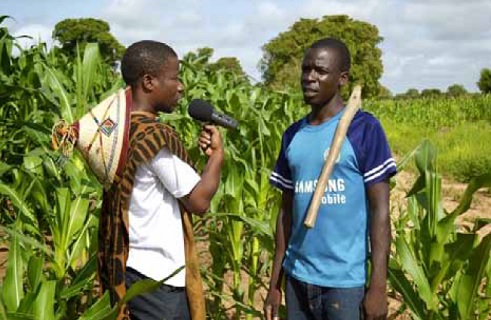
This report discusses the findings of the African Rural Radio Program Analysis (ARRPA) project, a study launched in 2011 by Farm Radio International (FRI) to deepen understanding of farmer radio programming in sub-Saharan Africa and help inform the work of FRI and other organisations working with farmers. The report discusses "the circumstances in which farmer radio programming operates, the strengths of radio stations and the challenges they face in producing farmer programmes, and the desires and preferences of farmer-listeners..."
The ARRPA project was initiated to fill in knowledge gaps about farmer radio programming in Ghana, and "documented a host of details, including: how farmer programs are put together, the resource challenges that stations face, listener preferences, and to what degree these programs inform farmers, are respectful of farmers, engage and entertain farmers, and include farmers’ own voices. " It involved in-depth investigations of the farmer radio programmes of 22 radio stations in five sub-Saharan African countries (Cameroon, Ghana, Kenya, Malawi and Tanzania), and included multi-day station visits and gathering listener perspectives.
The first section of the report discusses the nature of African farmer radio programmes, and farmers' preferences. As stated in the report, there is wide diversity - with stations being community, public, private and religious; and programming covering a wide range of broadcast areas, times, language, audience, formats and approaches. Overall, farmers listen to these programmes to gain information and hear about other farmers’ experiences. Radio is an accessible medium and "most participants appreciate programs which present a variety of topics geared to farmers, including innovations and alternatives to traditional methods, and new information on harvesting, planting, and applying chemicals. Farmers noted that, after listening to these programs, they can discuss the content with colleagues, family, and friends for further learning." On the other hand, farmers indicate that they would like to see more participation from farmers, and make the point that their ability to put into practice what is discussed on air is limited by their own resources.
The report shares a number of best practices gathered during the study, on aspects such as programme production, collaboration, encouraging farmer-listener feedback, station and organisational practices, content, and programme components, among many others. Based on this, the report outlines a number of challenges to be addressed, such as the importance of training and retaining staff, collaborating with extension agents, and engaging more with farmers.
The study also specifically reviewed the engagement with and use of FRI materials by the radio stations. "Overall, it appears that FRI services – Resource Packs, Farm Radio Weekly, and the Voices newsletter – are well-used and useful to those who receive them. These materials were judged by stations as easy to understand, often relevant to local situations, attractively packaged, and written in clear language."
The report offers a wide range of key findings. A few selected points are outlined below:
- "One of ARRPA’s key findings is the apparent mismatch between stations’ sense that they have strategies in place to include farmers in programming and many listeners’ feelings that they are not sufficiently included."
- All stations broadcast their farmer programmes in local languages and most broadcast at times convenient for farmers; some stations use guest experts appropriately, have good quality audio, offer repeat broadcasts, include dramatic elements or music, and feature women and men farmers.
- On the other hand "few stations use formats that encourage farmer discussion. Only two included a phone-in or text-in segment in their broadcast. Stations often did not use local music (a stated farmer preference) or provide farmers with opportunities to discuss important matters. Few stations provide engaging introductions to their farmer programmes or offer previews of upcoming programmes."
- "Many listeners wish that farmers could participate more frequently in farmer programs, with several suggesting that their station produce on-location broadcasts. Listeners also want more local market information, improved sound quality, more repeat broadcasts, more local music, and want broadcasters to use language that is easier for farmers to understand."
- There is a correlation between a station’s level of resources and their ability to produce quality programming, stations with the lowest level of resources have the most difficulty.
The report offers a wide range of recommendations for stations and FRI. For radio, specific suggestions include using more modern equipment, local music, and internet research to improve content, while also encouraging the involvement of farmers in both production and broadcast. Programmes would also benefit from using drama, clear non-technical language, and more market information.
For FRI, the following are among the recommendations:
- Training: African framer programming would benefit from ongoing support and capacity building to improve knowledge and technical skills in production and broadcasting. As well, by establishing systems to share what's working and what's not, FRI can help to support mutual learning. It is noted that FRI should work with state and public broadcasters as they have greater resources and wider reach, yet face many of the same challenges as other stations.
- Support: Weather is one of farmers’ major concerns and FRI could partner with organisations to provide useful agricultural weather forecasting services to radio stations. Some revisions to make FRI's Resource Packs more readable would be useful, as would more targeted region specific information.
- Overarching: The ARRPA data was gathered mainly from stations where the colonial language was English, "given that almost half of FRI’s broadcasting partners are in Francophone Africa, and that the culture of radio in Francophone Africa is different from that in Anglophone Africa, FRI should conduct an ARRPA in Francophone Africa"
Note: Based on lessons learned, FRI produced a document entitled "75 Ways to Fix Your Farmer Programme", which addresses many of the shortcomings that were identified in individual farmer programmes. See Related Summary below.
Click here to read a summary of the report entitled "Africa Rural Radio Program Analysis (ARRPA) - Understanding the State of Farmer Radio Programming in sub-Saharan Africa".
Farm Radio International website on December 12 2014.
- Log in to post comments