










































Family Literacy Project
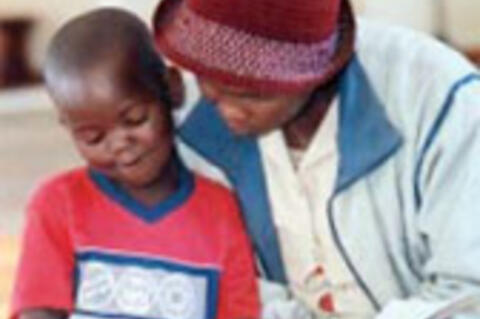
The FLP held workshops that provided opportunities for adults to discuss, learn, and experiment with ways they could use everyday experiences and materials to build early literacy skills in their children. Community members chosen by the FLP groups became facilitators and were trained in adult literacy, early literacy, and the participatory REFLECT approach (For details on the latter approach, click here.) Teaching units were developed to meet the interest of family literacy group members on topics such as child protection, committee skills, and HIV/AIDS. The facilitators work in villages in deep rural areas of southern KwaZulu-Natal, using school classrooms, community halls, churches, and community libraries for meetings.
Meeting twice a week to discuss a range of issues as well as to improve language and literacy skills, the family literacy groups organised by FLP initiate the following activities to improve literacy skills:
- Community notice boards: This project has been designed to provide an opportunity for group members to display their literacy skills and also share information gained from the topics covered in the sessions. One group member is responsible for organising the notice board and for encouraging others to contribute to the displays.
- Pen friends: This project gives group members an opportunity to write and exchange letters to other neighbouring groups.
- Newsletter: This started when group members were asked to write to the FLP. These letters were printed, followed by a few pages with news and then photographs. The newsletter is laid out and filled with news from the different groups.
- Umzali nengane (parent and child) journals: These include the conversations they have about a chosen picture pasted on a book supplied by FLP.
- Box libraries and book clubs: During a box libraries workshop, some women had a conversation about the children's books they had been loaned. This evolved into a more formal book club, which has since spread to every group.
- Community libraries: A group member's visit to her neighbours about whether they would use a library resulted in a container library being implemented.
- Home visiting: The group members' desire to spread the message of early literacy gave rise to the home visiting scheme. The women take books with them to read to children; they also talk to mothers about their role in their children's development.
- Child-to-child groups: Over 200 primary school children meet once a week to read, draw, and discuss different topics. These topics often mirror those of the family literacy groups, so links between family members are nurtured.
- Teenage sexuality groups: These groups are run separately for boys and for girls to discuss issues of sexuality, especially as they relate to HIV and AIDS.
- Health support groups: These began in 2004 as a response by the FLP to the numbers of women caring for orphaned children. A consultant, Chris Gibson, had trained the facilitators in the key messages of the international Integrated Management of Childhood Illnesses (IMCI) project, and this information is passed on to others as part of the home visiting scheme.
- Community projects: Community projects that some FLP groups are managing are a sewing group, a vegetable tunnel, and a chicken project.
Children, Education, Literacy
FLP project came about after research, conducted by Khulisa Management Services, found no improvement in the early literacy levels in preschoolers, despite training and support provided through the national Department of Education. According to FLP, it is estimated that one million children in South Africa live in families where no adults are literate. The organisation believes that a family can prepare children to read and develop a love of books that will lay the foundation for future learning, relaxing, and enjoying books. Furthermore, FLP reports that a participatory rural appraisal conducted late in 2000 showed that the adults wanted to improve their own literacy.
FLP website on March 27 2009.
- Log in to post comments