










































Evaluation of United Nations-Supported Pilot Projects for the Prevention of Mother-to-Child Transmission of HIV
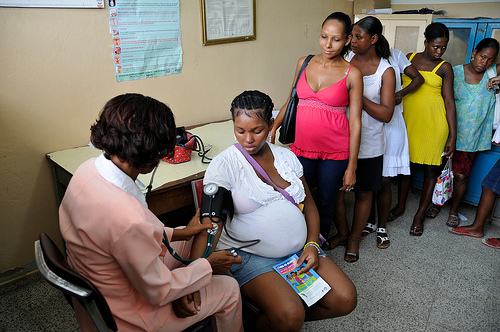
Worldwide, approximately 800,000 children a year get HIV infection from their mothers - either during pregnancy, childbirth, or breastfeeding. Seven of each 8 of these children live in sub-Saharan Africa, and most of the rest live in South and Southeast Asia. To address this situation, the UNAIDS Secretariat, UNFPA, UNICEF, and WHO launched the Inter Agency Task Team (IATT) on prevention of mother-to-child HIV transmission (PMTCT). This group funded the undertaking of pilot PMTCT projects in a variety of sites in 11 countries: Botswana, Burundi, Cote d'Ivoire, Honduras, India, Kenya, Rwanda, Tanzania, Uganda, Zambia, and Zimbabwe. The pilots aim to test the feasibility and sustainability of carrying out PMTCT programmes in settings typical of resource-constrained countries, to measure impact, and to guide expansion of successful programmes and introduction of new initiatives in other countries.
Horizons/Population Council carried out this evaluation between March and December 2002 in consultation with UNICEF and the IATT. The evaluation employed a mix of qualitative and quantitative methodologies, including a review of progress reports from the country pilots; interviews with key informants; rapid assessments of pilot sites and their surrounding communities, site visits, and face-to-face interviews with programme managers in Rwanda, Zambia, Honduras, and India; and a collaborative analysis meeting with PMTCT experts. The evaluation also drew on the Horizons studies in Kenya and Zambia that are described in a related Horizons publication (click here for access).
This 49-page evaluation identifies the benefits of introducing PMTCT into existing maternal/child health services, which appear to go far beyond providing antiretroviral (ARV) drugs. In addition to demonstrating these and other programme impacts, this evaluation explores feasibility and coverage, factors contributing to coverage, programme challenges, scaling-up strategies, and the case of low-prevalence countries. Highlights of the findings include:
Feasibility and Coverage:
PMTCT programmes are feasible in low-resource settings, but still face many challenges. Between January 2000 and the end of June 2002, pilot sites had counseled 385,000 women, given HIV tests to 280,000, and prescribed ARV prophylaxis to almost 12,000 women. Yet on average, 30% of women who visit the PMTCT sites for antenatal care (ANC) are not counseled on PMTCT. Of those women who do receive counseling, 3 out of 10 are not tested for HIV. Of those women who test positive, just under half receive antiretroviral drugs. "Although these proportions have increased over time, raising them further remains a critical task for program managers and PMTCT advocates."
The coverage of PMTCT counseling is increasing but staff shortages and service delivery organisation continue to affect uptake. Broad averages mask significant differences in the coverage of PMTCT counseling across countries (the percent of women who come to clinics for ANC receiving individual HIV pretest counseling ranges from less than 25% in Zambia to over 90% in Burundi and Rwanda). "An important trend is the tendency for pilot sites to increase the proportion of women they are able to offer pretest counseling over time." This was the case in India, Kenya, and Uganda, where, by the end of the evaluation period, clinics were counseling over 90% of clients.
While including HIV tests as part of routine ANC increases the proportion of women who are tested, some do not collect test results. The percentage of women who accept an HIV test after counseling ranges between 64% and 83%. The evaluation found that providing high-quality counseling and making the test a routine part of ANC can motivate women to be tested. However, studies in Kenya and Zambia suggest that about 25% of women do not get their results, perhaps because they change their minds, were never sure about the benefit of taking the test, or face partner opposition.
ARV provision is working well, but coverage remains a challenge. In 9 of 11 pilot countries only between 40% and 60% of women who test positive for HIV at the PMTCT site get ARVs. Moreover, in most countries, 25% or fewer of all HIV-positive pregnant women receiving ANC services ultimately get a short course of ARVs. "Although still too low, this proportion has shown an encouraging increase over time."
A PMTCT Health Information System is a critical management tool. This system would collect information on the number of women using various PMTCT services in order to monitor and evaluate the volume of services provided and to find out how successful the programme is at reaching women in need.
Programme Challenges:
- Communication activities to mobilise communities lag behind clinical services
- Attention to engaging male partners is insufficient
- Each country needs to develop or adapt HIV and infant feeding counseling guidelines based on local conditions - despite training, staff knowledge and
counseling abilities remain weak - PMTCT programmes need to strengthen related antenatal, family planning, and primary prevention services
- PMTCT pilot programmes vary widely in the development of care and support services (Botswana, with adult HIV prevalence above 35%, is a notable success: It provides access to hospital resource centres that provide information and counseling to women and their partners, sponsor support groups for people living with HIV/AIDS, and offer home-based care, tuberculosis treatment, and ARV therapy).
Reasons for and Evidence of Programme Successes:
Motivated health workers are key. PMTCT pilot programmes trained nearly 3,300 health workers on topics that include the minimum package for PMTCT, general counseling skills, infant feeding counseling, and laboratory tests. Acquiring the tools to help clients and their infants avoid infection gave staff a sense that they could do something about the disease and made them more supportive of HIV/AIDS-affected clients: The evaluation documents examples of newly trained staff who are now working to reduce stigma against HIV-positive clients and devoting extra effort to caring for and supporting women living with HIV. The evaluation team found that good management practices and strong leadership can help in this regard; at the Kicukiro Health Center in Rwanda, for example, the director motivated her staff by personally promoting the PMTCT programme.
PMTCT programmes have expanded HIV/AIDS education, which has led to increased levels of knowledge about PMTCT among clients and within the community. For example, according to progress reports prepared on pilot PMTCT sites in India, the proportion of pregnant women who knew how to avoid HIV infection increased from 50% to 85% after they had received counseling, and the proportion who knew how to avoid mother-to-child HIV transmission rose from 36% to 88%. Interviews with clients at pilot sites in Zambia and Rwanda revealed that their new knowledge helped overcome feelings of helplessness about HIV/AIDS. The evaluation found that PMTCT programme staff are generally able to tailor the information and counseling they provide to the circumstances and concerns of their clients.
Involving male partners can make a real difference in improving women's uptake of PMTCT services. When outreach efforts successfully engage men, they are far more likely to support women at critical turning points (e.g., deciding whether to take an HIV test, returning for test results, taking ARVs, and practicing safer infant feeding methods). Attempts to involve male partners were found to be most successful when they provide information about HIV and PMTCT directly to men outside of the antenatal or maternal/child health clinic setting, which many men perceive as the exclusive realm of women. For example, in rural Keemba and Monze, Zambia, programme staff approached male leaders to promote PMTCT among the men in their communities, which has led to higher levels of male involvement in PMTCT decision-making and in uptake of voluntary counseling and testing (VCT) services. Similarly, PMTCT programme managers in Kenya developed strategies to inform male partners about PMTCT services such as providing community education on PMTCT in places where men congregate, organising support groups for men, and directly inviting men to the clinic for HIV counseling and testing.
Based on these and other findings, evaluators advance a series of recommendations; among them are approaches for increasing coverage and improving infant feeding counseling which include:
- supplementing clinic staff with lay counselors
- introducing rapid HIV tests so women can receive counseling, testing, and results on the same day
- improving the quality of counseling by providing job aids and active supervision
- offering psychosocial and material support to PMTCT providers
- partnering with community groups to offer community education and outreach.
Click here for the full paper in PDF format.
Click here for a related evaluation entitled "Integrating HIV Prevention and Care into Maternal and Child Health Care Settings: Lessons Learned from Horizons Studies".
"How Implementing PMTCT Services Expands HIV Prevention and Care", by Carolyn Baek of Horizons/Population Council, Horizons Report - Operations research on HIV/AIDS, December 2003 - forwarded to the Women and Health online discussion on January 10 2005. Image credit: Pan American Health Organization (PAHO)
Comments

- Log in to post comments