










































Evaluation of Soul City 6
Soul City Institute for Health and Development Communication
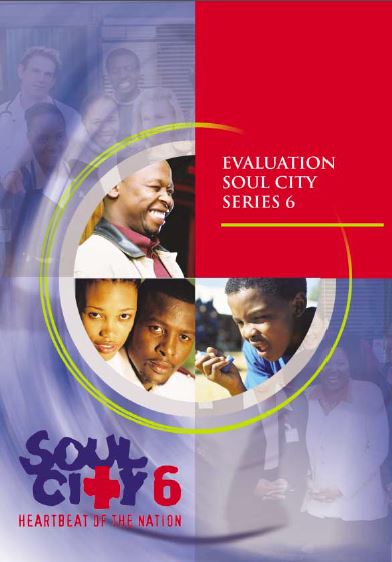
This 36-page summary document offers highlights of a full evaluation of the sixth edutainment series of Soul City, which consisted of a television drama, radio drama and print materials dealing with the issues of HIV/AIDS and children, xenophobia, asthma, depression and adult learning. The sixth series of Soul City consisted of thirteen 1-hour episodes of television drama broadcast on SABC1 between June and August 2003 at 9pm. The 15-minute radio drama was broadcast in 9 African languages between January and June 2003 on the SABC African Language radio stations. Three full-colour booklets were distributed at the same time as the television programme (Talking about Asthma, Children and AIDS, and Depression).
The evaluation was a national before-and-after panel study with a national sample of 1500 adults and 1500 children. The data were analysed using a variety of methods including multiple logistic regression models and propensity score analysis. In this way various demographic variables such as age, education, access to media, sex, area and race were controlled for as well as access to other possible large media interventions (which could be confounders).
The evaluation found that recognition of the Soul City logo remains high, with over 80% of adults and a higher percentage of children recognising it. 53.5% of adults and 61.5% of children had watched the television show, while a third of adults and 26% of children had listened to the radio programme. The various Soul City booklets were recognised by about one-third of adults, and read by about half of those who recognised them. This means that Soul City 6 reached over 9 million adults and 2 million children.
The Soul City television audience is largely young, with the highest access in the 25-29 year age group (66.5%), and lowest in the 60-69 year age group (37.5%). The distribution of Soul City 6 radio listeners was relatively even from 17-39 years old and then dropped off in the older age groups. Soul City TV was still very popular and rated second among the most popular programmes. Just over a third of the audience said they love Soul City, and a further half said they like it.
The evaluation results suggest that Soul City 6 succeeded in raising awareness of Adult Basic Education Training (ABET) classes, and in shifting personal and gender attitudes about adult learning. The programme reached substantial numbers of the South Africa population, and was mostly enjoyed and appreciated by its audience. The impact of Soul City was not even across various topics but was particularly successful with regard to the topic of HIV/AIDS, where change has been shown not only in awareness, attitudes, subjective norms and interpersonal behaviour, but also in action taken to support and care for people with HIV/AIDS.
Soul City website on July 18 2005.