











































Effectiveness of a Comprehensive Sexual and Gender-based Violence Prevention Project for In-school Girls in Swaziland
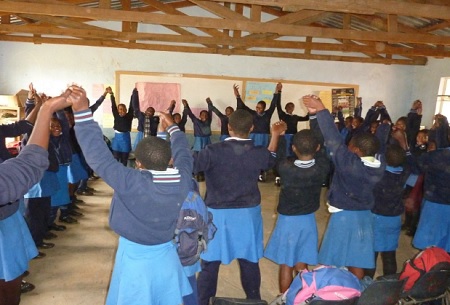
This 22-page report shares the experience of the Swaziland Action Group Against Abuse (SWAGAA) to use a "Safe Spaces" approach to build girls' social assets in order to mitigate sexual and gender based violence (SGBV). The goal of the Girls' Empowerment Clubs Plus (GEC-Plus) project was to prevent SGBV and improve reporting such cases among in-school girls. This is seen as particularly important given evidence linking SGBV with HIV/AIDS. An evaluation study found that "the GEC-Plus interventions were effective in improving girls' social assets, increasing their awareness, and positively changing their attitudes towards SGBV. The interventions were, however, less successful in changing the possibility that the students would decline sexual advances from fellow students or teachers."
The report notes that the high level of incidences of physical and sexual violence increases girls' risk of HIV/AIDS. A 2007 national survey found that "approximately 40% of [young women aged 13-24] reported lifetime experience of physical or sexual violence, while among girls in secondary school (aged 13-17 years), 13% reported that their first sexual experience was coerced." As well, among girls aged 13-17 years, "only 37% reported that their first sexual experience was voluntary, while the rest said it was through persuasion (39%), trickery/deception (13%), or rape (10%)." Although most cases occur in homes or the community, the report states that "among incidents of sexual violence experienced before age 18 in Swaziland, 10% occurred at school and another 10% on the way to and from school. In addition, 2% of incidents of sexual violence before age 18 were perpetrated by a teacher." However, these statistics do not take into account likely low rates of reporting.
The GEC-Plus project, implemented by SWAGGA in partnership with the Population Council, sought to build girls' social, economic, and leadership "assets." The core elements of the approach are: a safe place for vulnerable girls, friendship structures, and mentors. The approach involves a cascading leadership model whereby older girls from the community are recruited and trained to be mentors to the girls' groups. "These groups meet and build friendships, as well as are encouraged to engage in an income generating activity. Girls who graduate from the programme can be trained as mentors for the next group; they therefore have access to mentors as well as develop and practice leadership skills." The approach included revising existing club training curriculum and manuals, sensitising school authorities and students, selecting and training mentors, recruiting participants, and conducting GEC-Plus sessions.
The evaluation showed the following results (as excerpted from the executive summary):
- "There were significant improvements in girls' social assets as a result of the interventions: There were significant increases between baseline and endline in the proportions of girls that reported that they were engaged in an income-generating activity (from 6% to 13%), had many friends in the neighbourhood (from 41% to 52%), had two or more close friends they could confide in (from 60% to 74%), or that they were taking part in extra curricula activities (from 68% to 100%).
- There were significant improvements in awareness about sexual and gender-based violence among girls as a result of the interventions: The proportion of students who reported that girls in their institutions were teased or subjected to verbal sexual harassment significantly increased from 24% at baseline to 38% at endline. In addition, the proportion of girls that reported being subjected to sexual comments by fellow students at their current institutions significantly increased from 19% at baseline to 34% at endline. Similarly, the proportion of students that reported being physically abused in the community significantly increased from 24% at baseline to 40% at endline. The proportion of students that reported ever experiencing any form of sexual and gender-based violence either at school or in the community also significantly increased from 50% at baseline to 67% at endline. There was also a significant increase in the proportion of girls that reported prevalence of theft or stealing in their schools from 47% at baseline to 57% at endline.
- There were some improvements in the likelihood that girls would report incidents of sexual harassment: The proportion of girls who indicated they would report incidents of sexual comments by another student to teachers, the school principal, or the police significantly increased from 41% at baseline to 57% at endline. Nonetheless, there was no significant change in the proportion of students that indicated that they would report sexual comments by a teacher to fellow teachers, the school principal, or the police (from 38% at baseline to 40% at endline).
- The interventions did not have any effect on the likelihood that girls would decline sexual advances from students or teachers: There was no significant change between baseline and endline in the proportion of students that reported that they would decline sexual advances from a student (69% at baseline and a similar proportion at endline) or from a teacher (47% at baseline and 43% at endline).
- There were significant positive changes in the attitudes of students regarding sexual and gender-based violence: Students reported significant positive changes in 13 out of a total of 21 items used to measure attitudes towards SGBV. The changes were characterized by significant increases between baseline and endline in the proportions of students who disagreed with statements that justified sexual and gender-based violence as well as significant increases in the proportions that agreed with statements that promoted the rights of women and girls in society."
The study offers the following recommendations (as excerpted from the executive summary):
- "Strengthen the GEC-Plus model by incorporating components aimed at enhancing self-efficacy among girls. This could help increase the likelihood of girls declining unwanted sexual advances by teachers and fellow students.
- Foster wider community linkages with the GEC-Plus program to help address SGBV outside the school context (which girls referred to), to ensure sustainability of the programme, and to extend the reach of the programme to other populations.
- Diversify GEC-Plus activities for the girls, while maintaining a key focus on SGBV.
- Engagement by SWAGAA and key stakeholders in extensive advocacy and lobbying to facilitate the institutionalisation of the GEC-Plus program into Government of Swaziland structures through the Ministry of Education."
Population Council website on May 7 2014.
- Log in to post comments