










































The Effect of Covid-19 on Education in Africa and its Implications for the Use of Technology
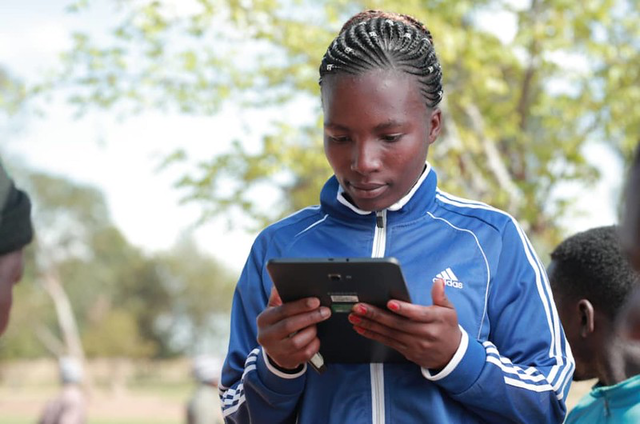
"What is surprising and encouraging, though is the support for the view that the pandemic represents not only a 'wake-up call,' but also an opportunity for Africans to put technology at the heart of plans for using education to transform the continent."
From eLearning Africa and the EdTech Hub, this report provides a window into the perspectives of EdTech experts regarding the impact of the COVID-19 pandemic on education in Africa. It is based on the findings of a survey of the eLearning Africa network, which garnered approximately 1,650 responses from 52 countries in Africa. The survey asked education and technology practitioners, experts, policymakers, administrators, and investors throughout Africa to weigh in on how COVID-19 had affected their countries, institutions, and colleagues. Their own words - in the form of quoted excerpts from the survey - are featured throughout the report.
The goal was to investigate Africa's experience with the COVID-19 crisis - one that has been traumatic but not perhaps as apocalyptic as some observers and experts had predicted - and the lessons to be learned from it in terms of how African countries are dealing with the pandemic and are working to mitigate its effect on their education systems. The overall picture is of a continent that remains optimistic in the face of the pandemic and understands that the combination of education and technology is more important now than ever.
The report begins with a look at the makeup of the eLearning Africa and EdTech Hub survey sample, noting, for example, that 69% of the respondents were male, which does not represent the percentage of women involved in education in Africa. This may mean that answers to some questions could have been distorted by unconscious gender bias (e.g., a lack of awareness of the particular difficulties faced by women and girls in accessing education and technology).
Next, the report examines Africa's experience during COVID-19 - stressing its diversity, reflecting the preparedness of individual countries, their relative prosperity or poverty, the efficacy of their health systems, and the political will of those in power.
Subsequent sections look at Africa's education sector and its response to the pandemic, including obstacles to effective response. Survey respondents highlighted 3 main obstacles for learners in the midst of school shutdown: a lack of access to technology, an unsuitable home learning environment, and a lack of access to learning materials. For example, in many African countries, the majority of students live in small homes with many inhabitants. There is unlikely to be a quiet room or other space suitable for study. Furthermore, the survey identified a common problem affecting rural learners: Children who were not in school might be expected to do work in the home or in the fields. This was likely to be particularly true for girls. And in June 2020, Ethiopia's Women and Children's Affairs Bureau reported that more than 100 girls in Addis Ababa had been raped since the start of the COVID-19 crisis, a fact that it attributed to school closures. Meanwhile, the main obstacles to the effectiveness of distance learning initiatives for teachers were seen by respondents as the lack of:
- capacity building, personal development and training (71%)
- affordable and accessible electricity and connectivity (49%)
- access to effective infrastructure and technology (44%)
- access to appropriate ICT devices (30%)
- a good learning environment at home (23%)
- access to learning materials and an appropriate curriculum (11%)
Other survey findings:
- In response to the pandemic, 97% of respondents reported school closures in their countries, and 95% of these noted that all schools had been forced to close. This was seen as an appropriate decision, with 92% of respondents opining that the closures were essential.
- In addition to school closures, lack of access to technology - specifically, lack of availability and affordability of connectivity - is considered to be the biggest barrier for learning during the pandemic, especially in rural areas. Early childhood and primary level students are seen to be most likely to be disadvantaged by the crisis and least likely to be able to access the technologies required for learning.
- Educational TV and radio are seen as the most important technologies for sustaining learning for students at the primary level. At the secondary level, online learning is considered to be the most important.
- The majority of educators have not received financial support for teaching and learning tools to help them continue teaching in the crisis, and they do not feel there has been sufficient preparation to help them adapt. Respondents suggested that the types of teacher development they would welcome would focus on: general information and communication technology (ICT) skills; use of devices (phones/tablets, etc.), enabling software (Zoom, Google classroom, etc.), and apps (WhatsApp, Facebook, YouTube etc.); and strategies for finding and/or developing learning materials.
- 83% of respondents think that national curricula should be adapted for the future in response to the current crisis, to enable more effective distance learning.
- Half of all respondents think the most significant long-term effect of the crisis will be that it leads to new opportunities for education systems.
- 85% of respondents anticipate that the current crisis will lead to more widespread use of technology in education in the future. However, they also note that this will lead to significant challenges for the most marginalised and may increase inequality.
Examples of findings that suggest good practice include:
- A recurrent theme was the need for effective communication: by governments with education institutions and teachers, and by institutions with students and parents. At a national level, communication and dialogue with key stakeholders, together with a clear message about objectives and plans, were seen as essential.
- Involving the private sector at an early stage was widely seen as an important factor in the development of effective solutions, as was an understanding of the importance of accepting that some forms of technology could be more appropriate for some sectors than others.
- Overall, countries that reached agreements with telecom companies, used radio and TV effectively, and distributed materials seem to have been the most successful in ensuring the continuity of education.
- Specific technologies and forms of social media were identified as being particularly helpful. For instance, WhatsApp was mentioned as a useful aid to facilitate discussions between teachers and students.
- In general, it seems that private schools and universities may have been better equipped to deal with the crisis - not only because of their comparative wealth and access to resources, but also because many of them seem to have been more flexible and ready to engage with external partners, including parents.
Recommendations include:
- For officials at the regional and pan-African levels:
- Assess communications networks, together with the availability and cost of connectivity across the continent, with a view to expanding the provision of online education and training, as well as broader community development.
- Foster intra-African cooperation in integrating distance learning into education, sharing innovations and best practice, including teacher training and curriculum development for distance learning.
- Encourage telecommunications companies and other infrastructure providers to assist in the expansion of Africa's online education and the creation of an effective, pan-African "safety net" for use in the event of future crises.
- For governments:
- Take the lead in developing the infrastructure for 21st century education for all, conceiving of the experience of COVID-19 as an opportunity to stimulate technology-assisted learning across the education sectors.
- Build an appropriate distance/technology-enabled component into the curriculum, taking a semi-blended, self-paced element into all learning, without disadvantaging any child.
- Seek, through fiscal measures and other incentives, to develop an "enabling environment" and to encourage the private sector to contribute to a firm technological basis for the education system.
- Prioritise the training of teachers in the use of technology and in conducting lessons online.
- Examine the possibility of devolving issues of methodology and process to the lowest possible level - ideally, the school or institution.
- Draw up, publish, and consult widely on crisis management plans, to ensure the continuity of education in any future crisis.
- For educational institutions and staff:
- Promote the use of whatever technology is available, and where there is no technology, promote self-directed learning in both students and teachers.
- Embark on a programme of continuous educational improvement, including the engagement and motivation of all learners through digital methods.
- Advocate for continuous professional development for teachers, and encourage peer learning among teachers in their institutions.
- Develop plans to raise awareness among students, parents, and the wider community of the benefits of distance and technology-assisted learning as an additional learning tool.
- Review their communications with parents and their local community, aiming for greater engagement of the community in the learning process with a view to ensuring their preparedness and willingness to cooperate in any future emergency affecting the education system.
- Contribute to a national review of the curriculum and development plans for reform.
Email from Rebecca Stromeyer to The Communication Initiative on September 16 2020. Image credit: ICTworks
- Log in to post comments