










































The Effect of the Alive & Thrive Initiative on Exclusive Breastfeeding in Rural Burkina Faso: A Repeated Cross-sectional Cluster Randomised Controlled Trial
London School of Hygiene & Tropical Medicine (Cresswell, Sarrassat, Cousens, Filippi); AFRICSanté (Ganaba, Somé); Centre MURAZ (Diallo); Université Ouaga I Pr Joseph Ki-Zerbo (Diallo)
"The locally-delivered components of the Alive & Thrive initiative improved the knowledge, attitudes, and mothers' reporting of exclusive breastfeeding practices by the time of the endline survey."
Studies have found that interventions to promote breastfeeding are most successful when they take are multidimensional and target a broad range of domains, including policy environment, social attitudes and norms among both mothers and their wider community, and supportive healthcare services. One such multidimensional approach, the Alive & Thrive (A&T) initiative, combines different programme components, in both community and facility settings, to improve infant feeding in low-income regions, including in Burkina Faso. The objective of this cluster-randomised trial was to determine the effect of the A&T initiative on exclusive breastfeeding in Boucle du Mouhoun, Burkina Faso.
The main messages of the A&T intervention were the following: place the baby to the breast within the first hour of birth; give colostrum; do not give water, tisanes, or other liquids; and breastfeed exclusively for 6 months. Only interpersonal communication and community mobilisation activities were randomly assigned, and hence assessed, in this study. (Other components of A&T not assessed in this study included advocacy, which occurred at the national policy level, and a mass communication radio campaign, which did not air in Boucle du Mouhoun.) Namely:
- Interpersonal communication activities - sought to increase mothers' knowledge about optimal breastfeeding practices and their benefits, to increase mothers' expertise in breastfeeding, and to improve mothers' perceptions about social norms relating to breastfeeding. The intervention primarily consisted of training sessions for staff specific to infant and young child feeding (IYCF) and enhanced supervision and monitoring structures. Activities were delivered by two (trained) cadres: (i) government health workers during individual consultations for antenatal, delivery, and postnatal care and during women's group discussions held at the local health centre; and (ii) community health volunteers during home visits of pregnant and postnatal women who, during a visit to a health centre, had expressed concerns or mentioned experiencing difficulties with breastfeeding. To facilitate these activities, communication materials, such as posters, leaflets, and counselling cards, were developed and shared. By June 2017, A&T had trained 381 government health workers and 1,226 community health volunteers.
- Community mobilisation activities - sought to raise awareness of the benefits of breastfeeding (primarily among partners, mothers-in-law, and grandmothers) and to increase the support they and the community provide to breastfeeding mothers. Community events and facilitated group discussions were held in public places; some community health volunteers also received requests to support wives or daughters-in-law during their interactions with fathers and grandmothers at these events. By July 2017, 40 trained community workers and 5 supervisors had delivered activities that reached 399 villages.
This cluster-randomised trial involved data collection with two independent, population-representative, cross-sectional surveys in rural villages in Boucle du Mouhoun: a baseline survey completed by 2,288 mothers (who had had a live birth 12 months prior) before the start of the initiative implementation (June 2 - July 28 2015) and an endline survey completed by 2,253 mothers (who had had a live birth 12 months prior) 2 years later. Masking was not possible for the intervention implementation. Select findings:
- At endline, there was a risk difference of 38.9% (95% confidence interval (CI) 32.2-45.6, p<0.001) between the reported prevalence of exclusive breastfeeding among infants younger than 6 months in the intervention group and that of the control group.
- In the intervention group, there was an increase in the prevalence of mothers reporting early initiation of breastfeeding (22.7% difference), giving colostrum (20.0% difference), and no prelacteal feeds (8.8% difference) compared with those in the control group.
- As table 3 in the paper details, compared to the control group: mothers in the intervention group had improved knowledge on the optimal timing of breastfeeding initiation and duration of exclusive breastfeeding; there was a higher prevalence of mothers in the intervention group responding that an infant should be placed on the breast within 1 hour of delivery; and there was a higher prevalence of mothers in the intervention group saying they should exclusively breastfeed for 6 months.
- As table 4 in the paper details, mothers in the intervention group were more likely to believe that a breastfed baby would have less diarrhoea, to disagree that colostrum was not good for the baby's health, and to disagree that tisanes protected the baby's health. The proportion of mothers who thought that a baby needed to drink water in addition to breastmilk was reduced by half in the intervention group compared with that in the control group.
- The intervention was successfully delivered at scale: 1,050 (96%) of 1,092 mothers in the intervention group reported exposure to at least one component at endline. "The associations between exposure to individual intervention components and improved outcomes were consistently in the expected direction, although the risk differences for individual components were generally modest."
Though it is possible that the findings might have been influenced by social desirability bias, the researchers conclude that this "multidimensional intervention deliverable at scale in a low-income setting resulted in substantial increases in optimal breastfeeding knowledge and beliefs and significant increases in reported breastfeeding practices....Although Alive & Thrive resulted in important improvements in knowledge and positive attitudes, further improvements are needed because harmful norms, such as giving young infant's water in addition to breastmilk, are still pervasive in Burkina Faso, in common with elsewhere in west Africa."
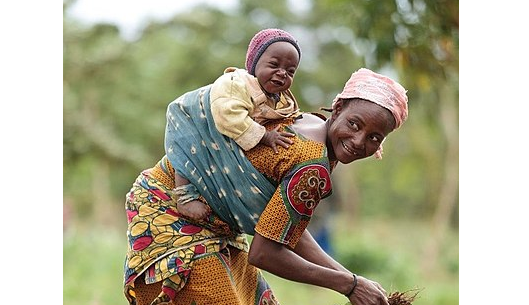
The Lancet Global Health 2019;7: e357–65. https://doi.org/10.1016/S2214-109X(18)30494-7- sourced from email from James Spiers to The Communication Initiative on January 5 2022. Image credit: FIFTY via Wikimedia (Creative Commons Attribution-Share Alike 4.0 International license)
- Log in to post comments