











































Digital Storytelling for Social Impact
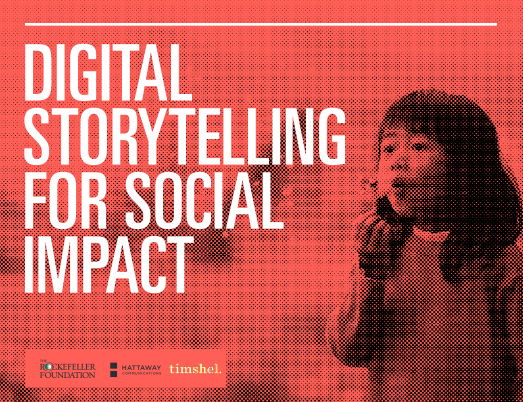
"Many of us are far more connected to stories and information than we have ever been, yet the noise and ubiquity of this digital world makes it harder to surface and share personal stories of change and impact." - Jay Geneske, The Rockefeller Foundation
The Rockefeller Foundation commissioned this study to explore the power of narrative and networked communication in order to: expand the reach and resources of social impact organisations, identify unmet needs in the field, and recommend tools, techniques, and technologies that can elevate the practice of digital storytelling for social impact. It was carried out as part of the Foundation's project to consider the role that digital technology can play in elevating the practice of storytelling as a means to improve the well-being of economically poor and vulnerable people around the world.
To prepare the report, the Foundation conducted interviews and roundtable discussions with "thought leaders in entertainment media and news, brand strategy, technology, philanthropy, government, nonprofits, and business." They then: conducted a technical platform assessment and landscape analysis to evaluate the current state of digital storytelling; explored "the power of narrative and networked communication to expand reach and influence"; and identified unmet supply and demand needs in the field and opportunities for innovation.
The study offers answers to questions in 5 key areas and suggests tools and resources that may help organisations elevate the practice and impact of digital storytelling:
- Strategy: How can digital storytelling help social impact organisations advance their missions? - sample ideas: "Develop an interactive tool that guides users through the key strategic steps of developing a digital storytelling program." and "Offer hands-on training and consultation to help users articulate compelling goals; explore audience motivations; and set realistic, measurable objectives."
- Capacity: What resources and skills do individuals and organisations need to shape and share their stories? - sample insight: "The most meaningful stories come from people with authentic and insightful experiences to share, even though they may not be skilled storytellers." Capacity-building ideas are provided, such as establishing "thought leadership forums to elevate the practice of strategic storytelling in the social impact sector through awards, conferences and public discussion."
- Content: What are the elements of compelling and motivating stories? - sample insight: "Stories for social impact must show people as active agents of change, who play a central role in creating solutions to the problems they face. This preserves their dignity, encourages empathy and inspires support from others." To this end, one idea suggested is to share "best practices" for digital storytelling as well as case studies that include examples of "compelling content".
- Platforms: What technologies are available (or needed) to help people curate, house, and share stories? - sample insight: "Develop a tool that helps users determine which platforms will help them reach their target audiences and learn how to engage these audiences in building communities of support".
- Evaluation: What simple, effective, and meaningful techniques can be used to evaluate the effectiveness of digital storytelling? - sample insight: "People charged with evaluating the impact of strategic storytelling within an organization need guidance on how to set metrics for digital storytelling. They also need training on readily available tools, such as Google Analytics and metrics available on YouTube."
The research also revealed gaps in how organisations create, promote, and sustain storytelling cultures. These gaps include:
- "Supply-side" issues, which include "a need for comprehensive strategic and tactical guidance on how to tell, store, share and curate compelling and motivating stories on a consistent basis". This, for the Foundation, implies "an overwhelming need for thought leadership and capacity building to strengthen storytelling in the field. Social impact organizations need easily accessible tools to help with developing their strategies, evaluating their capacity needs, understanding what content and platforms will help them reach their objectives, and measuring their success."
- "Demand-side" issues, which include "a need for incentives and requirements that foundations, businesses and the nonprofit community could embrace to ensure that social impact organizations are truly becoming storytelling organizations." This, for the Foundation, suggests the need for an increase in demand for stories. "Leaders of nonprofits, foundations and social-impact oriented businesses need to understand how stories will help them increase their reach and resources - and funders need to value and invest in story production."
The Foundation hopes that the ideas provided in this report will help spark a "storytelling marketplace", where social impact organisations can "leverage an interactive platform that provides strategic guidance, content, case studies and links to capacity building tools."
"Digital Storytelling for Social Impact", blog post by Jay Geneske, May 6 2014.
- Log in to post comments