Digital Hero Book Project (DHBP)
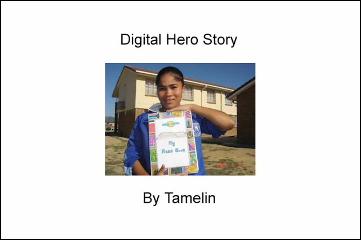
Hero booking is a process whereby a young person becomes the author, illustrator, and editor of his or her own hero book. Hero books are a form of memory work, a process of setting up a safe space for an individual to tell a story. According to the organisers, memory work is important in developing self-esteem, helping people take control of their lives, empowering them, and allowing them to tell their story in a positive way.
The DHBP aims to integrate hero booking into the learning activities of information technology (IT)-enabled schools in Cape Town, South Africa, and other sites around the world, to put paper-based "hero books" into the digital arena. The project, currently in its pilot phase, intends to enable youth in these schools to create digital hero books and to publish them on the Hero Book website or on a closed, private, community-based Digital Heroes website. Through the sites, authors can engage other "heroes" to share their experiences.
Organisers say that for various reasons, current hero booking and digital storytelling efforts are limited in reach. By operating through existing facilities, the DHBP helps address this issue. Khanya, the Western Cape Education Department's award-winning "Technology in Education" initiative, has recognised digital hero booking as a way to: improve e-literacy levels; teach related issues such as web publishing and child safety on the internet; build social inclusion by giving youth a voice; and, by sharing stories online, help foster community development.
The project has also developed an online Toolkit for Facilitators [PDF format] that covers the creation of simple digital hero stories. It contains resources needed to plan, create, and share digital hero books, including the required software. Example stories, are available here in video format.
Youth, Information and Communication Technologies (ICTs)
Regional Psychosocial Support Initiative (REPSSI), Khanya Project, Molotech, Center for Digital Storytelling
Digital Hero Book Project website (now closed) on December 16 2008 and April 16 2010, and the REPSSI website on May 9 2012.