










































Developing and Implementing Training Materials for Integrated Community Case Management in South Sudan
Malaria Consortium
This 28-page learning paper discusses best practices for delivering training of Community Drug Distributors (CDDs) in the implementation of integrated community case management (ICCM), and notes that what has shown to be successful in some countries and contexts, needed to be adapted to fit a more complex context in South Sudan. The Malaria Consortium went through a process of applying strategies to develop materials and implement ICCM training in two states of South Sudan, NBeG and Unity, between June 2010 and June 2012 at a time when the Ministry of Health was still developing strategy, policies, and its approach to ICCM programming. During this process the effectiveness of training was evaluated and revised to ensure CDDs learned good standards of care that would have a positive impact on the health of the communities they served. This paper looks at the process and the challenges encountered, and considers the lessons learned from implementing ICCM training in this complex setting.
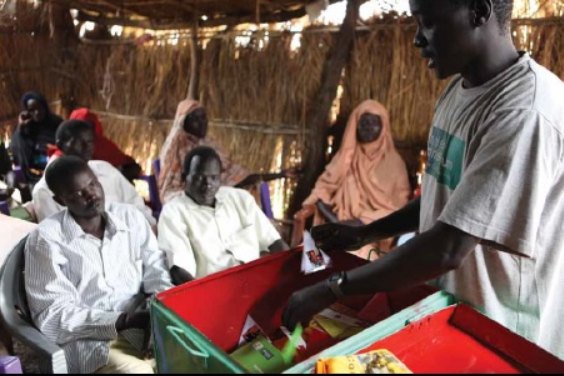
The paper explains that initial training materials developed were based on the World Health Organisation/United Nations Children's Fund (UNICEF) gold standard and the successful implementation of ICCM training in Uganda. The materials included: a ICCM Training Manual, training of Trainers Guide, sick Child Job Aid, CDD Flipbook, CDD Recording Form, referral triangles used to track referral of sick children to the Primary Health Care Centres (PHCC)/Primary Health Care Centres Units (PHCU), and treatment cards containing child treatment instructions for caregivers. CDDs are also given and taught how to use a respiratory timer to count the number of breaths in a child with possible pneumonia, a mid-upper arm circumference (MUAC) tape to measure the arm of a child with possible acute malnutrition, and medications to treat malaria, pneumonia, and diarrhoea. A training cascade system was used to deliver the training. This involved Malaria Consortium technical and adult learning experts training South Sudanese county health facility officers to become master trainers.
The mid-term review took place over three weeks during September and October 2011. Findings were as follows:
- The training cascade system hindered the delivery and transfer of consistent information by the time it reached the CDDs. In several cases, incomplete content or diluted messages were delivered to the CDDs. Additionally, from the time the first pilot TOTs were delivered to the refresher trainings in
August before implementation of ICCM commenced, several of the best trainers had left to work for NGOs. Few trainers were still working within the MoH, while those who remained did not have the appropriate skills and experience needed to implement the cascade training. - The initial ICCM Training Manual assumed that the master trainers and core trainers had a level of ICCM capacity and skills to be able to accurately interpret and translate the technical content in the training material in a way that CDDs would understand. In South Sudan there is neither the required capacity nor number of healthcare providers to deliver quality training to CDDs. Although some trainers did an excellent job, several of the master and core trainers demonstrated a limited ability to discern which content CDDs needed to learn and to disseminate the content to CDDs in a manner that could easily be understood. In addition, despite the pre-testing work that went into the development of the initial ICCM Training Manual, the trainers had visible difficulty following the instructions.
- It was found that although the initial ICCM Training Manual contained correct information, there were some technical elements and clarifications that could be added. The levels of literacy and numeracy among CDDs were far lower than in other countries where ICCM is used. This meant that using conventional adult training techniques or training tools, which required CDDs to read, write or count, proved difficult. Besides CDDs not being able to count the number of breaths, Malaria Consortium also recognised that CDDs had difficulty understanding the drug dosing instructions in the Sick Child Job Aid.
- Through skill observations and interviews it was found that the CDDs did not respond well to the method of teaching diseases individually and struggled to convert a disease by disease system into a holistic approach. This was particularly the case when children presented with more than one condition, which appeared to be relatively common in the context. Training ICCM through a disease by disease structure, which had proven to be a feasible approach to training community volunteers in Uganda, proved challenging to CDDs in South Sudan.
As part of the post review process, Malaria Consortium's case management and health training specialist, was asked to revise all the ICCM training materials for NBeG in collaboration with the technical team in South Sudan. Malaria Consortium's response to the mid-term review recommendations was as follows:
- To overcome the problem of messages becoming diluted down through the cascaded training, Malaria Consortium hired and trained experienced health facility workers to become Malaria Consortium field trainers. As a result, the core trainer component of the training cascade was eliminated. Malaria Consortium conducted a quality selection process in order to employ, train, and supervise 20 field trainers to deliver the ICCM training and supervise the CDDs in NBeG. These field trainers were nurses, health workers, or clinical officers and, in some cases, had previously received training as ICCM master or core trainers during the initial training period by Malaria Consortium, but who for other reasons had left the public health sector.
- During the assessment the field trainers were asked to describe the challenges presented by translating technical content from a training manual written in English into various local languages. In response to their feedback, the technical content and facilitator instructions in the ICCM Training Manual underwent a readability assessment (Flesch-Kinkaid) and revised to a 5th grade level. This included replacing complex terms and words with basic vocabulary, short concise sentences, and reader-friendly formatting. Prescriptive step-by-step technical and participatory training instructions were used to ensure consistency and accuracy of the information the trainers needed to translate and communicate to the CDDs. It also included more practical instructions on how to use the revised Sick Child Job Aid, respiratory timer and beads, the MUAC tape, Referral Triangles, and the CDD Recording Form.
- In response to the low literacy and numeracy levels among CDDs, a series of 48 colour laminated instructional pictures were developed and used by the trainers as memorable and interactive visual aids. The instructional pictures were used to explain and test CDDs comprehension of the integrated process used in ICCM as well to ensure that CDDs could correctly match the patient's symptoms to the diagnosis and treatment for their age and illness. Instructional pictures also corresponded with the pictures in the Sick Child Job Aid and the CDD Recording Form. The issue of CDDs’ limited ability to count above 10, and therefore unable to count the number of breaths, was addressed by dedicating a much longer period of time to training and practicing how to use respiratory beads along with a 60 second respiratory timer.
- One of the recommendations for the third phase revision process included the development of a CDD Competency Checklist and a system for certifying CDDs competencies at the end of training. As a result a simple to use, colour coded CDD Competency Checklist was developed to be used by the trainers during training and also during support supervision visits. The checklist was organised to assess CDD skills in the same integrated format as the revised ICCM Training Manual. The CDD Competency Checklist is used by the ICCM trainers during the clinical session on the fifth day of training to observe CDDs' skills and determine if they are competent to deliver ICCM in their community. CDDs need to demonstrate a satisfactory or 'OK' level in all skill areas in order to get a Certificate of Competence at the end of the training and receive their ICCM drugs.
Once all revisions and reviews had been completed and 10 additional Malaria Consortium field officers recruited and trained to be CDD trainers, the NBeG team rolled out the new full package of ICCM training to 111 CDD supervisors and 655 CDDs by the end of June 2012. Following the revision of all the training materials, Malaria Consortium brought together a number of stakeholders relating to ICCM including implementing NGOs, MoH staff, and donors to present the revision process that had been followed and to share the new and revised materials. The training materials were generally received very well by the partners, some of whom are planning to use them with some slight modifications. In the absence of an updated and approved set of training materials for ICCM in South Sudan, Malaria Consortium is proposing these materials form a foundation for review and refining by other ICCM implementing partners to move towards the production of harmonised materials.
Lessons learnt in the programme included the following:
- It is crucial to conduct continuous evaluation of training and materials through extensive piloting, field testing, revision, and re-testing to ensure that training quality is continually improved upon and that the materials work as effectively as possible in different contexts.
- Adult learning strategies start from what people already know, however, in the South Sudan context, insight into the competencies of the core trainers and the CDDs was gained through implementation experience. Particularly key for the review was a focus on effective learning styles for low-literacy settings.
- The trainers found that the less translation required within a training, the better the flow of delivery and learning. As a best practice from the first phase, trainers worked in teams to ensure that all language groups spoken by the CDDs were covered. Where there was a mixed language group, the trainers often used a combination of Arabic or support from the CDD supervisor who had already been trained in the content. The revised training manual was written in simple English with short sentences. The technical content was simplified and included in the trainer instructions. As a result, trainers were able to easily translate it into Dinka or Luo at the same time as delivering the training.
- A glossary of terms/dictionary was included in the original training materials, and its importance was reiterated as a best practice. After the mid-term review, the glossary was updated to include more words and meanings were confirmed though back-translation. Words in Dinka and Luo were also added to the Sick Child Job Aid where there were English words.
- In planning the project's activities, including training implementation, the initial work plans developed did not account for all of the resources (technical support, numbers of training teams, logistics, procurement timelines etc.) that were required to roll out the training. This needed to be at a sufficient scale to reconcile the heavy technical MoH guidelines with very low levels of literacy. In this situation, embedding continuous learning and improvement is critical and should be accommodated for in work planning.
li>Pictorial training worked very well. Using this model adds an element of equality to the group as it is less significant whether members are literate or not or which language they speak. Pictorials also help trainers who do not completely speak the language of the CDDs to communicate key concepts.
According to the paper, this experience shows that adaptation of materials is a resource intensive, proactive and on-going process, which requires testing existing best practices and evaluating which systems, methodologies, and tools can be used in various settings, as opposed to those that require additional revising or innovation.
Malaria Consortium Website on October 7 2013.