










































Debates: The Impact of Voter Knowledge Initiatives in Sierra Leone
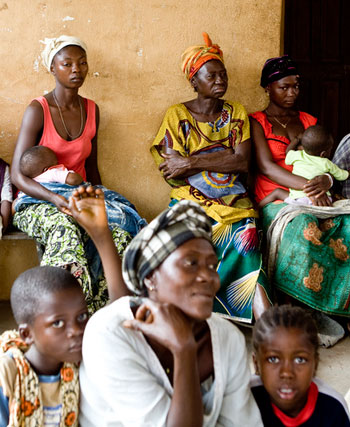
Abdul Latif Jameel Poverty Action Lab (J-PAL) (Bidwell, Glennerster); Stanford Graduate School of Business(Casey)
This 41-page research report discusses how debates between candidates during elections affect voting behaviours, based on research conducted in Sierra Leone during the 2012 Parliamentary elections. Researchers collaborated with Search for Common Ground to host, film, and screen structured inter-party debates. Debates were held in 14 competitive constituencies in the lead-up to Election Day, and videos of the debates screened at 197 public gatherings at the polling centre level. The research found that the debates were associated with "evidence of strong positive impacts on citizen political knowledge, policy alignment and votes cast on Election Day."
The first section of the paper provides an introduction, outlining how debates constitute significant campaign events, but questioning how these debates influence voting behaviours. Section 2 explains the institutional context and research design, while section 3 discusses evidence for effects of different kinds of treatments (i.e. public viewing vs. individual viewing) on voters, candidates, and, subsequently, elected officials. Section 4 explores survey priming, treatment effect heterogeneity, and social mobilisation. Section 5 concludes with policy and cost-benefit considerations.
Research found that exposure to debates led to substantial improvements in voter knowledge, which was retained over time. Debates that communicated to voters a combination of candidates' charisma, professional qualifications, and policy stances resulted in the greatest influences. In some cases, this resulted from better understanding of candidates' policy stances, allowing people to better align with candidates who represented their views and interests. In other cases, "opinion-updating" influenced changes in voters own views on the policy issues being discussed. One significant finding was that better information influences voters' willingness to vote across ethnic-party lines "but only in the event that the rival party runs a sufficiently superior quality candidate."
According to the paper, improved voter engagement and knowledge not only influenced voters' behaviours, but also the behaviours of candidates and elected officials. In some cases, candidates engaged more deeply with constituencies where video screenings took place, demonstrated by increased pre-election campaign expenditure in those constituencies. "One potential explanation is that by equipping voters with greater political knowledge and changing their voting choices, debate screenings made these areas more competitive." Similarly, voter engagement through participation in debates led to higher levels of constituency engagement and development expenditure during elected officials' first year in office. "Over the longer run, participation in debates appears to enhance accountability pressure of elected officials, increasing their subsequent engagement with constituents and expenditure on development projects." On the other hand, engagement was not found to affect some of elected officials' other behaviours, such as how active and vocal they are in Parliament.
One of the key points raised by the paper is the ability of video to be used as a cost-effective measure to amplify the reach of such candidates debates, especially in communities where there is little media penetration. The authors point to the increased expenditure by elected officials in engaged communities as a positive result of cost-benefit analysis. Researchers compared the video debate approach to "get to know you" radio and video programmes that introduced candidates to voters. It was found that "overall, while the debate, radio report and get to know you video all affected political knowledge, it is only debates that moved voters to change their voting choices and update their policy views." Researchers also tested group versus individual viewing of the debates. It was found that group viewing, rather than individual viewing, "facilitated greater discussion amongst voters that clarified and reinforced the information about candidates and policy conveyed by the debate."
Email from Mike Jobbins on April 21 2015 and Search for Common Ground website on May 8 2015.
Image credit: Glenna Gordon.