










































A Multi-Pronged Approach to Inform Policy Decisions in Designing Innovative Community Engagement Strategies in Ethiopia
Summary:
The Health Extension Program (HEP) has been pivotal to expanding access to primary health care largely through nurturing meaningful community participation since 2003. The women development army (WDA) a network of women volunteers that have been working in tandem with Health Extension Workers (HEWs) the frontline workers of HEP since 2011 has furthered the gains of HEP through advancing mobilization of families and communities. However, recent program reviews and surveys showed HEP is facing unmanageable challenges in terms of sustaining the momentum in community engagement. The technical working group for HEP at MoH employed multi-pronged approaches to generate shreds of evidence and inform policy decisions in designing alternative community engagement approaches. These approaches include national and sub-national level advocacy with health sector & political leadership; evidence synthesis to deeply understand the challenges; policy dialogues among stakeholders; human-centered design (HCD) techniques to understand desired attributes of and co-create prototype interventions and frame the policy options; and deliberations on policy options. The participatory designing process that involved both implementers and intended users at all levels has been instrumental to forge a strong collaboration among policymakers, political leaders, experts, implementers at the grass-root level and community representatives. Evidence-based advocacy to political leaders helped in opening-up the political and policy space among the leadership for allowing the experts to explore alternative strategies through a human-centered and evidence-informed process and fostering ownership of the policy options by the health system at various levels.
Background/Objectives:
The Health Extension Program (HEP) Ethiopia's community health flagship program launched in 2003has been pivotal to expanding access to primary health care largely through nurturing meaningful community participation. Ethiopia has registered tremendous achievements in improving health outcomes ever since the HEP was launched. The women development army (WDA) a network of women volunteers that have been working in tandem with Health Extension Workers (HEWs) the frontline workers of HEP since 2011 has furthered the gains of HEP through advancing mobilization of families and communities. However, recent program reviews and surveys showed HEP is facing unmanageable challenges in terms of sustaining the momentum in community.
Description of Intervention and/or Methods/Design:
The technical working group for HEP MoHat that is composed of technical experts from various directorates of the ministry, implementing partners and donors employed multi-pronged approaches to generate shreds of evidence and inform policy decisions in designing alternative community engagement approaches. These approaches were; i) national and sub-national level advocacy with health sector & political leadership and parliamentarians to get political buy-in on the need to optimize HEP and its community mobilization strategies; ii) Evidence synthesis to deeply understand the challenges and successes in community engagement in Ethiopia and other similar settings; iii) Policy dialogues among community health experts, donors and implementing partners; iv) Human-centered design (HCD) techniques to understand desired attributes of community engagement interventions and co-create prototype interventions and frame the policy options; v) deliberations on policy options among the top MoH leadership; and vi) collaborative iterative co-designing processes with HEWs, community representatives, community health experts and implementing partners.
Results/Lessons Learned:
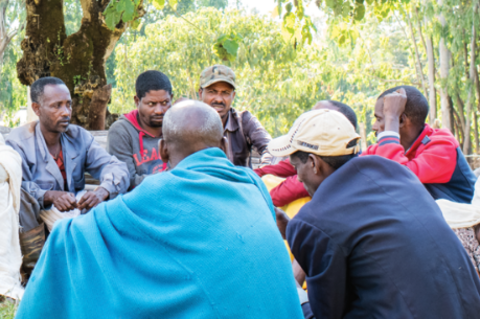
The participatory designing process that involved both implementers and intended users at all levels has been instrumental to forge a strong collaboration among policymakers, political leaders, experts, implementers at the grass-root level and community representatives. As such, desirable attributes of alternative community engagement approaches have been identified and policy options have been framed for agrarian settings through participatory, evidence-informed, and human-centered design approaches. The designed community engagement prototype approaches that would be tested in selected districts before ubiquitous scale-up includes introducing mix of female and male village health leaders (VHLs), designing and incorporating men engagement strategy in HEP, optimizing the existing WDA strategy, designing sustainable motivation mechanisms for community-level volunteers; and optimal engagement of indigenous and treasured social structures.
Discussion/Implications for the Field:
Evidence-based advocacy to political leaders helped in opening-up the political and policy space among the leadership for allowing the experts to explore alternative strategies through a human-centered and evidence-informed process. The initiative lead by the MoH with the active engagement of donors and implementing partners was critical in fostering ownership of the policy options by the health system at various levels. The iterative HCD process was important in bringing voices, desires, and aspirations of communities and frontline health workers to the table and influencing policy deliberations.
Abstract submitted by:
Temesgen Ayehu - Ethiopia Ministry of Health Dessalew Altaye - JSI Ethiopia
Bantalm Yihun - JSI Ethiopia
Biruhtesfa Bekele Shiferaw
Kassahun Sime - JSI Ethiopia
Israel Ataro - Ethiopia Ministry of Health
The Health Extension Program (HEP) has been pivotal to expanding access to primary health care largely through nurturing meaningful community participation since 2003. The women development army (WDA) a network of women volunteers that have been working in tandem with Health Extension Workers (HEWs) the frontline workers of HEP since 2011 has furthered the gains of HEP through advancing mobilization of families and communities. However, recent program reviews and surveys showed HEP is facing unmanageable challenges in terms of sustaining the momentum in community engagement. The technical working group for HEP at MoH employed multi-pronged approaches to generate shreds of evidence and inform policy decisions in designing alternative community engagement approaches. These approaches include national and sub-national level advocacy with health sector & political leadership; evidence synthesis to deeply understand the challenges; policy dialogues among stakeholders; human-centered design (HCD) techniques to understand desired attributes of and co-create prototype interventions and frame the policy options; and deliberations on policy options. The participatory designing process that involved both implementers and intended users at all levels has been instrumental to forge a strong collaboration among policymakers, political leaders, experts, implementers at the grass-root level and community representatives. Evidence-based advocacy to political leaders helped in opening-up the political and policy space among the leadership for allowing the experts to explore alternative strategies through a human-centered and evidence-informed process and fostering ownership of the policy options by the health system at various levels.
Background/Objectives:
The Health Extension Program (HEP) Ethiopia's community health flagship program launched in 2003has been pivotal to expanding access to primary health care largely through nurturing meaningful community participation. Ethiopia has registered tremendous achievements in improving health outcomes ever since the HEP was launched. The women development army (WDA) a network of women volunteers that have been working in tandem with Health Extension Workers (HEWs) the frontline workers of HEP since 2011 has furthered the gains of HEP through advancing mobilization of families and communities. However, recent program reviews and surveys showed HEP is facing unmanageable challenges in terms of sustaining the momentum in community.
Description of Intervention and/or Methods/Design:
The technical working group for HEP MoHat that is composed of technical experts from various directorates of the ministry, implementing partners and donors employed multi-pronged approaches to generate shreds of evidence and inform policy decisions in designing alternative community engagement approaches. These approaches were; i) national and sub-national level advocacy with health sector & political leadership and parliamentarians to get political buy-in on the need to optimize HEP and its community mobilization strategies; ii) Evidence synthesis to deeply understand the challenges and successes in community engagement in Ethiopia and other similar settings; iii) Policy dialogues among community health experts, donors and implementing partners; iv) Human-centered design (HCD) techniques to understand desired attributes of community engagement interventions and co-create prototype interventions and frame the policy options; v) deliberations on policy options among the top MoH leadership; and vi) collaborative iterative co-designing processes with HEWs, community representatives, community health experts and implementing partners.
Results/Lessons Learned:
The participatory designing process that involved both implementers and intended users at all levels has been instrumental to forge a strong collaboration among policymakers, political leaders, experts, implementers at the grass-root level and community representatives. As such, desirable attributes of alternative community engagement approaches have been identified and policy options have been framed for agrarian settings through participatory, evidence-informed, and human-centered design approaches. The designed community engagement prototype approaches that would be tested in selected districts before ubiquitous scale-up includes introducing mix of female and male village health leaders (VHLs), designing and incorporating men engagement strategy in HEP, optimizing the existing WDA strategy, designing sustainable motivation mechanisms for community-level volunteers; and optimal engagement of indigenous and treasured social structures.
Discussion/Implications for the Field:
Evidence-based advocacy to political leaders helped in opening-up the political and policy space among the leadership for allowing the experts to explore alternative strategies through a human-centered and evidence-informed process. The initiative lead by the MoH with the active engagement of donors and implementing partners was critical in fostering ownership of the policy options by the health system at various levels. The iterative HCD process was important in bringing voices, desires, and aspirations of communities and frontline health workers to the table and influencing policy deliberations.
Abstract submitted by:
Temesgen Ayehu - Ethiopia Ministry of Health Dessalew Altaye - JSI Ethiopia
Bantalm Yihun - JSI Ethiopia
Biruhtesfa Bekele Shiferaw
Kassahun Sime - JSI Ethiopia
Israel Ataro - Ethiopia Ministry of Health
Source
Approved abstract for the postponed 2020 SBCC Summit in Marrakech, Morocco. Provided by the International Steering Committee for the Summit. Image credit: JSI Ethiopia