










































Country Case Study: South Sudan - Support to Media Where Media Freedoms and Rights Are Constrained
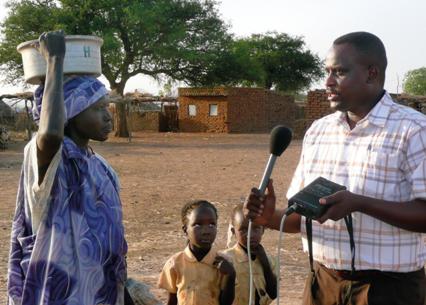
"The people of South Sudan expect change - and quickly. There is a clear hunger from all parts of the country for information on how - and whether - this change is happening, on how to engage with development issues, and on ways to enable ordinary people to exercise their new rights as citizens of an independent state."
This case study is part of a series of BBC Media Action research papers, including 5 case studies and a synthesis, discussing reasons why the media in each of the countries featured is constrained and how outside agencies and donors support free and independent media. Commissioned by Swedish International Development Cooperation Agency (SIDA), they are designed to describe the media landscape and media development (countries include Syria, South Sudan, Cambodia, Bangladesh, and Uganda) and set out best practice for donors to sustainably fund and support media internationally.
This document describes South Sudan's expectations and the realistic future of South Sudan. As stated in the Executive summary, the quest for independence can be unifying, but a backlash due to failed expectations could increase tribal divisions, fracture of society, and conflict. "An inclusive national conversation that connects decision-makers and ordinary people and helps to shape a realistic vision of South Sudan’s future is critical to averting possible backlash and to ensuring accountable governance and development....[I]n many ways, the media is the sole avenue for a much-needed national conversation." Three quarters of the population have access to daily radio. There is a state broadcaster of television, 10 state radio stations, a United Nations (UN)-supported station and a United States Agency for International Development (USAID)-supported station, and around 20 private stations. In the capital, Juba, there are some newspapers and limited internet penetration - "online channels played a galvanising and politically influential role throughout the path to independence."
Fondation Hirondelle manages Radio Miraya for the UN Mission. "Both the NGO Internews and the Catholic Radio Network have community stations across the country, often broadcasting in local languages to rural communities. South Sudan’s state radio and television is also scheduled to transition to a public service broadcaster, although it is unclear how this will happen, how the process will be supported and what sources of funding are available to undertake work on the grand scale proposed by the Ministry of Information. 3 The entire media sector continues to need long-term support from donors in both financial and political terms, such as strong advocacy for media laws and protests about the widespread intimidation, detention and mistreatment of journalists....To date, individual and divergent donor priorities have shaped South Sudan’s emerging media sector and its people’s access to information."
Strategies that donors might consider include:
- "Ensure media support meets the needs of people: There is considerable scope for underfunded and under-skilled community and state radio stations to better serve the information and communication needs of people outside Juba. The current focus of GoSS is on equipping and upgrading the skills of the state broadcaster and there has been substantial donor investment in national media....
- Consider alternative ways to harmonise support: Substantial harmonisation efforts have failed to bring media support into the fold, with most media support delivered outside these arrangements. Concerns about a lack of coherence remain, with no clear mechanism to address this.
- Consider the role of communication in peacebuilding: Media and communication have huge potential to support a peaceful transition to self-governance. The sheer distance and disconnect between seats of government and rural communities is a major communication challenge, and the media is perhaps the only instrument that can reach and connect both.
- Ensure plans are sufficiently long-term to support change: ...[B]reaking a decades-long cycle of conflict and tackling the raft of development challenges facing the country must be considered long-term goals, with appropriate support throughout.
- Invest in research, and consider pooling resources where possible: Conducting large-scale research in South Sudan is expensive and logistically problematic. Opportunities for joint research should be examined and, where appropriate, pursued."
Email from Aoife Allen to The Communication Initiative on September 4 2012 and BBC Media Action website, September 11 2012.
- Log in to post comments