










































Community Participation for Action in the Social Sector (COMPASS) Polio Project
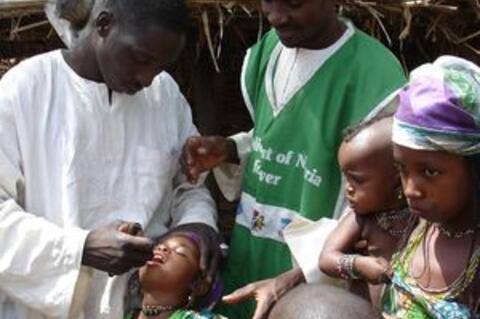
COMPASS' general approach is to blanket communities with information about polio, drawing on partner organisations such as the Federation of Muslim Women's Associations of Nigeria (FOMWAN). COMPASS notes that "[i]nformation is only as valued and trusted as the person who delivers it, and people in small rural villages give greatest credence to their own authorities - especially religious leaders." For example, among the Hausa people, polio is named "Shan Inna" after a goddess thought to suck the blood from a victim's limb as punishment for having offended the gods; thus, its stigmatised victims are marginalised and invisible. So it is through collaborative efforts such as those with FOMWAN that COMPASS approaches the information provision task, explaining that FOWMWAN members lead monthly house-to-house visits in an effort to resolve non-compliant cases. "Unlike most strangers, they can enter homes and talk directly to women, speaking the local language and answering questions without a translator. This connection to the community is extremely important." To cite another example of this mobilisation strategy, COMPASS strategically approached other key members of communities who can approach women in their homes, such as the Traditional Birth Attendant (TBA), "a key community figure who is known and trusted". COMPASS trained 1,500 TBAs in high-risk settlements to send all newborns to local healthcare facilities for vaccination immediately after delivery. During IPDs for the period October-December 2007, TBAs referred 7,395 newborns for immunisation.
COMPASS has also drawn on the participation of polio survivors, having recognised the important role they could play in teaching the community about the realities of polio. In 2005, COMPASS managing partner Pathfinder received funding from the Leahy War Victims Fund to strengthen the Kano Polio Victims Trust Association (KPVTA). With training in organisational management and communication, KPVTA members have developed television and radio spots, portraying the reality of life with polio and speaking directly to families about the importance of immunisation for every child. In addition, polio survivors often accompany the vaccinators on house-to-house visits. The Polio Office reported that KPVTA's efforts in the February/March 2007 IPDs contributed to an approximately 25% reduction in non-compliant cases in Kano.
FOMWAN leaders also ask Islamic scholars and Imams to set aside their resistance and use Tafsir (public lectures) during Ramadan and at religious events to inform the public and eradicate fear of the vaccine.
This strategy is illustrated by a particular effort carried out during the early March 2007 round of Immunization Plus Days (IPDs). In an effort to reach nomadic Fulanis, COMPASS stimulated an intensive dialogue in Gwaram Local Government Area (LGA). As part of this process, 15 Fulani Ardos (leaders) shared their fears and assumptions about polio immunisation, and learned of the importance getting their children immunised. COMPASS claims that, by the end of these dialogues, they were "thoroughly convinced about the importance of the immunization effort and spearheaded a local campaign by bringing their own children for immunizations. As expected, other Fulanis followed suit and as a result, 7,022 children were immunized; 261 had never received the vaccine."
Based on the success in Gwaram, the initiative was undertaken in 3 other LGAs: Guri, Buji, and Birnin-Kudu. Myetti Allah, a local non-governmental organisation (NGO), supported an advocacy meeting with 79 Ardos, which resulted in the immunisation of 18,081 children (467 zero-dose). With COMPASS technical support, Myetti Allah continued the initiative in Kiyawa, Kazaure, Garki, Taura, Kaugama, Ringim, Gagarawa, and Dutse. Advocacy as a strategy is also illustrated by this example: When the government mandated immunisation at all border crossings, COMPASS organised a meeting with immigration and customs officials in Jigawa and Katsina States, explaining the need and distributing educational materials so they could give the campaign their genuine support. This typifies the COMPASS approach to ensuring that local communities and government officials understand the reasons and trust the goals of all development efforts introduced by the project.
Health, Polio, Immunisation and Vaccines.
COMPASS explains that, despite several rounds of nationwide immunisations, Nigeria remains a centre of transmission of the Wild Polio Virus. According to the World Health Organization (WHO), nearly 800 cases of Wild Polio Virus (WPV) were diagnosed in Nigeria in 2004. However, between December 2006 and December 2007, WPV decreased by 76.7% in Nigeria.
The vast greenery in a district that is 90% farming remains a major attraction to Fulani herders, who frequently visit in search of good pasture and water, and to trade their diary products to sedentary farmers. It is for this reason that their lifestyle is nomadic, leading to some missed immunisation opportunities.
By the end of the March 2007 IPDs, the initiative had been applied in 11 LGAs, leaving 29,627 eligible children (1,049 zero-dose) immunised. According to COMPASS, a quick analysis showed that just during the late March 2007 IPD campaign, zero-dose cases dropped by 31.8% (83) and immunisation increased by 2.4% (7193) in Gwaram alone. "Targeting specific clusters of the community has proved successful in Jigawa and we are now adapting this approach to other States where we work," said COMPASS Regional Polio Activities Director Lola Mabogunje.
In partnership with the Federal Government of Nigeria, the United States Agency for International Development (USAID) launched the COMPASS Project in 2004. The 9-partner COMPASS team includes: Pathfinder International, Management Sciences for Health, John Hopkins Bloomberg School of Public Health Center for Communication Programs (CCP), Federation of Muslim Women's Associations of Nigeria (FOMWAN), Nigerian Medical Association (NMA), Civil Society Action Coalition on Education For All (CSACEFA), Creative Associates International, Inc. (CAII), Adolescent Health Information Project (AHIP), Futures Group.
Immunisation, Vaccine, and Polio Programme Experience Submission from Kemi Ayanda on May 31 2007; COMPASS Project website; email from Kemi Ayanda to The Communication Initiative on June 13 2007; and "Noncompliance in Polio Eradication:
COMPASS Takes on the Cause" [PDF], sent via email from Mary K. Burket to The Communication Initiative on May 9 2008.
- Log in to post comments