










































Child-Participatory Budgeting: A Review of Global Practice
Centre for Children's Rights at Queen's University Belfast
How can children be involved in decisions about public expenditure in ways that are effective, inclusive and impactful?
Drawing on the views of children, young people, and adults who worked together in participatory budgeting initiatives, this report from Plan International identifies enabling factors that make child-participatory budgeting a success. It features case studies from Croatia, Guatemala, Kenya, Togo, Wales, and other parts of the world on how children can participate in a meaningful way in the budget cycle at municipal, county and district levels, bringing significant gains for the efficiency, equity, and accountability of public spending.
The study builds on previous research conducted by the authors of this report in 2015. This research collated the views of nearly 2,700 children in 71 countries on public expenditure for children's rights and was used to inform the Committee on the Rights of the Child (hereafter "the Committee")'s General Comment. Children involved in the 2015 research - 9% of whom had direct experience of participation in budget decision-making - considered that they were well positioned to advise governments on how to make decisions about spending for children's rights because they understood the impact of this spending in their lives. (However, only 53% felt that changes were made based on their views.) The key features of good participatory practice from the children's perspectives can be summarised as involving: accessible information; respectful support from adult facilitators; consultations conducted at a time and in a location that was appropriate for the children; and adults who listened to children's views carefully and provided feedback. Children believed that governments should include the views of children from diverse ages and backgrounds and localities, as well as the organisations that worked with them and on their behalf. Children recommended that governments should follow up on the proposals made by children during budgeting discussions and offer feedback about why decisions were taken to implement (or not) the children's recommendations. They emphasised that adults should involve children in monitoring the impact of spending.
As is explained in the introduction, a core focus of the human rights guidance on children's budgeting as a key aspect of implementation of the United Nations Convention on the Rights of the Child (UNCRC) is the participation of children in all stages of budgetary planning and decision-making. The Committee has consistently recommended that States develop child budgets as a key aspect of implementation of the UNCRC. This study has been developed to contribute to the Committee's call for examples of good practice that are appropriate to context. To that end, Section 1 presents an overview of examples considered within the study in the form of a multi-page table. This offers a look at the breadth of initiatives that have taken place globally in recent years. Drawing upon this overview of examples, Section 2 considers global practice under 4 thematic headings:
- Supportive: Children's participation in public decision-making relies heavily on the support of adults who are able to facilitate access to adult-led processes and who are willing to share information with child participants in an accessible way. Developing and using child- or youth-friendly materials to support participants to engage with budgeting processes has taken the form, in Croatia, of work by members of the Children's City Council (aged 11 to 14) with civil society facilitators to develop an accessible brochure, entitled "The Budget for Little Ones". In short, most of the examples considered within this study depended on work done by adults from either civil society or government to create a particular space for child and youth involvement in budget decision-making and to build a culture of participation. The most helpful factor supporting child participation in the Philippines, for example, was noted as the "openness of government to involve children" in the process.
- Inclusive: The number of children involved in the initiatives considered in this report varied widely, from as few as 2 youth representatives at strategic board meetings to thousands of children's views included through broadly inclusive consultation exercises. The latter typically worked through or strengthened existing school councils across a part or the whole of a country to extend the reach of the programme. In some cases, the project worked to include the views of particularly marginalised groups (e.g., rural children, children out of school or living on the street, ethnic minorities) through wide consultation and peer research, while other projects sought to include individual children who themselves had experiences of marginalisation (e.g., children with disabilities). Children and young people are participating in budgeting processes globally as: representatives elected by children and young people specifically to participate in the budgeting process or as members of child and/or youth councils or parliaments who were then involved in the process; members of youth groups or networks supported by civil society organisations; and individuals, representing their own views. What is clear from this study is that particular measures are taken in many cases to ensure that girls and young women are included as participants, in addition to further measures to support them and include their views in line with the aim of gender equality.
- Accountable: Most child-participatory initiatives occur at planning stages, with children and young people presenting priorities for public spending in advance of an agreed budget. When these priorities appear in public policies or funding is allocated directly to the projects proposed, it can be easy to see the effect of children’s involvement. However, concerns remain about the lack of appropriate and accessible feedback from decision makers, and it can be difficult to monitor and track spending through publicly available information. As indicated here, there is a need for increased transparency, monitoring, and evaluation of how agreed budgets have been spent, including the effect on realising the rights of children.
- Effective: Generally, child-participatory budgeting processes are most effective when decision makers with responsibility for mobilising, allocating, and disseminating public funds are committed to hearing children's views and taking their views into account. In some cases, civil society and youth-led advocacy has succeeded in raising the awareness of decision makers to the extent that they have modified budget allocations in response to issues raised. In others, government representatives have been committed to child participation from the beginning of the process, either through sustained partnerships with civil society, inviting children and young people to share their views through consultation, or setting aside a particular portion of the budget for participatory budgeting processes. The motivation for involving children and young people in decision-making included, in many cases, the aim of building their capacity for citizenship. In Ghana, for example, children acted as representatives of low-income communities to draw the attention of district-level decision makers to the priority issues for children in their areas that required additional budget allocation.
Following this are case studies exploring in more detail 5 examples in which children and young people have participated in budgeting processes. In brief:
- In Croatia, a Children's City Council (aged 11 to 14) has effected change for children in the city of Opatija through sustained, open, and respectful engagement with the Mayor and officials of the City Council of Opatija. The Children's Council makes proposals for the city budget at regular meetings and allocates their own funding annually to a project that they determine will most benefit children. This initiative offers an example of how sustained engagement of children in public budgeting contributes to effective planning and implementation of priorities for children.
- In Guatemala, children and young people (aged 14 to 17) were selected by their peers as representatives specifically for this project. They received and then delivered to other children training about their rights and policy-making, conducted a situational analysis of priority rights issues in their communities, and achieved municipal-level public policies that acknowledged these concerns. Among other lessons, this case demonstrates the challenges associated with overcoming institutional resistance to child participation through short-term projects.
- In Kenya, teachers selected 26 children and young people (aged 14 to 17) from local schools in 4 sub-counties of Kwale County to act as representatives in a budgeting project supported by Plan International Kenya. Participants interviewed and met with many children in their communities before attending a 2-day workshop about their rights and public budgeting. During this process, they identified priority issues to present to the Director of Budgeting for Kwale County, and this discussion was broadcast on local radio.
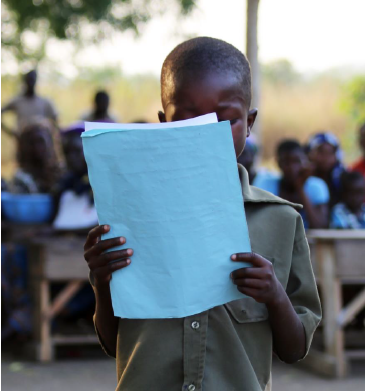
- In Togo, 25 children (aged 13 to 15) participated in a training workshop with Plan International Togo to learn about their rights and identify priority issues to present to decision makers in the City of Sotouboua. Child and adult participants agreed that this process would have been strengthened by children's continuous or more long-term engagement and more time to prepare in advance.
- In Wales, children and young people (aged 7 to 18) from local primary and secondary schools have been invited by the Swansea City Council to participate in annual budgetary decision-making since 2014. This is an example in which adopting the UNCRC into city policy-making has contributed to a culture of child participation. It is also an example in which the State has asked children and young people for their advice, and priorities, in the reduction of public spending during a period of austerity measures.
"The initiatives considered in this research indicate that, where there is meaningful engagement, children's views have directly influenced public spending decision-making in ways that have increased the spend for children and/or resulted in the existing allocation being directed to spending identified by children as a priority in their lives and communities. The resulting child-sensitive budgeting is perceived to produce significant gains in efficiency, equity and accountability in public spending. More generally, there is a clear sense across these projects that children's involvement in public spending has benefits for children's personal development and interest in civic engagement and enhances democratic participation generally." In considering all of the examples and case studies in the report, the authors identify the the following features as key for such initiatives to be most successful:
- Children are provided with accessible information about the budget process.
- Children receive support to develop and express their views freely.
- Children have the time to process the information and prepare their inputs.
- Adults listen to their views and engage with respect.
- Children receive feedback on what happened to their input.
The concluding portions of the report offer various recommendations for good practice, including but not limited to: Build the capacity of adults, especially decision makers, to engage respectfully with children; establish mechanisms for collating the views of as many children as possible (e.g., social media, through schools or local children's councils); establish mechanisms to communicate developments at each stage of the budget to children in accessible formats, including by child participants to their peers; and identify champions in local or national-level decision-making who have responsibility to mobilise, allocate, and disseminate funding in response to the priorities raised by child participants (and are willing to push for these priorities where decisions are actually made).
Plan website, October 27 2016. Image credit: Plan International Togo