










































CarePacks Testing Campaign
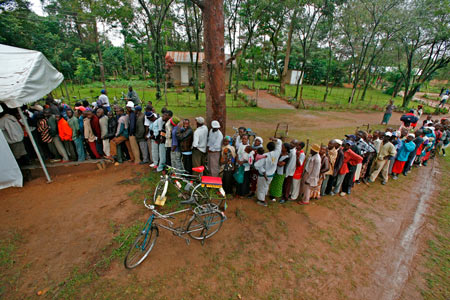
The campaign goal was to test at least 40,900 of the 51,000 Kakamega residents aged 15-49 years in one week and distribute multi-disease prevention packages (MPP) that included a bed net, a water filter, condoms, and education materials. 30 campaign sites were mapped and selected according to their suitability and geographic location. A pre-campaign survey was conducted two months prior to the campaign and used semi-structured questionnaires and focus groups to identify appropriate media messages and channels required to encourage residents to attend the campaign. An ongoing programme of health education and community mobilisation was conducted in the month preceding the campaign and during the campaign itself.
During the campaign, each participant was registered and given a unique client number. While waiting for testing, groups of 20 - 40 people at a time received basic health education and instructions on how to use the items in their MPP. A certified HIV counselling and testing counsellor provided individual pre-test counselling and obtained verbal informed consent before conducting an HIV test. Each participant received an MPP following the test, or following pre-test counselling if they declined an HIV test. People living with HIV received a three months supply of anti-retro viral medication and were referred to appropriate care and treatment services.
A camera crew followed the campaign progress and organisers say several community members invited the cameras into their homes to share their own experience during the campaign and afterwards. "The Test," the documentary film made about the campaign was screened in Washington, DC and New York City. Click here to find out more about the documentary and see below for the trailer.
HIV/AIDS
According to organisers, nearly 50,000 people participated in the campaign, and it helped to destigmatise HIV in the community. They add that the CarePack campaign is a template that was designed to be scaled up, and they are hoping that in future cost-effectiveness will spur more integrated campaigns like this internationally.
The Ministry of Health, Centres for Disease Control, Vestergaard Frandsen, and CFH International.
Blog 4 Global Health website and Vestergaard Frandsen website on January 12 2011.
- Log in to post comments