










































Time to read
less than1 minute
Capturing the Gender Effect: Guidance for Gender Measurement in Agriculture Programs
Image
SummaryText
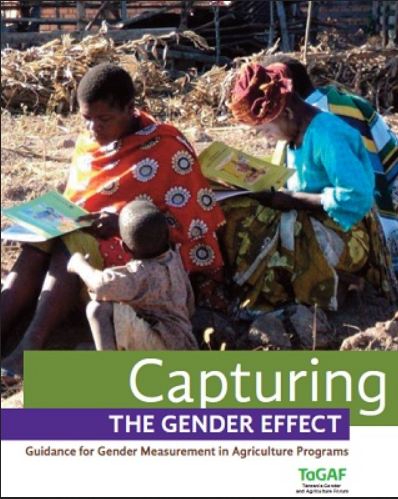
Published by ReliefWeb, this technical brief produced for the Tanzania Gender and Agriculture Forum (TaGAF), draws on the experiences of two projects in Mbeya, Tanzania - Faida Mali's Integrated Soil Fertility Management and TechnoServe’s Coffee Initiative - focusing on the steps they have taken to measure the 'gender effect.’ According to the authors, over the past decade there has been growing recognition of the contribution that women make to agricultural production around the world. Despite this attention, many agricultural programmes struggle to capture the difference - or the 'gender effect' — that gender integration makes on key outputs and outcomes.
The guide explains that there are gender tools and approaches that can help measure this effect, including initial gender assessments that provide details on the local gender and social context of agricultural production, ongoing monitoring that tracks the progress of gender-responsive activities, and project evaluations that determine the extent to which gender related outcomes have been achieved. This technical brief is intended to provide agriculture practitioners with an initial grounding in gender measurement, highlighting some of the critical points to consider when developing and implementing gender monitoring and evaluation systems. This publication is a follow-up to an earlier TaGAF brief that presents some of the promising gender responsive practices these project have underway.
The guide explains that there are gender tools and approaches that can help measure this effect, including initial gender assessments that provide details on the local gender and social context of agricultural production, ongoing monitoring that tracks the progress of gender-responsive activities, and project evaluations that determine the extent to which gender related outcomes have been achieved. This technical brief is intended to provide agriculture practitioners with an initial grounding in gender measurement, highlighting some of the critical points to consider when developing and implementing gender monitoring and evaluation systems. This publication is a follow-up to an earlier TaGAF brief that presents some of the promising gender responsive practices these project have underway.
Languages
English
Number of Pages
12
Source
ReliefWeb website on December 11 2013.