











































The Bumpy Road to Better Health: How Embedded Research Strengthened Health Services in Ghana
Fat Rat Films
"Embedded research is not a detached academic exercise; it is a collaborative process that involves negotiation with multiple players in the health world."
Ghana's Community-based Health Planning and Services (CHPS) programme is a community-centred approach that has "transformed maternal and child health in the most inaccessible parts of the country." This case study, from the World Health Organization (WHO)'s Alliance for Health Policy and Systems Research, looks at how CHPS came into being, what its key elements are, and, specifically, how its strategy of embedded research has "revolutionized how the government delivers health services under difficult circumstances."
As reported here, Ghana is like many other low- and middle-income countries (LMICs) in experiencing impediments to improving health and well-being for its citizens. Many people live long distances from the nearest health centre, and they lack access to electricity, mobile-cellular coverage, and clean water. While international standards suggest that the ideal ratio is one doctor per 1,000 people, in Ghana in 2017, there was only one doctor per 8,098 people, and most of these doctors lived in cities and towns. In addition to logistical challenges, there are also local cultural beliefs preventing women from seeking care, including during childbirth.
Based on the conviction that good health begins in the community, CHPS entails taking "health to the heart of the village". Specially trained nurses known as Community Health Officers are posted to the rural areas, where they support maternal and child health; they are also available in the case of emergencies. They deliver not only treatment, but health education, health promotion, community durbars (meetings), outreach services, immunisation, referral, and emergency services. Community members are trained to assist the nurses as Community Health Volunteers (unpaid). They use checklists and guides to structure their interactions as they go door to door, sometimes traveling long distances to do so, to check on the health of their neighbours, especially pregnant women and babies. They act as an interface between the community and the Ghana Health Service, communicating about health campaigns and events and supporting the health service to understand the needs of the people.
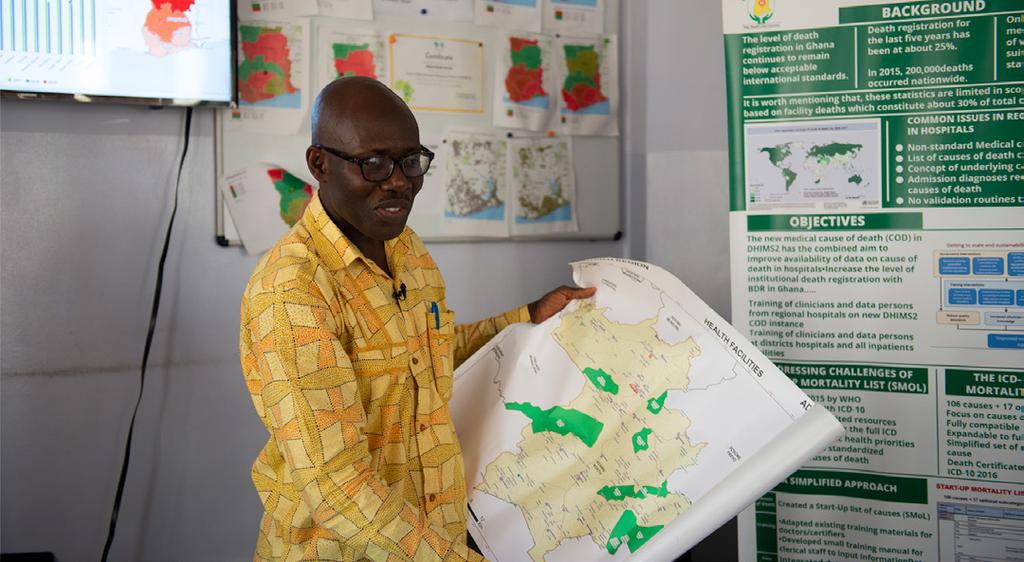
A key aspect of the CHPS programme is embedded research, whereby researchers engage with decision-makers and people who are delivering health services when setting research priorities, aligning research activities closely with the programmes they are intended to support. The data that are generated can empower them to make evidence-based decisions on the real-world challenges they face. Working as a team, embedded research projects are able to identify challenges, find the cause(s), and test solutions during a programme's implementation. Specifically, steps of the process include:
- Trust in the power of research evidence - Ghana has a "learning health system" and, thus, the formation of CHPS was grounded in research. Specifically, drawing on models of care that had been successful in other countries and consultation with local communities, the Navrongo Health Research Centre designed an experiment to test different models of community health and figure out which delivered the best outcomes. The model with the trained nurse and volunteer had much better results than alternatives tested, and, thus, this is how CHPS was structured. By 2000, CHPS was made national policy; by 2008, it was in every region of the country. However, there were challenges associated with scaling up, including the fact that community engagement was not always adequately implemented, local political will and management capacities needed to be built up, and supervision and information systems were weak.
- Bring everyone (researchers, implementers, policymakers, and communities) together from the very beginning to build a shared agenda for change - Embedded research requires the creation of new relationships to identify pressing challenges and to approach them together.
- Share data and intelligence as it becomes available - This allows for adjustments to a programme based on new knowledge and for researchers to respond to emerging policy or implementation priorities.
- Think local - Embedded research needs to respond to the problems and challenges that policymakers and health staff face on the frontlines. Effective partnerships with local research institutions can be key to such a response. For example, the University of Health and Allied Sciences (UHAS) provides training for Community Health Officers that covers issues such as community entry and cultural competency, emergency delivery in the community, resuscitation of newborns, and management of neonatal and childhood illnesses. UHAS conducts routine evaluations of the effectiveness of the trainings: Focus group discussions with the community health committees and surveys with community members allow them to get a sense of the community's perception of the changes. This information gets fed directly into decision-making. Making research relevant to real-world challenges is one of the key principles of the embedded research approach.
- Keep going - If research leads to a successful outcome, scale up. With each adaptation, the process of embedded research continues, ensuring that new services and the policies that guide them are informed by recent evidence that comes directly from the knowledge of communities and staff working at different levels of the health system.
As interviews conducted for this paper in Ghana have revealed, "The beauty of embedded research is that it can be applied to a wide range of issues in the health system, in many different contexts."
WHO website, August 17 2020. Image credit: © World Health Organization
- Log in to post comments