










































Broadcasting Peace: A Case Study on Education for Peace, Participation and Skills Development Through Radio and Community Dialogue
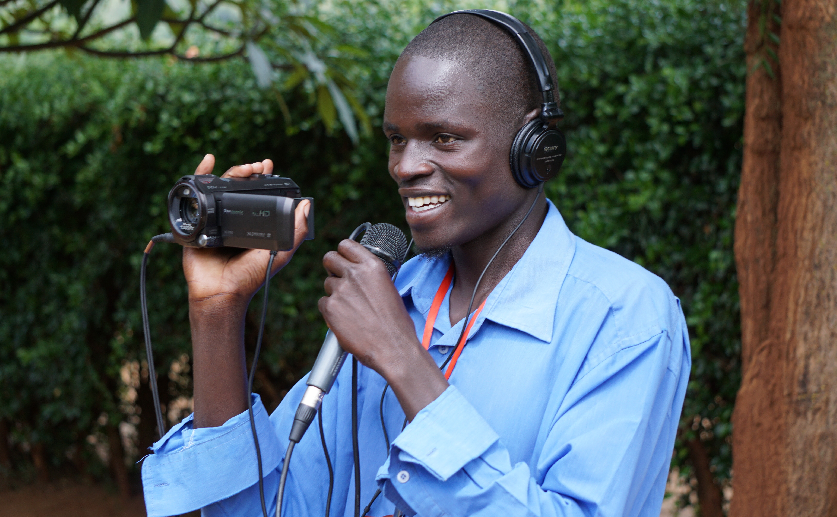
This case study looks at a youth-focused communication for development intervention in Uganda carried out in partnership with the Straight Talk Foundation as part of the Peacebuilding, Education and Advocacy in Conflict-Affected Contexts (PBEA) programme. The intervention sought to promote awareness about conflict drivers and to strengthen the peacebuilding competencies of youth and communities to mitigate and manage conflicts in and around education. The case study presents a compilation of data collected before, during, and after the programme implementation and seeks to assess changes at the individual, community, and institutional levels as a result of the intervention.
The multi country PBEA programme is a cross-sectoral initiative designed as a partnership between the United Nations Children’s Fund (UNICEF), the Government of the Netherlands, the national governments of participating countries, and other key partners. The overarching goal of this four-year programme is to strengthen resilience, social cohesion, and human security in conflict-affected contexts – including countries at risk of, experiencing, or recovering from conflict. As part of the PBEA programme in Uganda, UNICEF partnered with the Straight Talk Foundation (STF) to “strengthen youth access to information, participation, and skills in relation to conflict management, and to actively work with education stakeholders in local communities to build awareness of conflict drivers around education and to foster mechanisms for inclusive participation as well as mitigation and resolution of conflicts affecting children and education institutions.”
The paper explains that the intervention has been informed by an analysis of conflict drivers affecting children, youth, and educational institutions in Uganda. Studies had identified that conflict drivers particularly affecting education included: “challenges relating to unclear communication between schools, parents and local authorities; low levels of parental engagement and involvement; children’s basic needs and school requirements not being met; lack of effective mechanisms to respond to disputes between schools and local communities were strongly articulated along with a deep frustration from youth and parents over the educational outcomes that in the eyes of many contribute to high levels of youth unemployment and unproductiivity”.
The paper outlines in some detail the intervention of the STF, which took place between 2014 and 2015 in 20 districts across Western Uganda, Northern Uganda, and Karamoja, and includes a discussion about the theory of change underpinning this particular part of the intervention. In terms of communication for development activities, the intervention involved a range of media-based activities such as radio programmes and thematic ‘EduTalk’ newspapers, as well as listening groups, community dialogue activities, youth clubs in schools, and drama performances. These were all designed to: provide information and skills to youth around conflict management, build awareness among education stakeholders in local communities of the conflict drivers around education, encourage inclusive participation of all stakeholders, and build mechanisms that will help mitigate and resolve conflicts affecting children and education institutions.
The case study presents findings from programme monitoring along with evidence from quantitative baseline and endline surveys and a participatory most significant change assessment, which explores the impact of the programme intervention as experienced and expressed by the programme participants.
The report outlines the results according to the following four domains of change which informed data collection, particularly the most significant change assessment:
1. Awareness about conflict drivers in education and peace-building
2. Demonstrated individual skills and capacity developmen
3. Youth role in the community
4. Community results from dialogue, radio and youth
Overall, the report outlines the key findings as follows (as extracted from the Executive Summary):
“Overall it is found that the intervention strategy has been highly relevant. Strong results are identified across parameters such as increased awareness about conflict drivers in education among both youth, parents and community leaders. There is evidence of adoption of new practices among program participants in relation to both conflict management, taking on roles of advocating for conflict sensitivity in education in the community; as well as emerging trends of gender transformative changes in attitudes and practices around child marriages and girl’s access to education.
One of the strengths of the intervention has been found [sic] its ability to provide access to information on peacebuilding and education that youth and community members in many cases have highly limited or no access to. The media‐based intervention paired with community dialogue events has proven to be a powerful method in firstly dispersing information and cultivating interaction over conflict drivers and their solutions, and secondly to tap into channels of communication in communities that has enabled a trickle-down effect from direct participants to secondary beneficiaries in the wider community.
The findings of the qualitative assessment with program participants have been corroborated with random sampled youth respondents in target locations, and the evidence points to [the fact] that the program has contributed to a move towards increased use of dialogue-based conflict management methods, increased use of community structures in conflict management and community members experiencing that conflict levels have reduced within schools and between school and community members. Most importantly, responses to the quantitative surveys in 2015 and 2016 respectively indicate a change in perceptions of how much of a problem physical violence, lack of safety and sexual violence in schools – indicating a trend of reducing the scope of these grave issues in education.
The intervention has been found to be highly successful in strengthening collaborative partnerships among education stakeholders. The program has had an notable reach beyond the main target group of youth, and has been found to contribute to changes in parental engagement and investment in education as well as the engagement of local leaders in addressing conflict drivers such as teacher absenteeism and barriers for equitable access.“
The report concludes with a list of lessons learned and observations, highlighting that a key learning from this interventions is a reaffirmation of the applicability of the approach, and that it can be recommended for replication, scaling, and mainstreaming.
UNICEF Learning for Peace website on August 26 2016.
- Log in to post comments