










































Blended Learning Using Peer Mentoring and WhatsApp for Building Capacity of Health Workers for Strengthening Immunization Services in Kenya
JSI Research and Training Institute, Inc.
"Innovative learning strategies outside of formal classroom trainings are needed to improve frontline health workers' competencies for achieving immunization coverage goals that have become more important now during the COVID-19 pandemic..."
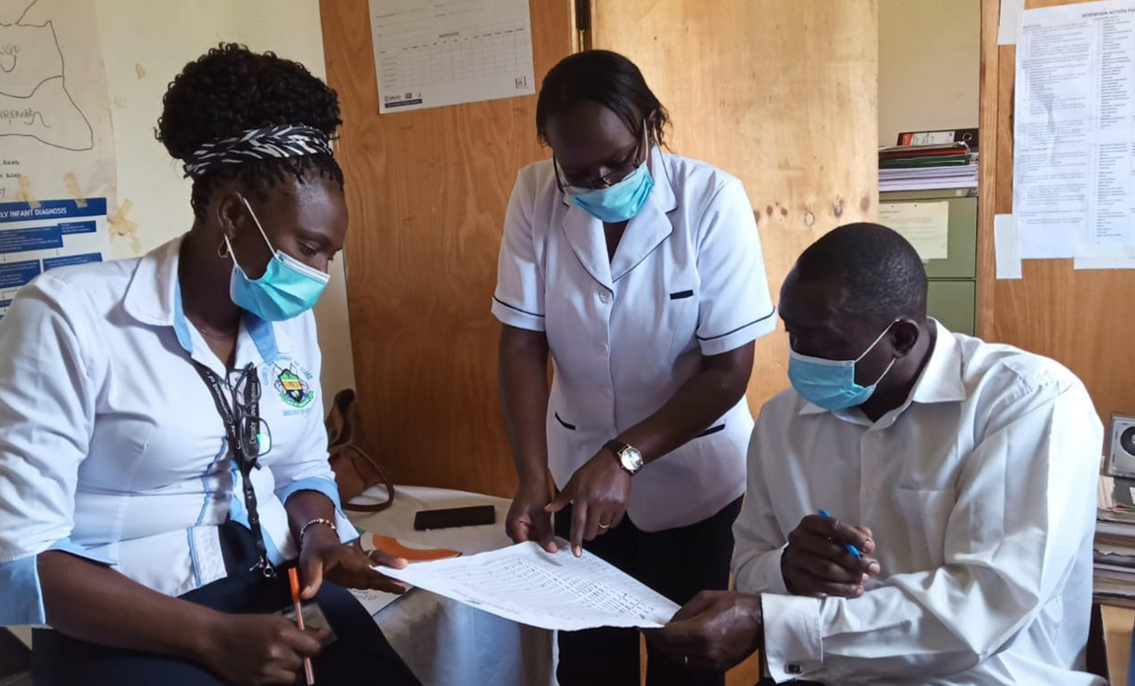
Immunisation training for healthcare providers has until recently predominately taken the form of classroom-based lectures. Increasingly, however, learner-centred education methods are being used to encourage active participation and learning, with the traditional lecture method complemented by need-based, individualised, and interactive immunisation capacity building that doesn't disrupt healthcare workers' regular duties and that strengthens networking and communication among nurses. This case study describes JSI (John Snow, Inc.) Research & Training Institute's pilot use of peer mentoring with WhatsApp for immunisation capacity building of maternal and child health (MCH) nurses in the Lari and Machakos subcounties of Kenya.
Process:
In December 2017, 40 health facilities (20 in each subcounty) were selected to study the peer mentoring and WhatsApp capacity-building programme, which was designed to build individual immunisation capacity of MCH nurses while fostering cross learning in a less hierarchical manner. Ten MCH nurses (5 in each subcounty) were selected to be peer mentors; all 5 mentors in Lari were female, and all but 1 mentor in Machakos were female. In January 2018, formative research was conducted using a human-centred design (HCD) approach in 19 low- and high-performing health facilities (10 in Lari and 9 in Machakos). In-depth interviews were conducted with 16 MCH nurses and supervisors in Lari and 15 MCH nurses and supervisors in Machakos; based on the findings, prototyped intervention concepts of peer mentoring and use of WhatsApp were created and tested. Takeaways from the formative research were:
- MCH nurses may be relutant to reach out to their supervisors, either face-to-face or electronically, for support related to immunisation services, perhaps due to the perception of the supervisor as having a position of power that is intimidating to MCH nurses.
- Peer mentorship must be built on a foundation of trust. This allows nurses to feel comfortable having conversations with peers, leading to open exchanges of knowledge and skills.
- Moderators of the WhatsApp networking groups must demonstrate an open-forum dialogue to make members feel comfortable to participate and create an environment that is conducive to free discussion while also enhancing the mentees' knowledge.
A 2-day orientation training in March 2018 was conducted for the mentors in each subcounty to introduce the processes, steps, and challenges of peer mentoring. The 5 phases of peer mentoring are: (i) seeding - time of relationship building potential; (ii) opening - initiation and progression of mentoring relationship; (iii) laddering - period of reciprocal interaction; (iv) equalising - mentee and mentor become equal; and (v) reframing - reflection and recognition. The mentors were also trained on the use of WhatsApp networking. Each mentor was assigned 4 mentees.
From April 2018 to March 2019, mentors met with mentees in their health facilities at least monthly. A mentors' WhatsApp group was formed in April 2018 and was cofacilitated by the research coordinator with support from the subcounty Expanded Program on Immunization (EPI) focal person. The mentees' WhatsApp group was formed in July 2018, with both mentees and mentors participating, and was facilitated by the mentors on a rotating basis (with initial support from the research coordinator).
Assessment:
In February 2018, baseline data collection was conducted to assess immunisation knowledge, skills, and practices of the 20 selected MCH nurses (mentees) at the 20 selected health facilities in each subcounty (total 40 in both subcounties). Starting in April 2018, during each mentoring visit, mentors recorded each mentee's learning progress using a CommCare digital checklist (a mobile application). The endline assessment was conducted in March 2019 in 34 of the 40 initially selected health facilities (19 in Lari and 15 mentees in Machakos), after 6 facilities (1 in Lari and 5 in Machakos) dropped out.
Analysis of CommCare data showed a steady increase of mentees' average scores in capacity building across all technical areas in both subcounties between the launch in April 2018 and the end of the peer mentoring programme in March 2019. In Lari, comparing baseline with endline assessment data, positive changes in mentees' knowledge were found in 11 of 12 immunisation technical areas; in Machakos, positive changes in mentees' knowledge were found in 10 of 12 immunisation technical areas. In both Lari and Machakos, mentees were found to have positive changes in skills and practices for 11 of 17 activities observed.
Mentees reported that nonjudgmental support, tracking of progress, and positive feedback from mentors during peer mentoring sessions were instrumental in building knowledge and skills. Their positive perceptions of peer mentoring were attributed in part to its individualised method of learning at the facility, rather than the previous didactic lecture methods, which were conducted in classrooms. Challenges to mentoring included turnover of mentees and supply issues with vaccines and vaccinating materials, which prevented the mentees from putting the new knowledge and skills into practice for improving routine immunisation services.
Analysis of transcribed WhatsApp data showed that both mentors and mentees actively participated in the WhatsApp groups and posted knowledge questions, opinions, and experiences in their respective groups. Mentees said that discussion in the WhatsApp group acted as a reminder of what they learned and as method to get further clarification of any questions and issues related to routine immunisation. Interaction in the WhatsApp platform was found to be helpful in building confidence among MCH nurses in voicing issues they were having related to routine immunisation services. The WhatsApp platform was also useful for sharing national immunisation policy guidelines or other relevant reference documents.
Reflections:
The case study reflects on factors influencing the success of peer mentoring, such as a relationship that is based on mutual trust and respect; this mentorship can empower a partnership between two people who have a shared set of learning objectives. Support from supervisors and facility managers are critical to plan and implement on-site peer mentoring. With regard to the WhatsApp groups, however, the inclusion of a supervisor as moderator in the mentees' group could introduce power imbalances that might hinder participation. Moderation of the mentees' groups by the mentors (who were not direct supervisors) in the study created an open and nonjudgmental environment for mentees that made them feel comfortable to post questions in the group.
Beyond the life of the project, both subcounties decided to increase the number of mentors, graduating some of the existing mentees into mentors to expand peer mentoring in all the health facilities providing immunisation services. WhatsApp group members remained active and continued to participate in the discussions. To generate further evidence, a cost-benefit study could be conducted to compare peer mentoring (along with WhatsApp networking) with classroom-based training for health workers.
Global Health: Science and Practice Journal April 2021, 9(1):201-215; https://doi.org/10.9745/GHSP-D-20-00421. Image credit: JSI
- Log in to post comments