










































Assessing How Agricultural Technologies Can Change Gender Dynamics and Food Security - A Three-Part Toolkit
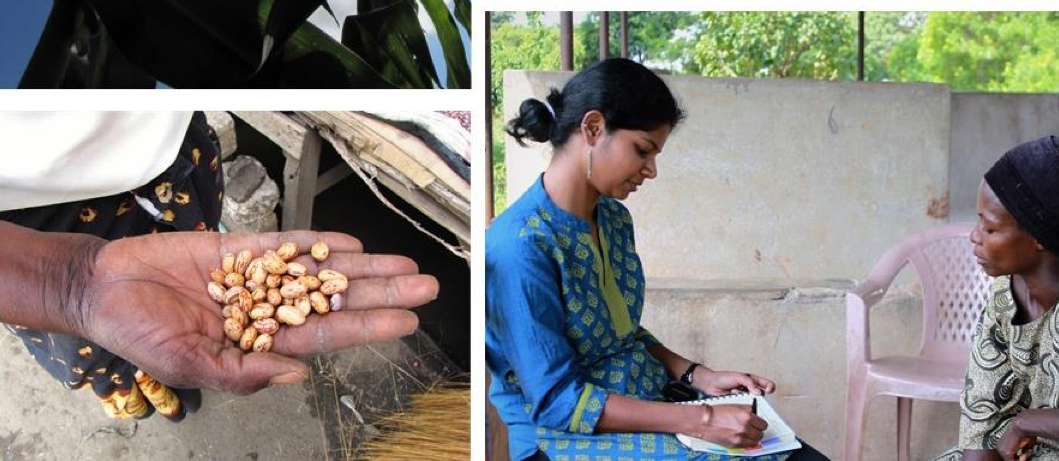
The INGENAES toolkit, developed by Cultural Practice, LLC, introduces a methodology that is designed to aid practitioners and researchers in assessing whether agricultural technologies they are planning to introduce or promote are gender-responsive and nutrition-sensitive in terms of design, use, and dissemination. It can be used to improve the design of agricultural technologies that: appeal both to women and men farmers, increase women’s access to benefits from the adoption of technologies, and incorporate distribution models that respond to women farmers’ needs through extension agents, input suppliers, and mobile devices. It focuses on three areas: time and labour; food availability, access, quality, and safety; and income and assets.
Agricultural technologies are defined as “practices or techniques, tools or equipment, know-how and skills...[alone or together]...that are used to enhance productivity, reduce production and processing costs, and save on scarce resources or inputs, such as labor or energy (Ragasa 2012: 5).” These can be broadly categorised into three groups: (1) intangible (knowledge-based or management practices around, for example, fertilisation practices); (2) a tangible or physical technology (such as storage containers or tractors); or (3) a biological technology (such as biogas or animal vaccines).
The toolkit was developed to address the constraints to research, adoption, and scaling of agricultural technologies related to gender issues. As explained in the toolkit, “Awareness that technology is not designed in a vacuum but reflects and responds to policies, institutions, and social values is increasing, especially in technological fields such as personal electronics, but is not yet a mainstream perspective in agriculture. Too often, research and/or AES [agricultural extension services] do not differentiate between different types of farmers and their respective needs, including differences between men and women farmers that might limit the benefits that each group might receive, including higher productivity, reduced labor, and increased access to income and improved nutrition.”
The methodology was developed by Cultural Practice, LLC, as a consortium partner of the Integrating Gender and Nutrition within Agricultural Extension Services (INGENAES) project, funded by the United States Agency for International Development (USAID). The toolkit was piloted between 2015 and 2017 in Bangladesh, Zambia, Nepal, and Sierra Leone.
It consists of the following three parts:
- Part 1: LEARN - This section of the toolkit discusses the relationships between gender, nutrition, and agricultural technologies. It is divided into short thematic chapters that each describe one of three areas of inquiry: 1) time and labour; 2) food availability, access, safety, and quality; and 3) income and assets.
- Part 2: APPLY - This section provides readers with a set of tools to collect, organise, and interpret information about agricultural technologies to improve the design and dissemination of technologies in ways that increase adoption by men and women farmers.
- Part 3: SHARE - This section of the toolkit is a facilitator’s guide for designing and conducting a workshop on the methodology. The facilitator’s guide is made up of slides and exercises that were found to be most useful in sharing the methodology during pilot workshops.
The toolkit also includes an introduction section and a series of technology profiles.
English
Email received from Cultural Practice, LLC on October 26 2017 and Cultural Practice, LLC website on October 31 2017.