










































Applying a Behavioral Science Lens to Maternity Care in Liberia: How Scarcity, Salience, and Structural Factors Impact Likelihood of Facility Delivery
ideas42 (Flanagan, Schachter, Smith); Center for Population & Reproductive Health (Parwon, Jusu); Breakthrough ACTION (Okanlawon)
"Behavioral solutions that support women to make these difficult decisions and empower communities to address local challenges are still sorely needed."
Delivery in well-equipped facilities is important to prevent the major causes of maternal mortality. Social and structural barriers are well established across low-resource contexts; less understood is the interaction between the psychological dimensions of behaviour and a pregnant woman's environment to either facilitate or hinder facility-based delivery (FBD). This paper shares formative research that applied a behavioural design approach to explore the context shaping decision-making and behaviour of pregnant women and others with influence in Grand Cape Mount, Liberia.
Grand Cape Mount was selected for the study, as it had the lowest rate of FBD in 2021 amongst the six counties in which the broader United States Agency for International Development (USAID)-funded social and behaviour change (SBC) project supporting the formative research reported here and subsequent co-design activities operates. Liberia's mortality rate is one of the highest in the world.
Behavioural design leverages insights from behavioural economics, social psychology, human-centred design, and other disciplines to develop and testsolutions that reshape people's environment to positively influence their behaviour. This approach is not based on a specific behavioural model but, rather, entails systematic process for exploring the applicability of a wide range of behavioural principles incorporated in existing behavioural models.
Based on input from local partners and review of the literature, the researchers first developed a process map detailing all the decisions and actions a woman in Grand Cape Mount must make in order to successfully deliver at the health facility. They then systematically generated a series of hypotheses about the behavioural barriers that pregnant women may face, using an internal set of prompts derived from key insights and principles from the behavioural science literature, a core step in the behavioural design approach, which were then used to develop interview guides. In-depth interviews (n = 58) were conducted in 2021 with pregnant and postpartum women aged 18 and older, family members, facility-based providers, trained traditional midwives, community health assistants, and community leaders.
Interviewed women and family members confirmed that most pregnant women in Grand Cape Mount County do intend to deliver in a facility and noted this as a shift from previous generations or from their earlier child-bearing years. The paper presents insights into the socio-ecological context and influential factors contributing to behavioural delays and challenges at each stage that can reduce the likelihood that a woman is able to successfully deliver in a facility:
- Care seeking for antenatal care (ANC): Unwanted or unplanned pregnancies lead many young women to delay telling others or seeking care. Furthermore, structural constraints (e.g., poverty causing transportation difficulties) to attending ANC lead to fewer opportunities for women to consider delivery planning. As this study was conducted during the COVID-19 pandemic, participants also mentioned fears in the community driven by misinformation - for example, that you will be injected with coronavirus at the facility, or you will be forced to take a vaccine that will kill you, which may also make women hesitant to seek care.
- Planning and preparation for childbirth: Providers and women focus on ensuring a healthy pregnancy during early ANC and deemphasise preparing for delivery. Providers may not fully understand the challenges women experience in arriving at the facility and provide advice that is difficult to carry out. Partners can be a source of stress for pregnant women and divert attention from planning. While the husband is often responsible for making decisions during pregnancy and labour, husbands who work in mines or migrant labour, as was common in this study area, may be gone for long periods of the pregnancy, which makes planning more difficult. Furthermore, high and unpredictable costs can make saving appear unattainable, resulting in inaction.
- Care seeking for birth: Pregnancy denial may extend to labour denial and fear among adolescents, delaying departure to the facility. Women have trouble distinguishing labour or expect "slow pain" and do not time their departure appropriately, particularly when they need to travel long distances and/or when fears about the costs of staying a facility lead them to wait until it is too late.
- Arrival to facility for birth: Transportation options in the community are limited, difficult to find in a moment of need, and not always appropriate for a woman in labour, requiring women to plan and depart for the facility earlier. The multiple steps and gatekeepers can create delays between suspecting labour and departure.
- Provision of adequate care: Providers may turn away women in early stages of labour, not realising the challenges faced to arrive and the challenges they may face to return.
In short, this study found that, while most women intend to deliver in a facility, poverty compounds difficulties at each step of the continuum of care, with the cumulative impact making FBD more difficult for lower-income, rural women to achieve. The findings reveal the importance of delays earlier in pregnancy, as economically poor families have to weigh trade-offs of various aspects of planning and saving more carefully while also facing chronic scarcity and competing demands for attention.
Per the researchers, "While psychological research can illustrate the why behind the individual actions and decisions that underlie behavior, the barriers...identified highlight the systems, social, and community challenges that cannot be solved by downstream solutions alone." Suggestions for making it easier for women to deliver in facilities include:
- Programmes should support community mobilisation and problem-solving to address structural gaps as a means to increase access to transportation and feasibility of staying in maternity waiting homes. These and other solutions will be critical to ensuring access to care for all.
- Programmes should make the critical obstacles that families may not be fully considering more salient (noticable/important) earlier on in the continuum of care, relative to other pregnancy and delivery concerns.
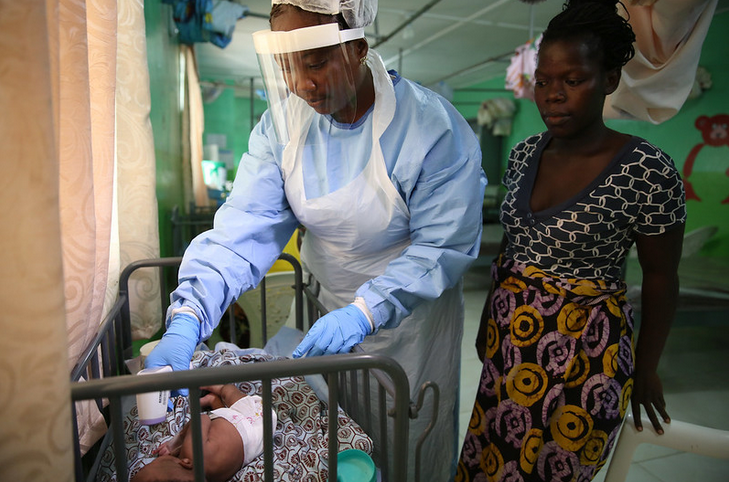
SSM - Qualitative Research in Health, Volume 5, June 2024, 100409. https://doi.org/10.1016/j.ssmqr.2024.100409. Image credit: © Dominic Chavez/World Bank via Flickr (CC BY-NC-ND 2.0 Deed)