










































Advancing Freedom of Expression - Using Digital Innovation to Foster Article 19 in the Global South
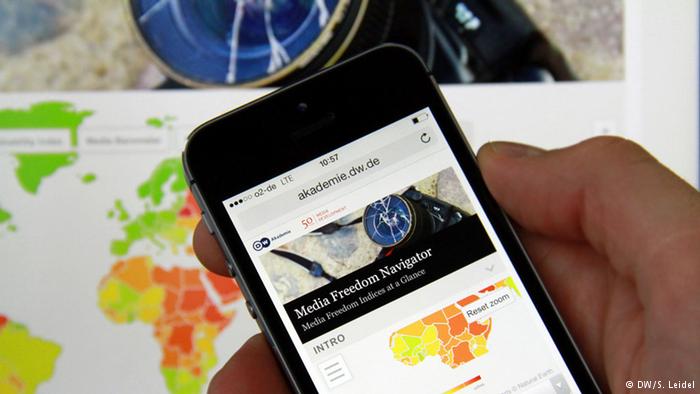
“Digital technologies have created numerous new opportunities of how to exert the basic human rights of freedom of expression and access to information. At the same time, new possibilities of how to limit or violate these very rights have arisen. Digital technologies have also demolished the gates journalists used to keep. The public domain is no longer only dominated and shaped by traditional media institutions. Today, individuals, various actors of civil society, as well as experts can communicate opinions and information to a broad public.”
This publication looks at how the media in the global south is using digital technology innovation to foster Article 19, which guarantees freedom of expression and access to information as a human right. The document is based on a study of 16 projects that use digital technologies to strengthen Article 19 across Africa, Asia, and Latin America and provides insight into the methodologies and technologies being adopted. The study is an attempt to learn from projects using digital technologies in order to inform the future work of media development organisations (MDOs).
The study has been divided into four sections for ease of reading. Section one titled "The Debate” consists of the executive summary, introduction, literature review, and the proposed research questions. Section two is the research component named "Best Practices" and comprises the methodology and research of 16 media projects. In section three, the "Conclusion" is set out, and section four is the "Appendix", which includes recommendations and background documentation.
As outlined in the first section, the study defines the four functions the media were supposed to accomplish in the pre-digital age and analyses to what extent projects, other than traditional media outlets, can fulfil them using digital technologies. The four functions are: 1) creating a public sphere, 2) supporting participation and inclusion, 3) providing access to information, and 4) holding those in power accountable. The document then looks at how the initiatives selected for this study seek to support freedom of expression according to these four categories. In addition, in order to provide further insight into the opportunities and challenges projects using digital technologies offer to the implementation of Article 19, the study seeks to answer the following research questions:
- What are opportunities, challenges, and pitfalls for freedom of speech in innovative projects using digital technologies?
- What lessons can be learned from a project’s evolution and possible changes of focus over time?
- What is the relationship between technological innovation and innovation in media practices in fostering freedom of expression?
- How do these projects survive, and what are their requirements and approaches to sustainability?
The following is a brief overview of the 16 projects discussed in section two of the publication, which highlights the key areas of media development that each initiative is engaged with. It also illustrates the variety and breadth of techniques and digital technologies being adopted to address differing issues:
- 263 Chat (Zimbabwe): Independent media organization seeking to stimulate discussion on issues affecting Zimbabwe using social media.
- Africa Check (South Africa): Nonprofit fact-checking site checking claims and statements made by politicians and other public figures.
- African SkyCAM (Kenya): Project investigating the use of drones for journalism and storytelling in Africa.
- CGNet Swara (India): Nonprofit providing local news in audio form to rural communities in central India.
- Extra’s WhatsApp (Brazil): Popular Rio daily paper encouraging the general public to send tips, photos, and videos via WhatsApp.
- Follow the Money (Nigeria): Advocacy organisation tracking aid funding promised by the Nigerian government using data journalism.
- HarassMap (Egypt): Advocacy organisation which collates and maps reports of sexual harassment in Egypt.
- InfoAmazonia (Brazil): Online environmental site providing richly detailed maps, data, and news from the Amazon basin.
- Mera Swasthya Meri Aawaz (India): Women’s rights organisation which collates reports of illegal fees charged by maternity hospitals in northern India.
- Open Development Cambodia (Cambodia): Open data website and information hub aggregating data, maps, legislation, and research publications on Cambodian development issues.
- Our Health (South Africa): Citizen journalism health reporting project on people’s experiences of using South Africa’s new national health insurance scheme.
- Plaza Publica (Argentina): Online investigative reporting site that publishes analysis and in-depth investigative and data-driven journalism reports.
- Poderopedia (Chile): Database of influential people and organisations with visualisations of the connections between the rich and powerful in Chile.
- Rutas del Conflicto (Colombia): Online database of massacres perpetuated during Colombia’s civil war.
- Trac FM (Uganda & Somalia): Software platform used for SMS (text messagine) opinion polling during radio broadcasts.
- VozData (Guatemala): Data digitisation project of La Nación newspaper that converts scanned PDF documents into a usable dataset.
Overall, an analysis of these projects “highlights the strengths of digital technologies in providing access to information and creating a public sphere. On the other hand, they are still weak at cultivating inclusiveness of society because they often find it hard to actually bridge gaps and reach out to disadvantaged groups as planned. The fourth aspect, holding to account, might turn out to set the limits for MDO’s engagement in the future. It is the question of holding to account that the initiatives differ the most in their approaches to foster Article 19. While some aim to publish information on the activities of those in power as a means of holding them to account, others use information gathered with the help of digital technologies for their classical lobbying activities.”
The following are some of the findings related to the research questions outlined above, which are discussed more extensively in the conclusion section of the publication:
RQ 1: What are opportunities, challenges, and pitfalls for freedom of speech in innovative projects using digital technologies? - In brief, the study demonstrates that digital technologies can help foster freedom of expression and access to information in all its aspects. They can offer new ways of creating a public sphere, foster inclusiveness of society, help to provide access to information, and hold those in power to account.
RQ 2: What lessons can be learned from a project’s evolution and possible changes of focus over time? - The projects in the study showed, among other things, that projects often change over time. Some things work well initially but then lose momentum, some ideas do not work from the very beginning, and other ideas are so successful that they struggle to meet the demands of high usage. One of the things this highlights is need for continual evaluation and reassessment of project goals and the means by which a project aims to reach these goals. This could require strategy changes mid-project that may need additional financial support.
RQ 3: What is the relationship between technological innovation and innovation in media practices in fostering freedom of expression? - The projects studied highlight the importance of having a technology strategy, which needs to include an assessment of available technical skills (both internal and external) and an infrastructure assessment – even when only basic technologies are foreseen for the project. It also showed that “technology works best when it is integrated within a strategy with a specific goal or objective. As such, innovation is not about developing new tools or software for the sake of it. Rather innovation is about creating innovative practices and processes that realize some aspect of freedom of expression.”
RQ4: How do these projects survive, and what are their requirements and approaches to sustainability? As stated in document, “given the diverse scopes and circumstances of digital technology initiatives, there is no ‘one-size-fits-all’ solution to financial sustainability. However, most of the initiatives show a desire to become less dependent on donor organizations, and diversify their income streams. Methods being explored include soliciting individual and corporate donations, starting crowdfunding campaigns, holding fundraising events, and the sale of services such as consulting and training.”
The final section of the publication offers recommendations to initiatives using digital technologies related to strategy, integration, sustainability, openness, data for public interest, participation, and skill sharing. It also offers more detailed descriptions of each of the 16 projects in this study.
DW Akademie website on December 1 2016.
- Log in to post comments