










































Extending the Learning Community: Rural Radio, Social Learning and Farm Productivity In Ghana
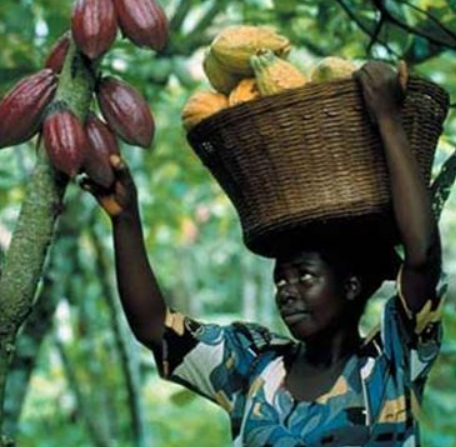
Africa Growth Initiative (Taiwo); University of Cape Coast (Asmah)
This 28-page paper examines the potential role of rural FM radio stations in facilitating indigenous agricultural knowledge sharing in Ghana. According to the paper, agricultural productivity remains a crucial factor in poverty reduction and rural transformation in Africa. Recent developments in communication and socialisation infrastructure have extended the sphere of social learning beyond village borders. In the Ghanaian context, the rural radio phenomenon has successfully moved the borders of social learning from the village to the range of radio broadcasts. This paper attempts to evaluate the impact of social learning through rural radio on crop yields in Ghana.
According to the paper, while changes in inputs and markets are well captured in analyses measuring changes to agricultural productivity, the impact of extension services are muted in these reports. The analyses omit a crucial change in the form of the knowledge to which farmers are adapting and the ways in which this knowledge is being disseminated. The literature on knowledge systems clearly distinguishes between formal or explicit knowledge that is based on scientific evidence and informal or tacit knowledge that is experimental and is acquired after a given practice has proved fruitful. Whereas orthodox extension services focus on application of the former, there is evidence that farmers are instead shifting to the latter.
Through analysing existing data - The Ghana Living Standard Surveys (GLSS) 3 (1991–92) and GLSS 5 (2005–6) and Demographic and Health Surveys (DHS) conducted in 1993 and 2003, the researchers found that that variation in expenditures on labour inputs do not explain cocoa yield. The availability of agricultural extension service seemed to help raise cocoa yields in the 1991–92 survey, but this effect disappeared in a subsequent 2005–6 survey. The other institution through which farmers learn from one another — farmers' cooperatives — did not have any effect on crop yields in either survey. One potential explanation for this finding that the study verified anecdotally in Ghana is that the cooperatives are more focused on issues of farm credit and political representation than the traditional purpose of knowledge dissemination. However, the study suggests increases in television viewership and radio listenership are both associated with higher crop yield in the two surveys. The increase in the radio intensity correlation is more dramatic compared with the television viewership. The differential increase in the positive relationship of radio intensity over television may capture the possibility that farmers are able to share more information on the radio than on television, implying that a 1 percent increase in radio intensity provides more productive knowledge than television.
Researchers also found that the results support the hypothesis of a positive conditional correlation between social learning through radio listening and the growth of noncocoa yield between 1991–92 and 2005–6. The next challenge is to demonstrate the extent to which social learning contributes to noncocoa yield growth differentially in cocoa areas compared with noncocoa areas, because crop yield statistics show that the growth rates are different by area. The research also found that noncocoa crops have done better in cocoa regions than in noncocoa regions. This may be because differences in ecological conditions may induce cultivation of different types of noncocoa crops in both cocoa and noncocoa regions. If noncocoa technologies in cocoa regions are more amenable to learning by doing than noncocoa technologies in noncocoa regions, there may be greater access to inputs in cocoa regions, and there may be knowledge spill overs from formal extension services that are more common in cocoa regions than in noncocoa regions. Because there are more research facilities in cocoa regions, noncocoa technologies may also be subject to scientific analysis to some extent in cocoa regions and noncocoa farmers may benefit from this knowledge.
The paper concludes that there is a positive correlation between the intensity of participating in rural radio networks and the increase in noncocoa crop yield, and authors interpret this association as having emerged through the socialisation of farming knowledge through radio listenership. The finding of conditional correlations between participation in rural radio and crop yield does little to establish the channels through which information shared on radio programmes influences farm technology. Further work in this area will involve developing testable frameworks to explain how farmers interact on radio programmes, analysing the content of agricultural programmes on rural radio and developing a model of learning through radio networks. The correlations found suggest the existence of an enormous potential for agricultural research to make an impact on farm practices at a faster rate than orthodox extension services if research institutions take advantage of widely broadcast community radio programmes. Utilising this recommendation, agricultural research findings would not simply sit on shelves or in conference papers, but would be communicated directly to the end users, the farmers, via programmes on rural radio stations.
Brookings website on September 7 2013.
Image credit: Ghana Permaculture Institute.
- Log in to post comments