










































Final Project Report: Her Farm Radio in Ethiopia, Malawi, Tanzania and Uganda
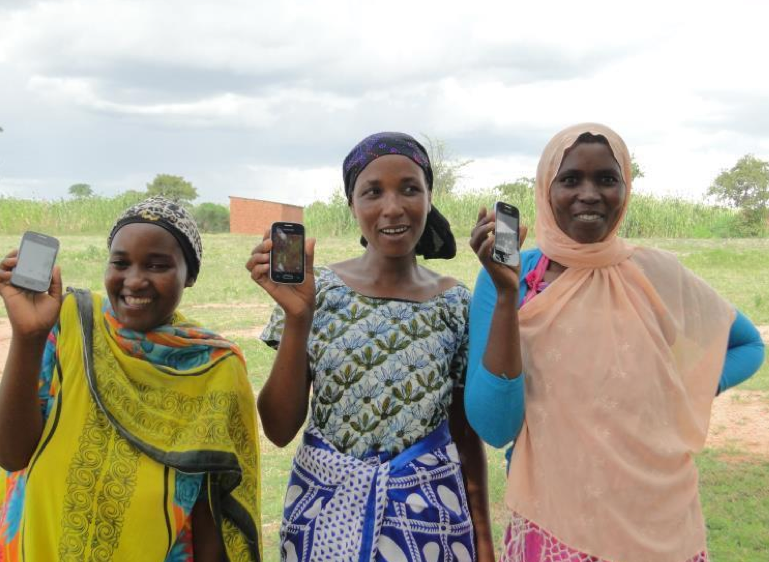
“Women carry out a substantial and growing part of the work on family farms and represent 43 per cent of the global agricultural workforce....For women to have more meaningful contributions to farm management and decision-making, they must have consistent access to relevant and reliable agricultural information provided through easily available means that suit their daily lives and schedules.”
This report describes the experiences, outcomes, and impact of the Her Farm Radio (HFR) project, which was implemented by Farm Radio International with funding from the International Fund for Agricultural Development (IFAD) in Ethiopia, Malawi, Tanzania, and Uganda between January 2015 and June 2017. The project goal was to increase the extent to which farm radio programmes broadcast by 12 stations in the four countries feature the voices, perspectives, and concerns of female farmers and provide them with increased access to information that is critical to improving their livelihoods. The project was implemented in response to recognised barriers facing rural women in accessing relevant agricultural information and in having their needs, experiences, and questions shared on a wide-reaching communication platform. As explained in the report, “Women’s lesser access to radio sets and mobile phones, the paucity of rural women’s voices within rural radio programs, and the lack of on-air discussion of gender-related issues of importance to women all conspired to reduce the relevance of rural radio to female farmers.”
The report describes the 'Her Voice on Air' approach used by the project, which was a new tool designed and developed specifically for this project, built on Uliza (FRI’s interactive voice response system and dashboard) for facilitating, harvesting, and incorporating rural women’s voices, perspectives, and questions into rural radio programmes about agricultural topics of particular interest to female farmers. The approach involves training for both radio broadcasters and women in rural communities where those radio stations air. Broadcasters were trained to incorporate a gender-sensitive approach in their programming to address the information needs of women through interactive radio programming. This includes practical information on farming practices that are tailored for the crops grown in each area, as well as the facilitation of discussions around topics such as gender-based violence and family planning. Women, forming community listening groups, were furnished with smartphones and wind-up radios and given training on how to contribute to and use the available radio programmes to their benefit. They learned and practiced how to call in to radio shows live and how to use their mobile phones to record and contribute content for inclusion in rural radio programmes.
The report looks at the project achievements in each country in relation to the following objectives:
- Objective 1: To build the skills of women members of 120 radio listening groups (thirty groups in each project country) to contribute content to regular, interactive farm radio programmes.
- Objective 2: To use a “Beep-to-Vote” system to enable women farmers to express their views on a variety of agricultural issues and topics.
- Objective 3: To build the skills of radio station production teams in incorporating the voices, stories, perspectives, and concerns of women farmers, and meeting the information needs of women farmers in their rural radio programmes.
- Objective 4: To ensure that weekly episodes of farm radio programmes of 12 rural radio stations regularly feature the voices, perspectives, stories, and concerns of women farmers through weekly programme monitoring.
- Objective 5: To ensure that the weekly farm radio programmes address the priority information needs of women farmers.
Some of the achievements by the 13 radio stations that are highlighted in the report:
- Reached over 8.1 million listeners.
- Conducted 49 days of training for the rural radio production teams.
- Facilitated the formation of 134 community listening groups with a total of 2,314 members and equipped them with smartphones and wind-up radios.
- Provided 4,113 listening group members with training on the use of radios and smartphones.
- Facilitated the production and broadcast of 262 episodes of farm radio programmes containing content directly generated by women in community listening groups. The discussion includes an outline of each radio programme, the format, and topics dealt with.
FRI collected both quantitative and qualitative data to assess the impact of the project. These are discussed in detail in the report and include personal stories of how the project had an impact on the lives of women. In brief, the report indicates that “focus group discussions revealed that the implementation of the project had a positive impact on their lives, with women in Tanzania and Uganda overwhelmingly reporting an increased sense of self-confidence, and also increased respect from others in their community. Furthermore, the quantitative survey data collected through GeoPoll also supports the relationship we believe to exist between level of interactivity with the radio program and the chances of uptaking the agricultural practices discussed on the program, as well as an increased awareness of, and belief in, gender equality in agricultural practices. Perhaps even more striking is the finding that, regardless of gender, the more the respondents listened to the radio program, the more likely they were to agree with statements that showed a positive view of gender equality in agriculture. This clearly shows an association between exposure to the radio program and shifting views on gender equality. The survey also showed that radio was indeed the most influential source of information for most respondents, even above that of agricultural extension workers and family/neighbours.”
Based on the positive impact, FRI has been experimenting with using this approach in other projects where gender equality is an emphasis. “We propose to take the use of the training modules, weekly questions, and group training to the next level by incorporating these elements into a “gender package” that can be used as part of a networked set of resources by any stations signed up to a national, FRI-led Interactive Rural Advisory Platform (IRAP). A fledgling Interactive Rural Advisory Platform (IRAP) will soon be ready for testing and development in Ethiopia.”
Farm Radio International website on October 11 2017 and March 5 2021.
- Log in to post comments