










































Real-Time Tracking of COVID-19 Rumors Using Community-Based Methods in Côte d'Ivoire
Johns Hopkins Bloomberg School of Public Health, Center for Communication Programs (Tibbels, Allen-Valley, Fordham, Nana, Naugle); Johns Hopkins Center for Communication Programs-Côte d'Ivoire (Dosso, Benie, Brou, Zounneme, Silué, Kamara)
"While consistent and clear messaging is the best way to undermine misinformation, tracking emerging rumors can help communication actors to nuance and prioritize messages."
During the COVID-19 pandemic, misinformation spread widely throughout communities and social networks. Rumours undermine public health by creating barriers to protective practices, reducing trust in health responders, and extending the duration of a public health emergency. Building on previous work on Ebola and Zika viruses, the Johns Hopkins Center for Communication Programs (CCP), with funding from the United States Agency for International Development (USAID) under the flagship social and behaviour change (SBC) programme Breakthrough ACTION, piloted a real-time rumour-tracking system in Côte d'Ivoire to identify, analyse, and respond to rumours that emerged around COVID-19. This paper describes the multipronged community-based approach to rumour collection, outlines the process of coding and managing rumour submissions, and summarises user feedback and lessons learned.
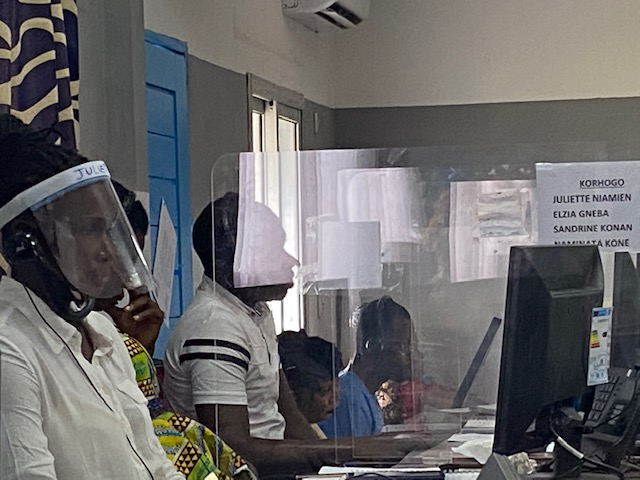
Breakthrough ACTION's approach to real-time rumour tracking (see also Related Summaries, below) leverages existing structures (like national hotlines) and local liaisons (such as community health workers). In February 2020, the team recruited and trained 20 community contributors (CCs), individuals who were in touch with communities and working in fields relevant to human or animal health, as well as teleoperators at 3 national health-related hotlines. During the 2-day training workshop, participants watched videos explaining the purpose and public health benefits of tracking rumours, worked on identifying and classifying rumours, and learned how to submit rumours through WhatsApp or the digital application.
Rumours were submitted through the CCs and collected from callers to the national hotlines and then processed on a cloud-hosted database built on the open-source software District Health Information System 2 (DHIS2). Hotline teleoperators and data managers coded rumours in near-real-time according to behavioural theory frameworks within DHIS2. For example, the Extended Parallel Processing Model (EPPM) posits that in the context of a threat, perceived susceptibility to an illness, anticipated severity of the illness, and perceived efficacy of protective behaviours to alleviate the threat can all influence whether people feel motivated to practice protective behaviours. Rumours related to the EPPM were of interest to prioritise messaging that would prompt people to take action (danger control) rather than minimise or ignore the threat (fear control).
The team visualised the findings on custom dashboards within DHIS2 that summarised the data by district, topic, belief statement, and week, allowing for rapid analysis across multiple dimensions. Insights were shared with the national Risk Communication Technical Working Group (RCTWG) during weekly coordination meetings.
During the 6-month pilot (March 1 to August 31 2020), CCs and hotline teleoperators contributed 1,757 individual submissions to the rumour-tracking system, with CCs contributing 70% of rumours received during this period. Of the rumours where a specific illness was mentioned, 97% related to COVID-19.
In brief, the system captured both widespread rumours consistent with misinformation in other settings, such as suspicions about case counts and the belief that masks were deliberately contaminated, as well as very localised beliefs related to specific influencers. Rumours related to the development of a vaccine occurred early on, then waned, and then picked up in frequency toward the end of the pilot period.
In particular, themes that were directly informed by the EPPM, such as perceptions around the personal risk of contracting the virus or the severity of COVID-19, provided data throughout the pilot and helped inform theory-informed strategies to respond to rumours through risk communication and community engagement (RCCE). In response to the rumours collected, the RCTWG coordinated RCCE efforts alongside representatives of the Government of Côte d'Ivoire and implementing partners working on SBC activities. The RCTWG prioritised rumours that were timely, reported multiple times, had the potential to cause harm, or put people at risk.
Strategic communication messages focused on sharing correct information and avoided restating the rumours. As a result of themes identified in the rumour tracker, specific messages were added to emphasise that COVID-19 exists and is a threat to everyone. Messages were disseminated through: influencers such as religious leaders; radio spots disseminated on radio stations, reaching 3.6 million people; posters and billboards placed in neighbourhoods with populations totaling over 800,000 people; and the project's Facebook page and the public Facebook pages of the Government of Côte d'Ivoire.
In general, feedback gleaned from a process evaluation involving 10 CCs, 3 RCTWG members, and 2 teleoperators was positive. The main suggestion was to expand the system to include public health issues beyond COVID-19. The RCTWG has asked the project to scale up and continue supporting the rumour tracker. CCs also requested more regular feedback so they could grow in their capacity to contribute rumours and keep informed of emerging credible information so they could share it with their communities.
Reflecting on the experience, the project team notes that the system was built on existing infrastructure, and the technology that supported the overall approach is an open-source software platform used by more than 70 countries to track health and social data. Suggesting that the real-time rumour-tracking approach is "eminently scalable", the team reflects on the Government of Côte d'Ivoire's intention to do so. Along those lines, considering that "COVID-19 vaccine-related rumors comprise, at present, the bulk of submissions to the system", the "government hopes that the system will contribute insights into vaccine hesitancy and help risk communicators adapt their approaches for the recently initiated vaccine rollout effort."
In partnership with the RCTWG, the team is applying findings from this pilot by expanding the rumour-tracking scope to incorporate social media, training teleoperators at 3 additional health-related hotlines, recruiting local radio hosts as CCs, and systematically documenting actions taken that are informed by rumour data. They note that future studies could endeavour to understand whether RCCE activities informed by rumour tracking result in greater behaviour change in desired directions.
In conclusion: "Health leaders should consider using a real-time rumor-tracking approach during public health emergencies and can build on the detailed guide and District Health Information System 2 metadata package provided for a simple, open-source, community-centered technology to make rumor data digestible to responders."
Global Health: Science and Practice 2021, Vol. 9, No. 2, https://doi.org/10.9745/GHSP-D-21-00031. Image credit: CCP
- Log in to post comments