










































"In Our Culture, if You Quarantine Someone, You Stigmatize Them": Qualitative Insights on Barriers to Observing COVID-19 Prevention Behaviors in Côte d'Ivoire
Johns Hopkins Center for Communication Programs, or CCP (Tibbels, Nana, HendricksonDanielle Amani Naugle); CCP-Côte d'Ivoire (Dosso, Benié); Université Alassane Ouattara (Kra, Gbeke, Coffi, Ngoran); Université de Cocody (Niamke)
"Ultimately, reinforcing a narrative of cohesion and shared commitment is critical to building a social movement to end the pandemic."
Data from a survey early in the COVID-19 pandemic suggested that people in Côte d'Ivoire had high awareness of the recommended prevention behaviours, but compliance was influenced to a greater extent by individuals' risk perceptions, exposure to misinformation, and trust in the government's management of the COVID-19 response. In November 2020, the Breakthrough ACTION project, led by Johns Hopkins Center for Communication Programs, undertook a qualitative study to further understand the factors that prevent Ivoirians from engaging in COVID-19 prevention behaviours as part of its work to address COVID-19 in Côte d'Ivoire through social and behaviour change communication (SBCC).
The study used the Extended Parallel Process Model (EPPM) as a behavioural framework to consider how people respond to a health concern, particularly based on their perceived susceptibility to the risk (e.g., the likelihood they might get infected by COVID-19) and the perceived severity of the consequences (e.g., the likelihood the illness would be serious for them if infected). According to the EPPM, individuals who feel threatened adopt preventative behaviours to the extent they feel that the recommended behaviours will reduce the threat (response efficacy) and if they feel they have the resources and ability to perform them (self-efficacy).
In Abidjan, a data collection team comprised of Ivoirian researchers conducted 24 focus group discussions (FGDs) and 29 in-depth interviews (IDIs) with a total of 156 members of the general population and health providers. In these discussions, they explored barriers and facilitators to seven recommended prevention behaviours (respecting a quarantine of 2 weeks after exposure, keeping a distance of 1 metre between people, wearing a mask in public, washing hands frequently, using hand sanitizer frequently, limited gatherings to fewer than 50 people, and limited non-essential travel), with a particular focus on the EPPM concepts of response efficacy and self-efficacy, as well as social norms (e.g., by asking what people thought of those who practiced these behaviours).
Participants described low uptake of the seven COVID-19 prevention behaviours, ten months after the beginning of the pandemic (at the time of data collection). This drop-off in compliance as compared to a time when fear was heightened is consistent with findings reported elsewhere in the region. However, participants felt the behaviours were very or somewhat useful (response efficacy), especially if someone close to them had survived or died from the virus. However, low self-efficacy hindered the ability of individuals to adopt or sustain even the behaviours deemed useful for preventing infection, particularly after the initial phase of the pandemic. For instance, self-efficacy was limited by economic realities: The inability to afford products like masks and hand sanitizer or the need to travel and interact with others to earn a living inhibited physical distancing or quarantining. Receiving material assistance and food supply facilitated adopting some of these behaviours, whereas misinformation - in particular, skepticism that COVID-19 exists - undermined compliance.
In general, unfavourable social norms reinforced the perception that prevention behaviours, with the exception of hand hygiene, were unnecessary or impractical - in part because of a lack of modeling by public figures and pervasive misinformation and conspiracy theories, such as beliefs that insisted that Africans were immune to COVID-19 or promoted alternative prevention methods and therapies. Participants framed their resistance to many of the behaviours in terms of social cohesion, feeling that masks, distancing, limiting travel, and quarantine were anti-social and undermined interpersonal relationships. For example, as one health worker explained, "In Côte d'Ivoire, and in Africa in general, [quarantine] is the measure that is the most difficult for the population to accept...It isn't in the culture. If you are sick, you have family around you. Isolating people like that is the measure that will derail the entire system...". As time passed, stigma related to COVID-19 further undermined normative support for the prevention behaviours as the behaviours became associated either with being ill or with negative stereotypes of people who embrace the prevention behaviours as fearful, gullible, or stupid.
Based on the findings, the researchers offer the following recommendations:
- Make behaviours that are perceived to be "antisocial" as easy as possible to practice - Practices such as mask wearing were acceptable during the pandemic's early phase of heightened fear, but have diminished greatly in social acceptability over time. To counter this, policymakers could consider how to reduce the financial barriers to purchasing masks, for example.
- Track and address rumours and conspiracy theories influencing risk perception - Misinformation continues to circulate on social media and in communities, and it is important to track and address them as they arise by leveraging credible messengers and channels most trusted by communities.
- Address stigma attached to certain prevention behaviours - Messages should aim to reframe prevention behaviours as broadly protective against myriad diseases rather than as a sign of having or fearing COVID-19. Associating influential figures with social and behaviour change messaging may help break stigma.
- Continue to highlight survivor stories - The challenge of declining risk perception is only likely to increase the longer the pandemic lingers. To achieve a meaningful protective effect through prevention behaviours, people need to see the continued impact of infection with COVID-19 and the risks that it presents.
Shaped by the findings from this study, messaging from the government and Breakthrough ACTION partners has sought to convey to Ivoirians that COVID-19 is still present and a risk, even as the pattern of caseloads may seem to trend downwards. Messaging has also focused on capitalising on the social influence of community and national leaders to highlight the importance of key prevention behaviours and normalise continuing certain behaviours such as mask wearing and social distancing. In strengthening this framing, high-level leaders must be perceived as having integrity and "practicing what they preach". "Empathetic messaging that reinforces people's collective power to protect one another and defeat the pandemic together appeals to the high value placed on social cohesion" in Ivoirian culture.
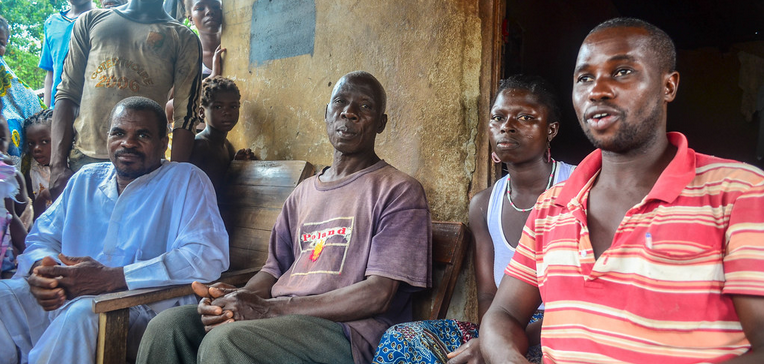
PLOS Glob Public Health 2(8): e0000489. https://doi.org/10.1371/journal.pgph.0000489. Image credit: jbdodane via Flickr (CC BY-NC 2.0)
- Log in to post comments