










































Mwananchi Programme - Ghana
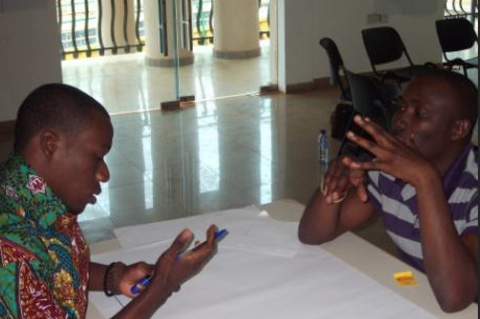
Led by Participatory Development Associates, the Mwananchi programme in Ghana is working to enhance the ability of civil society, media, and elected representatives to better access, understand, and apply information and communication as a basic resource. This involves building connections between community, district, and national decision making processes to strengthen policy dialogue between citizens and other stakeholders. This project forms part of the overall Mwananchi Programme, which is a five-year project (2008 to 2013) by the Overseas Development Institute, funded by United Kingdom Department for International Development, working in Ethiopia, Ghana, Malawi, Sierra Leone, Uganda, and Zambia to provide a dynamic platform that can give citizens a voice in enabling the state to be responsive, accountable, and capable of delivering public services to poor people.
At the initiation of the Mwananchi Programme, surveys were undertaken in focus countries in order to establish a baseline on levels of accountability across different elements of governance. The Programme Director and National Country Offices used the baseline report in order to identify thematic target areas for grant-making and to refine the Mwananchi theory of change.
As part of the programme, civil society organsiations (CSOs), media organisations, and elected officials in each country are invited to apply for small grants (on average a total of 10 per country) for projects that focus on enhancing citizens’ voices. The grants support coalitions of interlocutors to pilot innovative approaches to enhancing voice and accountability according to the context and specific governance issues. The programme supports grantees through capacity building workshops and opportunities for experience and information sharing.
Examples of projects being undertaken with support of Mwananchi Ghana include the following:
- BasicNeeds: The Mwananchi Ghana project with BasicNeeds uses a photographic documentary on the everyday lives of people with mental illness and epilepsy to influence mental health policy and practice that address the needs and rights of people with mental illness in Ghana.
- Advocates and Trainers for Children and Women’s Advancement and Rights (ATCWAR): ATCWAR was born out of a need to provide a safe haven where marginalised women and children could receive training and to be supported by an institution that would monitor their rights and advocate on their behalf. The Belandan-Bo platform is a traditional communication channel that allows communities to meet under the ambit of a traditional ruler to deliberate on community affairs and to find solutions to their own problems.
- Belim Wusa Development Agency (BEDWA): This project aims to significantly reduce the cost involved in the dowry system and reduce the payment of dowry by 50%. In order to do this, BEDWA has created a platform for communities, including women, girls, and the youth, to participate in discussions on the challenges of bride price and influence changes to the practice.
- Radio Ada: Radio Ada is using the power of radio to reduce communal tensions by initiating open discussion on the issue and advocating for greater accountability and transparency of trusteeship in the Songor by national, local, and traditional governance structures.
- SocioServe: This Mwananchi Ghana partner works by using data to empower the vulnerable (such as the physically disabled) and excluded to engage directly with duty bearers to ensure their involvement in both decision-making and policy formulation as well as the implementation and monitoring of decisions and polices that affect them. The project uses drama to create awareness and improve information flow between assembly members and vulnerable groups.
- Friends of the Nation:
This project is working to enhance voice by creating awareness among fisherfolk and other stakeholders on fisheries policies and laws, and the responsibilities of stakeholders towards sustainable resource management.
Governance
Mwananchi's theory of change centres on citizens effectively expressing their views and interests and holding governments accountable for their actions at different levels in the governmental system. This includes three key participants. The first are the citizens (the "wananchi") or ordinary people. The second are the interlocutors, such as journalists, civil society organisations, and elected representatives, who are able to 'broker' citizens' views and wishes in the policy process and form a link between governments and Wananchi. The third is the state. To increase the ability of civil society, media, elected representatives, and traditional leaders to enable citizens to effectively express their views and hold governments accountable, the programme seeks to sharpen the roles of civil society, media, elected representatives (MPs and councilors), and traditional leaders, strengthen partnerships between interlocutors for comparative advantage synergies, and increase the use of research-based evidence to influence government policies and engage citizens.
Participatory Development Associates, United Kingdom Department for International Development, Overseas Development Institute
Mwananchi website on November 1 2012.
- Log in to post comments