










































Mwananchi Programme Sierra Leone - Leh Wi Tok
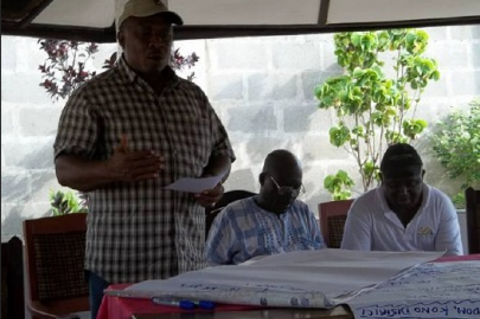
Led by The Campaign for Good Governance, the Mwananchi programme in Sierra Leone, known locally as Leh wi tok (Let us Talk), envisions a country where all citizens benefit from governance irrespective of economic and social status. In Sierra Leone, this programme is working to achieve better interactions among governance players, with a focus on building relationships between civil society, media, local councils, and parliamentarians. The Mwananchi Programme is a five-year project (2008 to 2013) by the Overseas Development Institute, funded by United Kingdom Department for International Development, working in Ethiopia, Ghana, Malawi, Sierra Leone, Uganda, and Zambia to provide a dynamic platform that can give citizens a voice in enabling the state to be responsive, accountable, and capable of delivering public services to poor people.
The implementation of the Leh wi tok programme uses the following key strategic approaches to promote dialogue and partnership between stakeholders:
- creating platforms for civil society, media, local councils, and Members of Parliament to engage in governance;
- advocating for civil society contribution to policy issues that promote civil and political liberties for women and youth;
- securing political commitments from government on civil society involvement in policy-making; and
- promoting close working relationships between civil society, media, local councils, and parliamentarians to continue the implementation, monitoring ,and evaluation of current policies on women and youth.
The programme adopts the approach of critically positioning women and youth with elected representatives, traditional leaders, and other civil society organisations in order to have the space they need to raise their voices and make their demands heard. Specific activities being carried out for the benefit of women, youth, and the poor include:
- mobilisation and advocacy and ‘action-for-change’;
- engaging for policy change on issues affecting the target group; and
- encouraging political parties to adopt policies that address issues of these groups.
The programme also seeks citizen engagement on a number of issues through consultative and representation processes. Prior commitment was sought from political actors as part of evidence for engagement in social change.
Leh wi tok, as with all Mwananchi programmes, is being implemented through partnerships with key stakeholders through a grant-making programme. For example, The Young Women's Christian Association (YWCA) is working on Women and Mining in Moriba and Mogbemwo communities in the Imperi Chiefdom Bonthe district, a mining community. The project has created a platform for women to directly and openly engage with other women to discuss issues affecting them in relation with the mining companies and as a result of the mining operations. In addition, community women leaders in Kambia District as part of the Advocacy Movement Network’s (AMNET) intervention are now receiving adult literacy and civic education classes. Support was also given to provide capacity building for the youth driven bike rider union's leadership, and raised awareness of bikers’ role in the political economy. Other grantees have formed mothers' clubs in schools to address girls' dropout rate, raised awareness of teenage pregnancy, and worked to enrol more girl-children in schools.
Governance
Mwananchi's theory of change centres on citizens effectively expressing their views and interests and holding governments accountable for their actions at different levels in the governmental system. This includes three key participants. The first are the citizens (the "wananchi") or ordinary people. The second are the interlocutors, such as journalists, civil society organisations, and elected representatives, who are able to ‘broker’ citizens’ views and wishes in the policy process and form a link between governments and Wananchi. The third is the state. To increase the ability of civil society, media, elected representatives, and traditional leaders to enable citizens to effectively express their views and hold governments accountable, the programme seeks to sharpen the roles of civil society, media, elected representatives (MPs and councilors), and traditional leaders, strengthen partnerships between interlocutors for comparative advantage synergies, and increase the use of research-based evidence to influence government policies and engage citizens.
Campaign for Good Governance, United Kingdom Department for International Development, Overseas Development Institute
Mwananchi website and Mwananchi-Sierra Leone Annual Report 2012 [PDF] on October 18 2012.
- Log in to post comments