










































Successes and Challenges for Malaria in Pregnancy Programming: A Three-Country Analysis
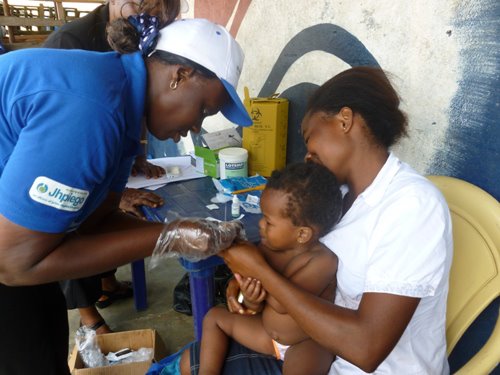
This 8-page brief provides ministries of health (MOHs), donors, and malaria and reproductive health implementing partners with a synthesis of lessons learned in malaria in pregnancy (MIP) programming in three relatively high-performing countries - Malawi, Senegal, and Zambia. According to the publication, although many countries have made important strides toward their broader malaria goals, most are still far from achieving the 2010 Roll Back Malaria (RBM) Initiative and President’s Malaria Initiative (PMI) targets for intermittent preventive treatment in pregnancy (IPTp) and insecticide-treated bed net (ITN) coverage among pregnant women. As countries continue scale-up of MIP interventions, they might benefit from specific tools that help to identify and overcome programmatic bottlenecks. This brief highlights best practices and successful strategies that can be applied to other malaria-endemic countries throughout Africa.
The brief is based on case studies compiled using a desk review of secondary data sources and stakeholder interviews. The case studies were analysed using the MIP implementation framework developed by the United States Agency for International Development (USAID) Malaria Action Coalition. Key themes were identified in the three countries in relation to best practices that have furthered MIP programme implementation and challenges that have hindered the achievement of MIP goals. The most significant challenges were found in the areas of commodities, quality assurance, and financing.
The review found that integration of MIP interventions into focused antenatal care (FANC) services at the facility level are essential to MIP programming. However, the strength of integrated planning and implementation across central-level MOH units, including reproductive health (RH), national malaria control programmes (NMCPs), and HIV/PMTCT, is variable, with weaknesses largely resulting from MOH human resources constraints, the perception of other units as competitors for funding, and a lack of emphasis on programme integration by MOH leadership. In terms of policy processes, the review found that although guidelines are available at the central level in each country, they have not been disseminated effectively to all health care providers; nor have orientations to the guidelines been conducted extensively. The review also found some problems with stock outs and quality assurance of medicines.
Since MIP guidelines are included in the pre-service education curricula for clinical health care providers, inservice training focuses on evidenced-based updates and maintenance of relevant and important MIP competencies. More coordination between the RH and HIV units and national malaria Control Programmes (NMCPs) would help to better manage the time providers spend at off-site trainings and ensure that supervision of trainees focuses on eliminating gaps in performance. Alternative capacity-building strategies, such as on-the-job training and mentorship, which could contribute to better training outcomes, are currently underutilised.
The reviews adds that community health volunteers/workers are actively involved in education and mobilisation for FANC and MIP, and are viewed as playing a key role in promoting ANC attendance and the use of ITNs. Community campaigns that include both education and active assistance with hanging ITNs are considered key to increasing ITN use both by pregnant women and by the general population. Community health worker support and participation in the provision of facility-based services has relieved some of the burden on clinical providers. Although donors are increasingly devoting funds to community-based programming for the purposes of consistency and sustainability, more strategies are needed to generate resources from within communities.
In response to the identified bottlenecks, the case studies outline recommendations specific to each of the three countries. Key, cross-cutting recommendations include the following.
- Promote integration and coordination of RH, HIV, and malaria control programmes through MIP working groups - The reestablishment and strengthening of MIP working groups can serve as a forum for ministries of health, donors, and implementing partners to share technical and programmatic expertise; harmonise MIP service delivery guidelines across health sectors; track and plan in-service training of providers; leverage funds for integrated supportive supervision and performance assessments; and promote collaboration, rather than competition, between MOH health units and implementing partners in order to reduce programmatic redundancies and stretch resources.
- Advocate through MIP working groups and other fora to ensure consistent stocks of SP and ITNs at ANC clinics - Ministries of health must convene stakeholders to take aggressive steps to identify reasons for and mitigate stock-outs. Such steps may not require new interventions, but rather the altering and strengthening of current activities related to commodity quantification, logistics management information systems, data management, and quality assurance.
- Increase support for community initiatives to overcome barriers to care-seeking - Ministries of health and donors should dedicate increased resources to community-directed activities that raise awareness of the importance of FANC and MIP services, bring services closer to the household, and strengthen the link between communities and facilities. Institutionalisation of and support for community health extension workers and focused interventions, such as community-based agents who demonstrate and assist with proper hanging of ITNs in households, can help programmes overcome the simple but significant barriers to implementation of malaria prevention strategies. Recognising that health starts in the family within a community, engaging communities early on to promote healthy practices during pregnancy promotes care-seeking behaviour and enables pregnant women to demand needed services, including MIP prevention, throughout pregnancy.
- Dedicate increased resources to strengthening existing M&E systems and integrate data management and data use for decision-making into pre-service education and in-service training programmes - Efforts toward this objective should be threefold: (1) strengthen facility-level data collection and reporting, (2) build district-level skills in using data for decision-making, and (3) incorporate World Health Organisation-recommended indicators into the HMIS and/or household surveys.
- Promote capacity-building strategies, including strengthened pre-service education, on-the-job training, mentorship and supervision, and group based in-service training - ministries of health and stakeholders should consider the cost effectiveness of investing in alternative capacity building strategies, such as strengthening pre-service institutions; offering district- and facility-level on-the-job training, mentorship, and supervision; and developing infrastructure.
- Strengthen quality assurance systems - Greater collaboration between quality assurance units, NMCPs, and RH and HIV units is needed in conducting performance assessments and using assessment information to augment and more efficiently focus supervision to address programme and service delivery gaps.
According to the brief, many of the lessons learned are likely to apply to other malaria-endemic countries and can be used to inform programming. The framework can be applied through a collaborative process among MIP stakeholders and in routine malaria and reproductive health programme reviews. It concludes that although many obstacles remain in eradicating malaria and malaria in pregnancy, lessons learned thus far demonstrate that the obstacles are not insurmountable and that the PMI and RBM goals for IPTp and ITNs are still within reach.
Jhpiego website on May 7 2012.
- Log in to post comments