










































We Have Rights Too! Project
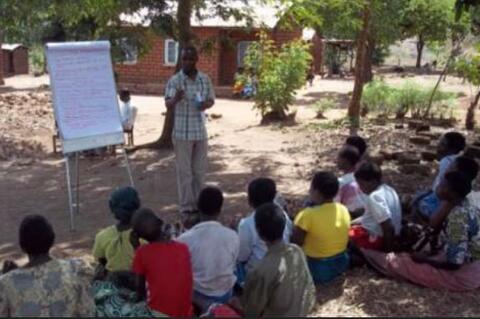
Running from 2012 to 2014, We Have Rights Too! is working to ensure that the sexual and reproductive health and rights (SRHR) of women and girls living with HIV and AIDS are respected, protected, and upheld, within six Traditional Authorities (TA) within Blantyre and Nkhotakota districts in Malawi. This will include raising awareness on SRHR and systems for redress, training and supporting community SRHR promoters and peer educators, and advocating on issues affecting the SRHR of women living with HIV (WLHIV), including access to and quality of sexual and reproductive health services. The project is a collaboration between World University Services Canada (WUSC), Women for Fair Development (WOFAD), and Coalition of Women Living with HIV and AIDS (COWLHA), with funding from the Tilitonse Fund.
The We Have Rights Too! Project is working to increase the protection and promotion of sexual and reproductive health rights of women living with HIV and AIDS, improve access to sexual and reproductive health services, as well as improve the technical capacity of COWLHA and WOFAD to promote sexual and health rights. The project is designed to encourage awareness, commitment, and action in upholding SRHR amongst duty bearers at all levels.
The first step in the project was a baseline study to better understand the situation and gather information on SRHR violations. Research tools for the baseline survey were designed to capture the complex array of factors influencing the experiences of WLHIV with SRHR violations. It was essential that the women themselves were able to voice their needs and begin engagement with this project. The stories, experiences, and needs voiced by the women are being used to inform the development and implementation of programmes and activities for the We Have Rights Too! Project.
Further activities included the training of peer educators. WOFAD trained 20 peer educators from across Blantyre District with individuals coming from T/A Kuntaja, Kunthembwe, and Machinjiri, to build their capacity to effectively engage their peers and support them in seeking redress and psychosocial support services in the event of violations taking place. Following this training, peer educators were equipped with bicycles that will allow them to travel through their communities to educate community members on SRHR related issues, provide counselling and guidance services to WLHIV, and advocate for the SRHR of WLHIV. Furthermore, during the training peer educators developed an advocacy plan to promote their advocacy initiatives for the SRHR of WLHIV in the community. This includes advocating for quality and non-discriminatory SRHR services and engaging traditional leaders, religious leaders, and government officials. The training session was based on the We Have Rights Too! Peer Educator SRHR Reference Manual .
WOFAD also conducted awareness and lobbying meetings with traditional and religious leaders from T/A Kuntaja, Kunthembwe, and Machinjiri. These meetings were intended to create a forum to raise awareness among key duty bearers about SRHR of women living with HIV and AIDS. WOFAD also used the meeting to address the need to stop harmful cultural and religious practices that violate the SRHR of community members. At the end of these meetings, brochures and booklets of translated Chichewa laws and policies were provided to the leaders to further distribute them to community members.
The project also hosted a training workshop for radio broadcasters and journalists to gain the knowledge and skills needed to deliver effective reporting and media programming on SRHR. Participatory Radio Campaigns (PRC) will be used to provide knowledge, promote dialogue and begin mobilising people around SRHR issues. The project considers training media personnel as a critical first step in engaging the media in: familiarising the public with the objectives and activities under the We Have Rights Too! Project; raising awareness on key SRHR issues, SRHR violations occurring in communities, systems for redress and relevant laws intended to protect women from SRHR violations; and providing a public space, on air, for dialogue on SRHR issues so that communities may begin discussing potential solutions to factors driving SRHR violations.
In addition, WOFAD and WUSC delivered a training session to health care workers (HCW) to develop and enhance the professional capacity in the delivery of sexual and reproductive health services to patients, with an emphasis on WLHIV. During the first part of the day, an overview of the We Have Rights Too! Project findings from the baseline survey on SRHR, patient’s rights and responsibilities, key SRHR concepts, Malawian laws, and policies relevant to SRHR were covered. In the afternoon, participants engaged in group work to discuss the changes that could be made, at an individual and at the level of the health centre, to ensure that the SRHR of WLHIV are promoted and protected at their health facility.
Sexual Reproductive Health Rights, HIV/ AIDS
According to the project organisers, in Malawi, women are more vulnerable to HIV infection than men, and must overcome barriers to access treatment, care, and support. Women’s rights, including sexual and reproductive rights, are protected and promoted under various laws and policies. However, lawmakers are unable or unwilling to enforce the laws and policies at all levels. This inadequate enforcement is caused by limited awareness of the laws and policies, and weak structures and systems at district and community levels. At the community level, harmful cultural practices also promote gender-based violence and prevent enforcement of the policies and laws. Most women living with HIV do not have knowledge of or access to contraceptives, or their partners prevent them from using them.
By 2014, this project intends to have promoted and protected the SRHR of 2,500 WLHIV in each district – reaching a total of 5,000 women by 2014. Achieving this goal will necessitate improving access to and quality of SRH services available to WLHIV.
World University Services Canada (WUSC), Women for Fair Development (WOFAD), and Coalition of Women Living with HIV and AIDS (COWLHA), with funding from the Tilitonse Fund.
Women for Fair Development website and World University Services Canada website on March 20 2014.
- Log in to post comments